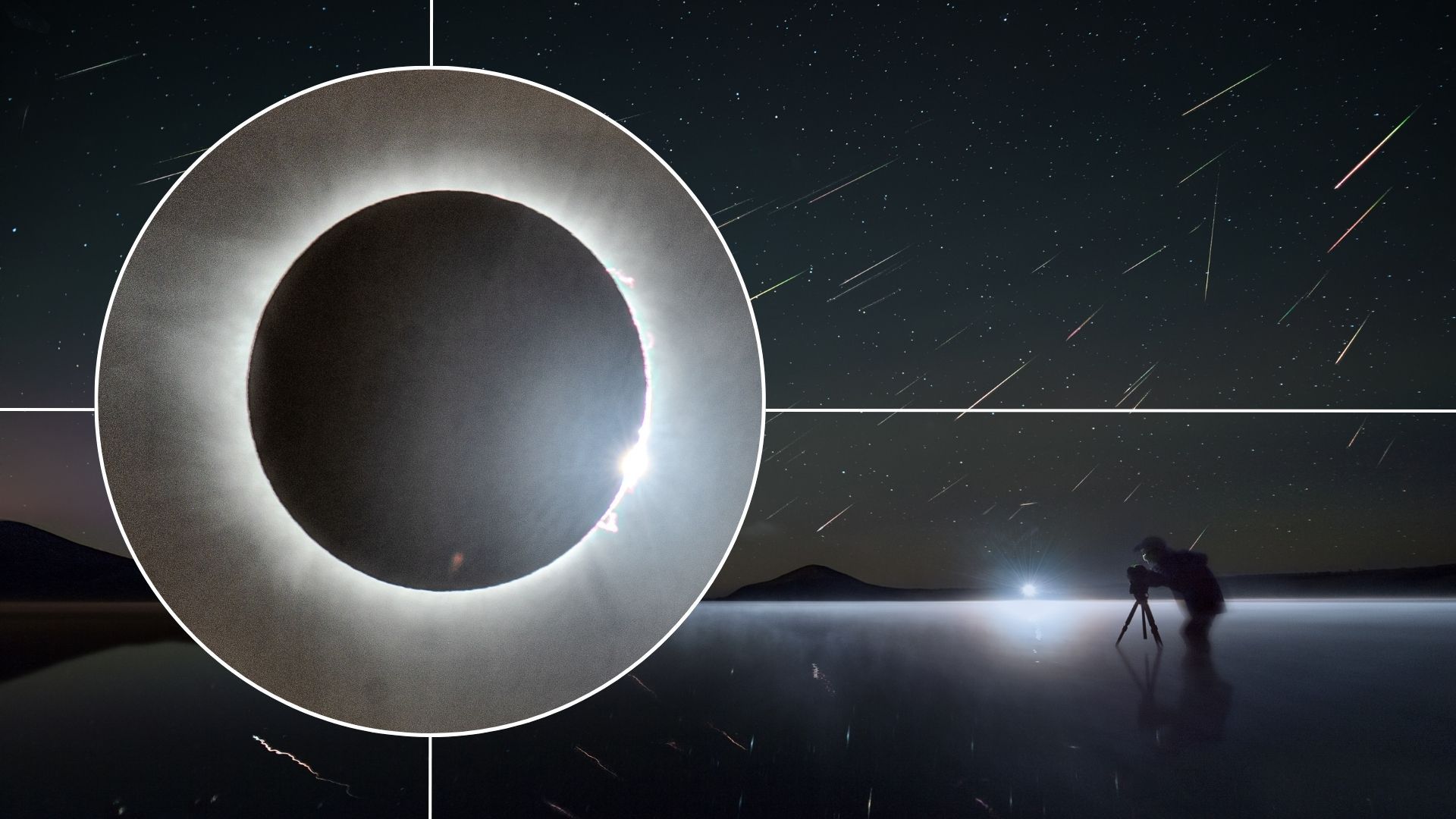
A spectacular total solar eclipse will coincide with the peak of the Perseid meteor shower on Aug. 12-13. But will you be able to spot shooting stars in the false twilight of totality?Perseids appear as Earth plows through the stream of debris shed by comet Swift-Tuttle. Up to 100 shooting stars may be seen each hour around its peak under ideal dark skies, as particles from the ancient comet collide with our atmosphere at speeds of 133,200 mph (214,365 km/h) to etch a fiery path through the summer night sky.It's an unmissable highlight of the skywatching calendar, supercharged in 2026 by the spectacle of a total solar eclipse, which will plunge millions across Greenland, Iceland and Spain into the darkness of an eerie twilight, as the moon crosses the face of the sun.Is it possible to see shooting stars during totality?Yes. The most brilliant Perseid shooting stars can shine bright enough to be spotted in the brief twilight of totality. But it's all a question of timing."It would have to be a fireball that passed through the darkest portion of the sky," Robert Lunsford of the American Meteor Society told Space.com in an email. "The Perseids usually produce about one fireball per three hours at night. That's asking a lot for one of these bright meteors to appear during a 2-3 minute window. If anyone does see one, they had better go play the lottery asap!"
Will Perseid shooting stars be visible during the Aug. 12 total solar eclipse?
"If anyone does see one, they had better go play the lottery asap!"
482 words~2 min read