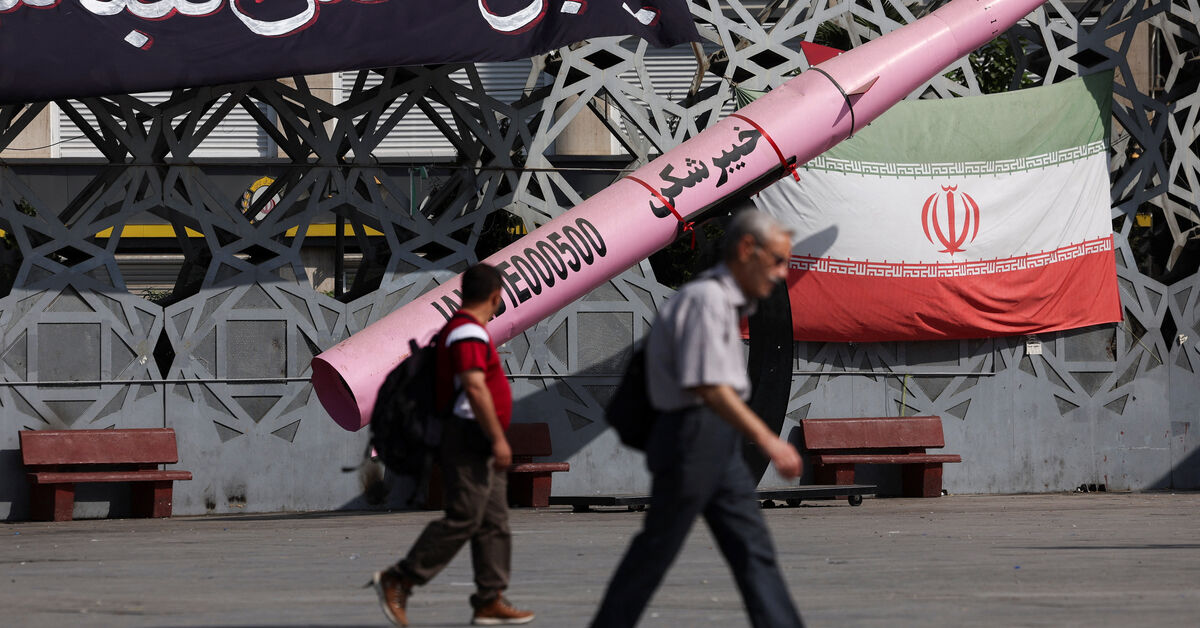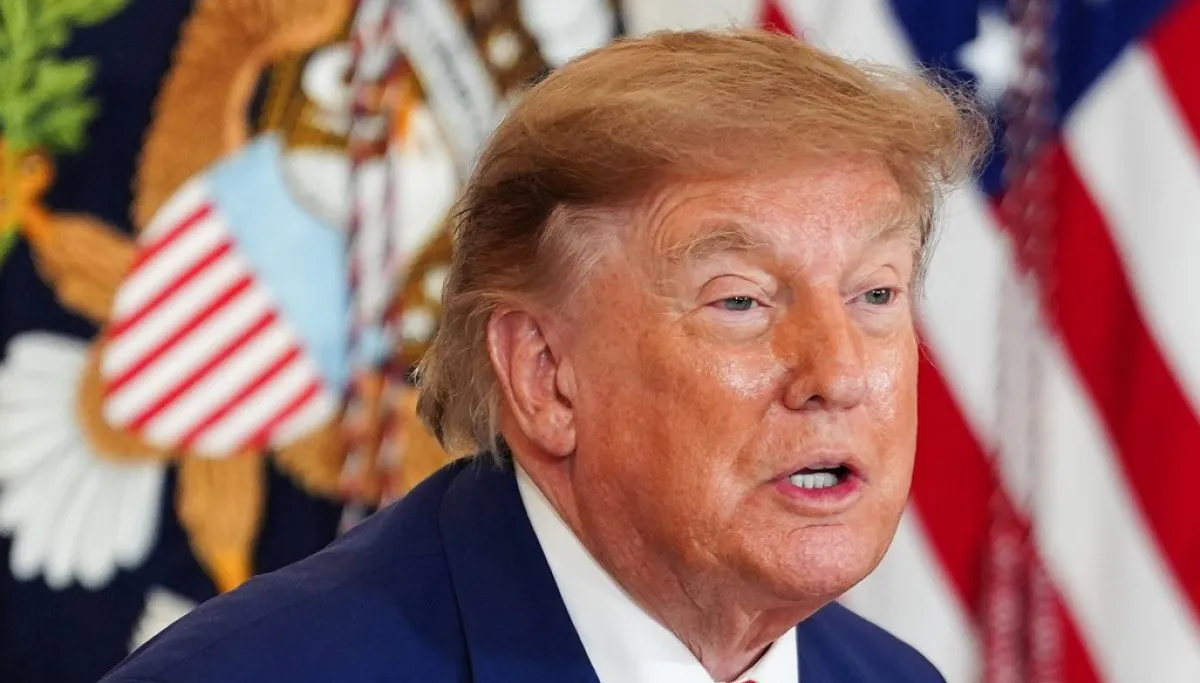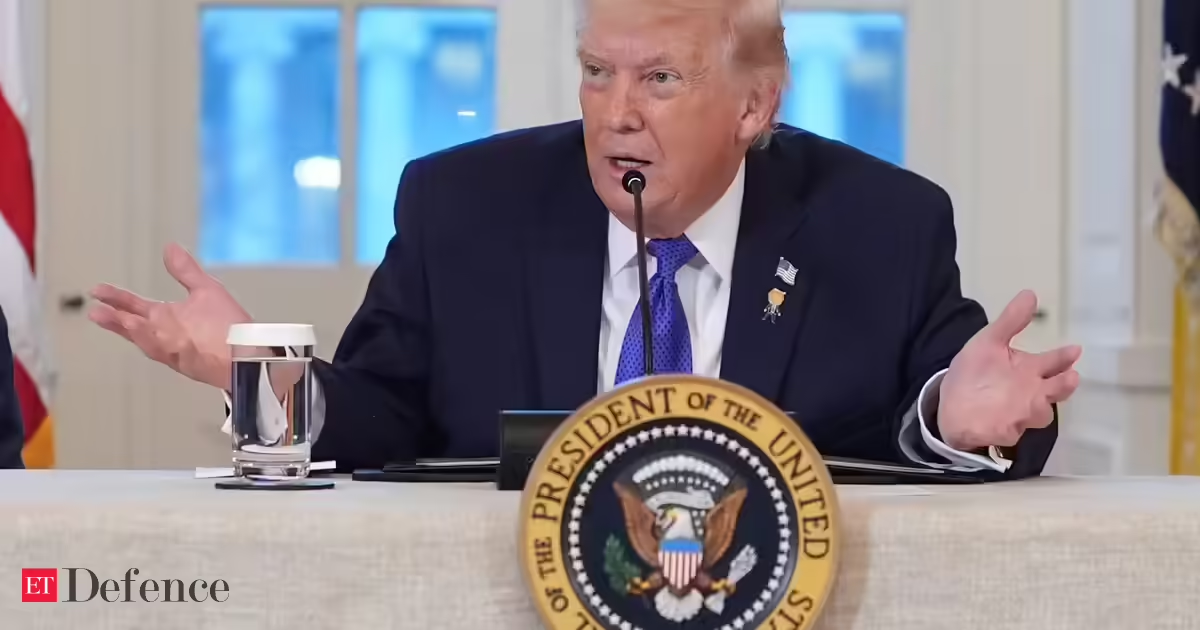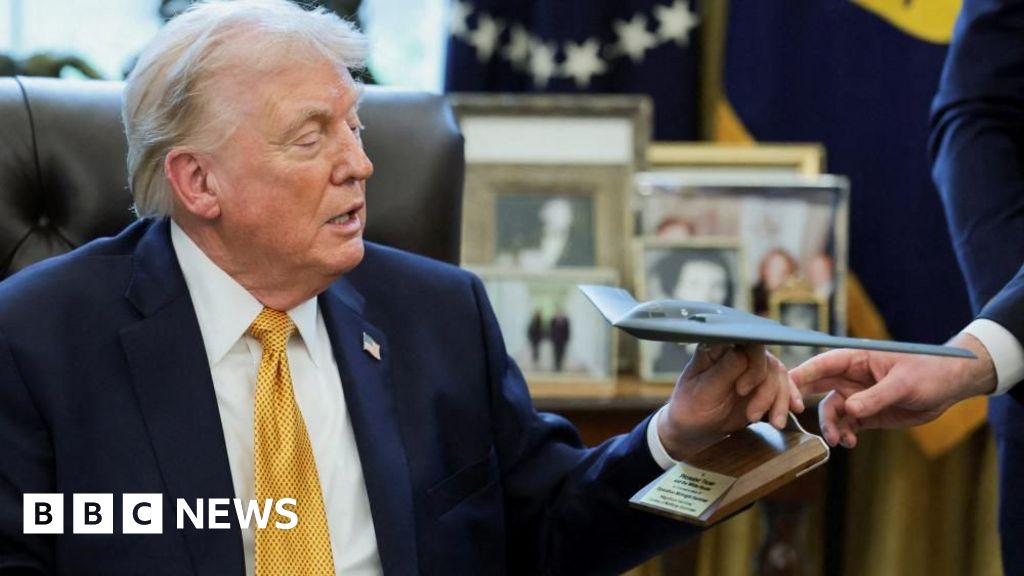
Donald Trump is not worried about Iran—at least, that’s the message he’s trying to send to panicked investors, frustrated voters, and vulnerable congressional Republicans. “We are low-keying it” on Iran, the president told Axios’s Barak Ravid on Sunday. “We are only semi-negotiating with them. We are just watching Iran with its huge inflation and the fact they have no money,” he said, noting the country was “in very bad shape” economically. “It will work out. It always works out,” he concluded. “It’s like a chess game.”“It always works out” is never a reassuring message to receive during a crisis, especially when it comes from someone who has declared multiple bankruptcies and launched a failed coup. Trump, of course, was elected president for the first time after those bankruptcies and won again after the failed coup (and the dozens of criminal charges that followed it). But just because he got lucky twice doesn’t mean he will again. And if the war with Iran is a “chess game,” then it’s one he and the United States are losing badly, with few available moves left on the board. Iran announced on Monday that it would not reopen the Strait of Hormuz, the vital shipping lane that carries around a fifth of the world’s oil supply, until the U.S. agrees to its demands, which include the lifting of sanctions, the payment of reparations and the unfreezing of Iranian assets, and ending the blockade that Trump believes will ultimately lead to victory. The strait had previously been reopened in response to ceasefire agreements. Now, Iran—not Trump—is playing hardball. And there’s little reason to believe that even the economic chokehold Iran is currently facing will cause its leaders to bend anytime soon, especially since they’re well aware of the damage that the war—in particular its steroidal impact on the price of gas, fertilizer, and other essential goods—is doing to the GOP’s bid to retain control of Congress in the November midterms. Ever since the war began, Iranian leaders have insisted that they are prepared to withstand crippling economic sanctions and devastating airstrikes in large part because they believe that Trump and congressional Republicans are far less willing to face the rising prices that have accompanied the closure of the Strait of Hormuz. So far, it’s hard to argue with that read. Trump is historically unpopular on the economy; his net approval on inflation is 50 points underwater. Congressional Republicans, meanwhile, are facing an electoral bloodbath that could equal the 2006 wipeout. Iranian leaders, meanwhile, seem more than willing to withstand a blockade until the midterms and to use those elections to their benefit. The only question now is if Trump folds before the midterms or if allows the war to continue indefinitely—an eventuality that would almost certainly hand the White House to Democrats in 2028. The war in Iran is already, strategically speaking, one of the biggest foreign-policy blunders in American history. Iran will likely emerge from the conflict, whenever it ends, stronger than before. The U.S., meanwhile, has lost much of what was left of its global credibility, along with the majority of its supply of munitions. But the war is also the capstone of one of the biggest political blunders in American history. Less than two years ago, voters elected Trump because they were frustrated about the state of the economy. Since retaking office, he has done seemingly everything he can to make that economy even worse—and make an ever-increasing number of those voters hate him. The frenetic nature of Trump’s presidency makes it hard, if not impossible, to tell one overarching story about it. Every week, it seems, features at least three middle-of-the-night tweetstorms, two historic corruption scandals, and one other news-generating disgrace that eats up several days of media coverage. In just a year and a half, his administration has launched a global trade war, decimated much of the U.S. government, kidnapped the president of a sovereign nation, launched a war against another, all while deploying masked paramilitary goons to snatch people off of the street in our communities and trying (usually without success) to prosecute its critics. In this time, Trump has also survived two historic scandals, one relating to his long-time friendship with child sex offender Jeffrey Epstein, and the other involving ongoing self-dealing and corruption that has netted he and his family billions—and that would make a politician in the Gilded Age blush. There’s a lot going on, in other words. But the biggest story of Trump’s second term is arguably its simplest. Voters returned Trump to power because prices were high, even though the incumbent administration was not really at fault. In the wake of the Covid-19 pandemic, inflation was rampant everywhere in the world. Indeed, by most macroeconomic indicators, the Biden administration had done a comparably stellar job. That didn’t matter. Voters were pissed off about paying too much—so pissed off, in fact, that they re-elected the person who had failed to responsibly manage the pandemic and then tried to cling to power after he lost in 2020, notably by ginning up a mob that intended to hang his vice president. Trump got lucky. A normal administration would have recognized as much on some level. At the very least, it would have made the most important issue of the recent presidential election a focal point: to do everything possible to bring prices down and take other steps to alleviate the affordability crisis. Trump didn’t. He and his advisers decided a narrow, fluky election was a historic mandate that gave them clearance to do whatever they wanted. Many of those moves—the massive cuts driven by Elon Musk’s “D.O.G.E.” project, Trump’s global trade war, the war in Iran—sabotaged the economic recovery that had begun under Joe Biden. They did nothing to address the things that people hated about the economy under Biden—and in fact, they all made those things worse to varying degrees. And so here we are. Even Trump’s voters are fed up. Dean Rosenbrook, a farmer who recently attended a Trump rally in Wisconsin, said he planned on voting for Republican Congressman Dean Van Orden, who is backed by Trump, but that he wants the Iran war to end because fuel and fertilizer prices are “killing us.” The economy, meanwhile, is sputtering. July’s jobs report, released last week, unexpectedly showed that the U.S. economy lost 23,000 jobs that month, while totals from May and June were revised down by 100,000. For the first time in over a decade, a Reuters/Ipsos poll found that a plurality of voters say they prefer Democratic stewardship over the economy. Trump’s overall economic numbers are historically bad and have fallen 31 points since he returned to office. Congressional Republicans, particularly those in vulnerable seats, are campaigning in the constant shadow of these political storm clouds. But Iran’s leaders can see them, too, and that’s why they’re playing hardball over the Strait of Hormuz. All Trump can offer, meanwhile, is hollow reassurance that “it always works out.” That adage may be true for him, but it rarely works out for the people caught in his blast radius.
Trump Is Trapped in His YOLO War in Iran
“It always works out,” the president assures us. But Iran is playing hardball because it sees what every American does: The war is jacking up prices and dragging down the entire Republican Party ahead of the midterm elections.
1,184 words~5 min read