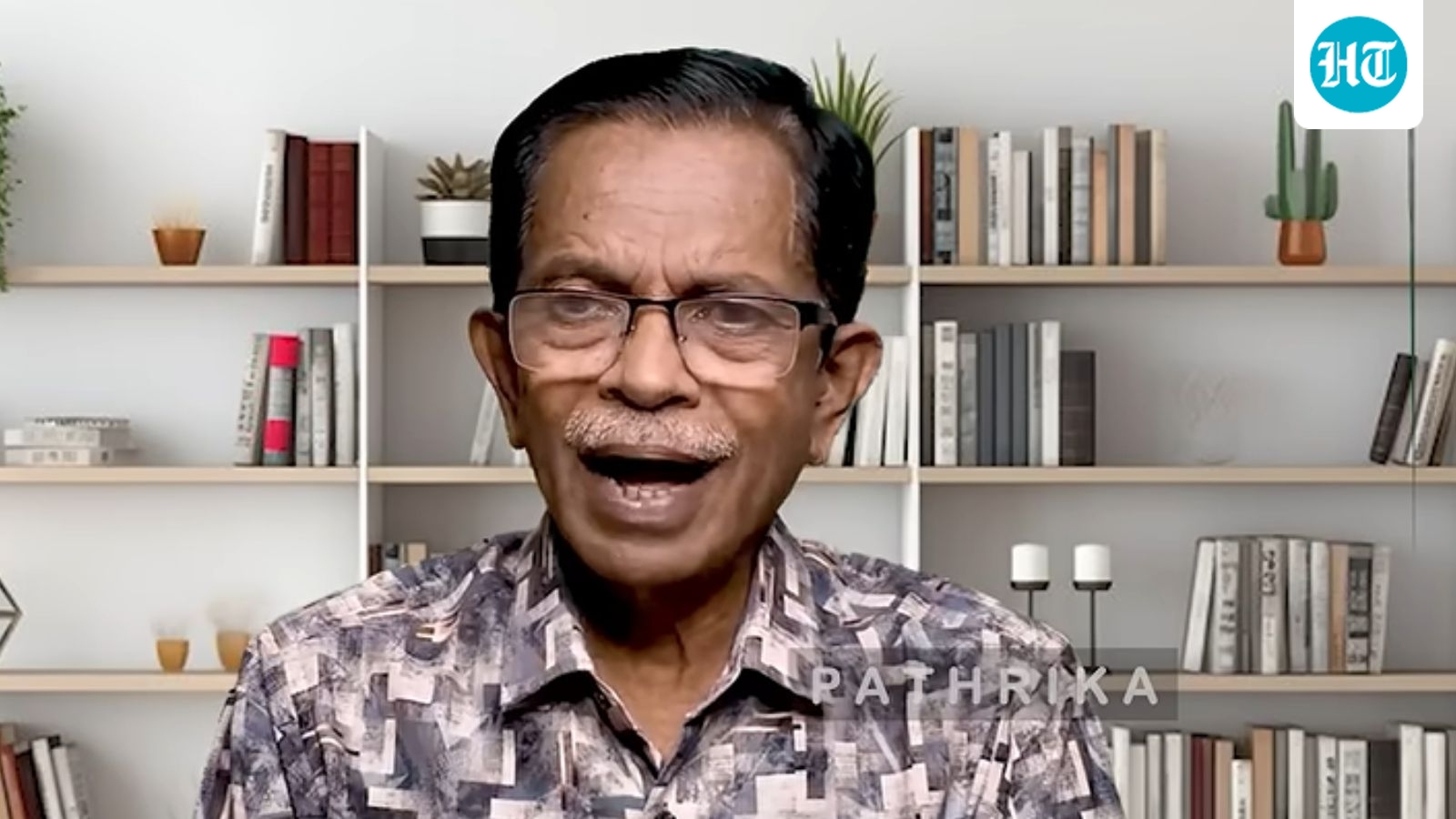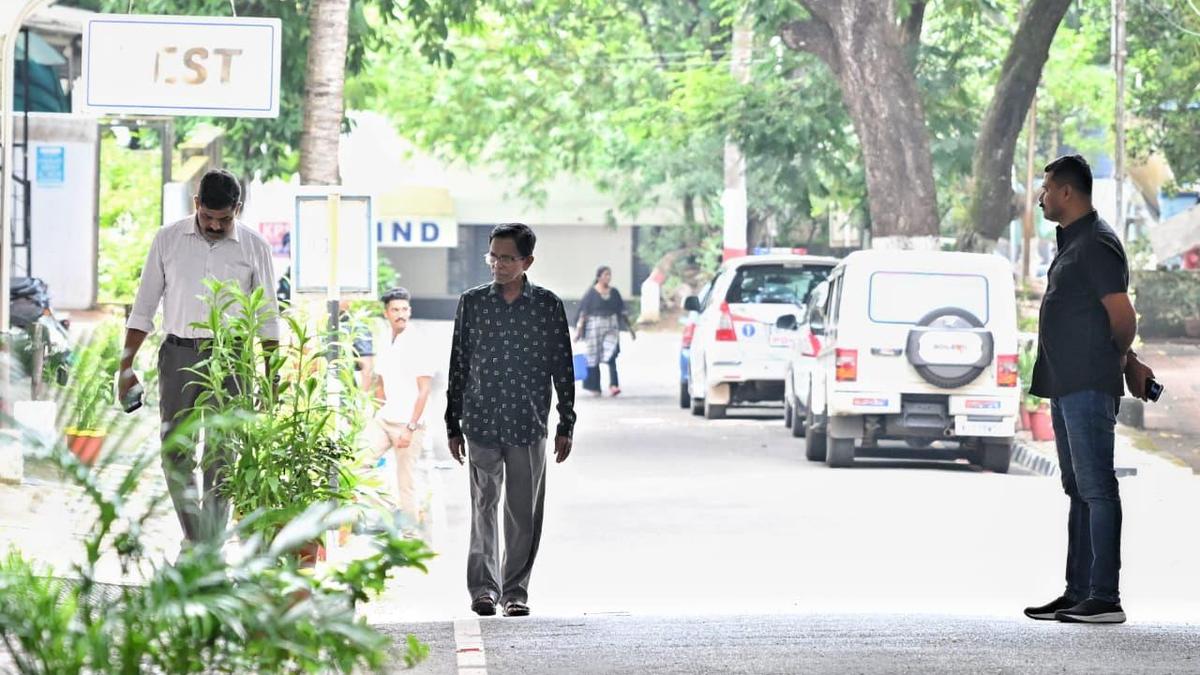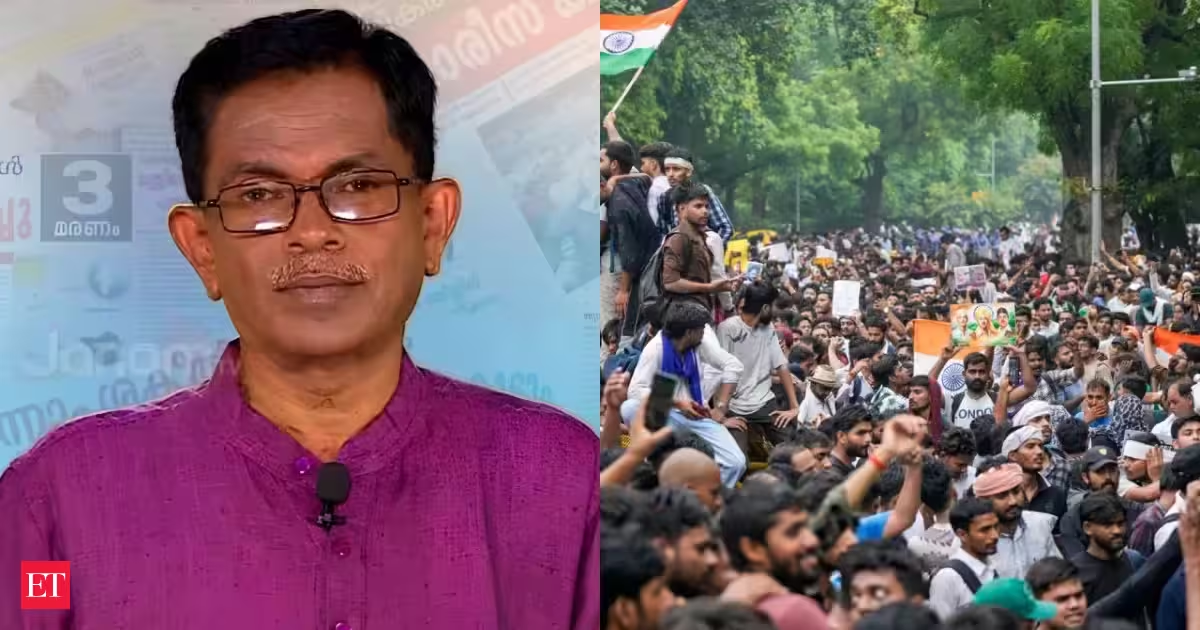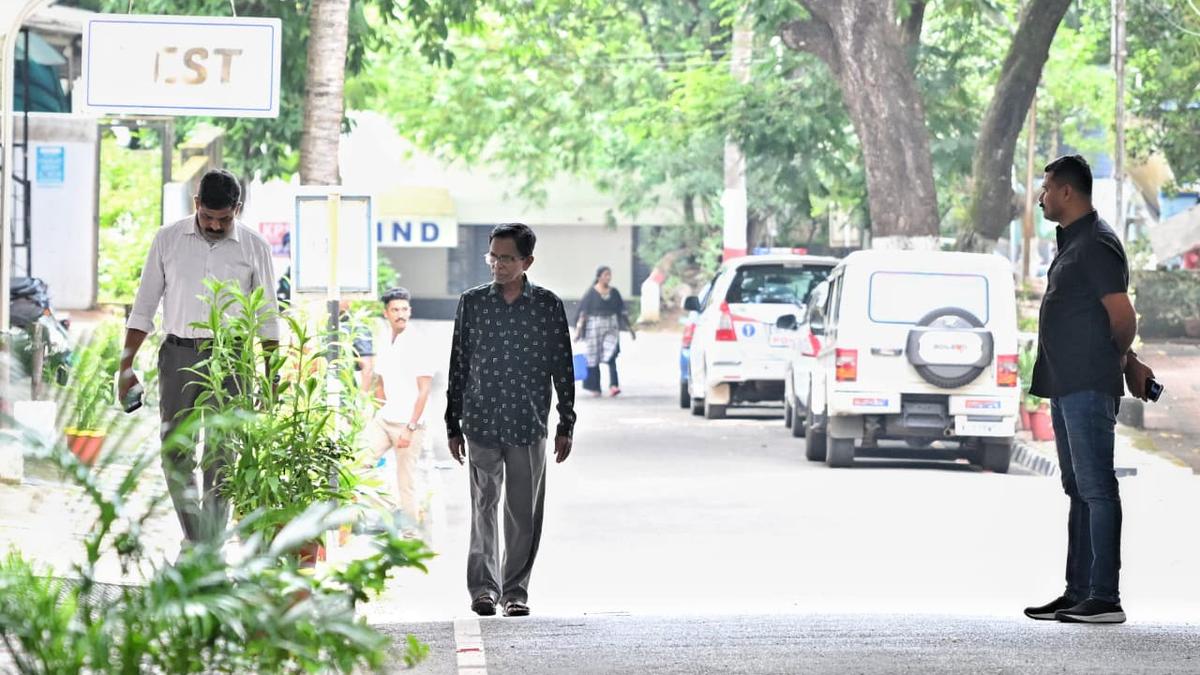
Hindutva ideologue T. G. Mohandas appears for questioning at the Cyber Police station at Thycaud in Thiruvananthapuram on Tuesday (August 11, 2026)
| Photo Credit: Nirmal Harindran
The Thiruvananthapuram Additional Chief Judicial Magistrate has come down heavily on the police for failing to issue a mandatory notice before arresting Hindutva ideologue T.G. Mohandas, who was ultimately granted bail following his arrest over derogatory statements made against students who recently protested at Jantar Mantar in New Delhi.The court, while granting bail to the accused on Monday, said the requirement to issue notice under Section 35(3) of the Bharatiya Nagarik Suraksha Sanhita (BNSS) was attracted in the case and that the grounds cited by the investigating officer for not issuing it were insufficient. The prosecution could not satisfactorily justify the decision to dispense with the statutory safeguard, the court found.The accused was booked by the Thiruvananthapuram City Cyber Crime Police under Section 66 of the Information Technology Act, Section 120(o) of the Kerala Police Act and Sections 79, 192, 353(1)(b) and 351(3) of the Bharatiya Nyaya Sanhita (BNS).The offences under BNS pertain to insulting the modesty of a woman, provocation with intent to cause riot, statements conducing to public mischief, and aggravated criminal intimidation respectively.The prosecution alleged that he had uploaded videos on his YouTube channel ‘Pathrika’ on July 24 and 25 containing statements “intended to create fear and anxiety among participants of a protest at Jantar Mantar and disrupt public peace and tranquillity”.The court observed that the only non-bailable offence among those invoked was Section 353(1)(b) of the BNS, which carries a maximum punishment of three years’ imprisonment, a fine or both.It then relied on the Supreme Court’s ruling in Satender Kumar Antil v. Central Bureau of Investigation, which held that a notice under Section 35(3) of the BNSS is the rule in offences punishable with imprisonment of up to seven years, while arrest is an exception.The court rejected the prosecution’s contention that notice could be dispensed with because the accused might abscond, destroy digital evidence or influence the complainant. The investigating officer had recorded these apprehensions as the reason for not issuing the notice.The court, however, found that the investigation records did not disclose any specific circumstance suggesting that Mr. Mohandas was attempting to evade the investigation or was likely to abscond. On the contrary, the investigating agency had located him at his known residential address and conducted a search of the premises while he was present there. The court said such circumstances were inconsistent with the apprehension that he might abscond.The court was equally critical of the police claim that immediate arrest was necessary to protect digital evidence. It said no specific or cogent circumstance had been disclosed in the remand report to highlight that arrest was immediately necessary to preserve or secure such evidence.The investigating agency had already located the premises and was in a position to proceed with the investigation and secure the relevant material, the court observed.Questions need for custodial interrogationThe court also questioned the prosecution’s argument that Mr. Mohandas’s custodial interrogation was necessary because the investigation was at an initial stage, more witnesses had to be examined, the involvement of other accused had to be ascertained and the owner of the YouTube channel was yet to be identified.It said such factors did not provide sufficient justification for keeping the accused in custody. Besides, it was recorded that relevant electronic devices, including a mobile phone, hard disk and modem, had already been recovered from Mr. Mohandas’s residence following a search and had been seized and produced before the court.Meanwhile, the accused appeared before the investigation officer in Thiruvananthapuram in compliance with the court order, which also directs the accused to turn up for further interrogation for the next two days, and thereafter every Monday for two months or until the filing of the final report, whichever is earlier. Published - August 11, 2026 02:58 pm IST