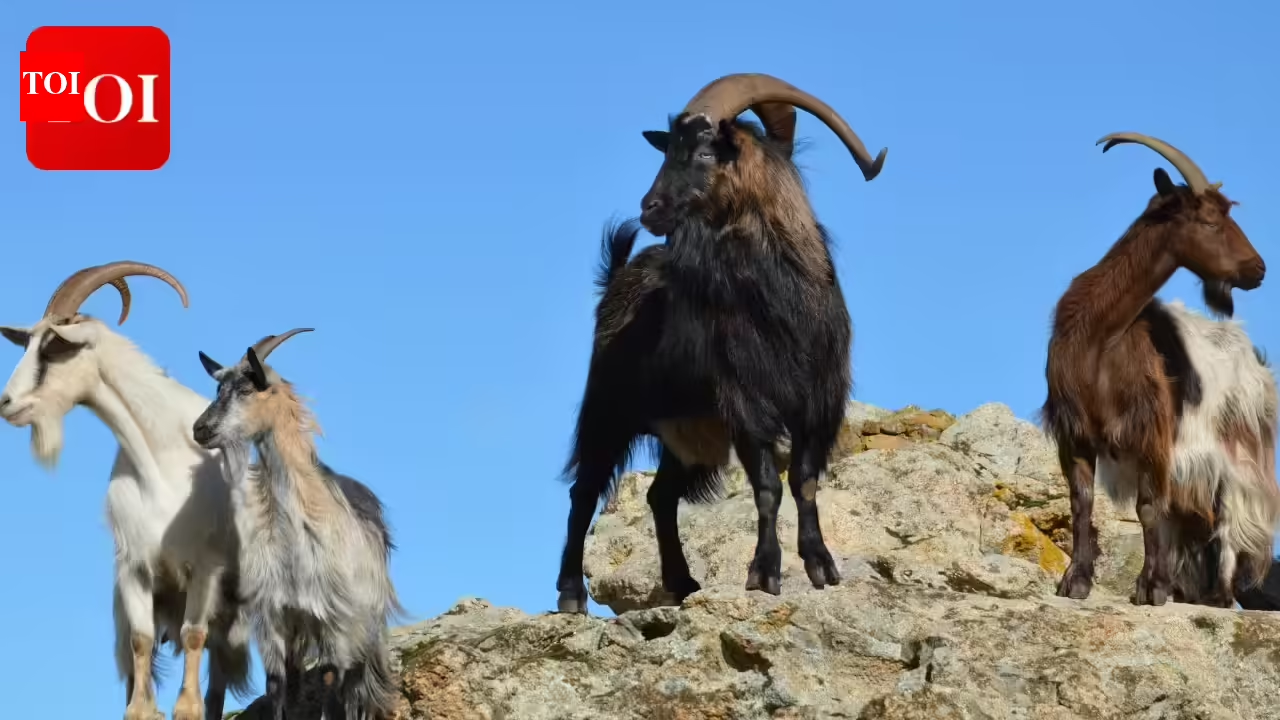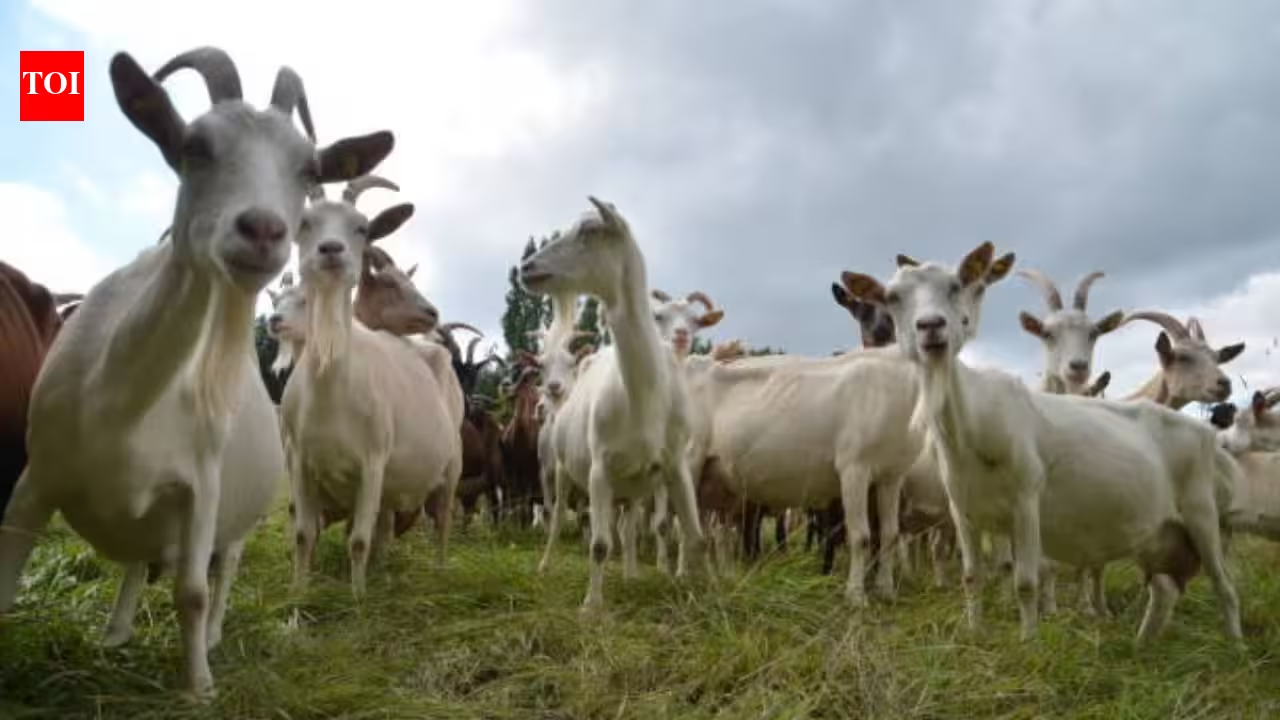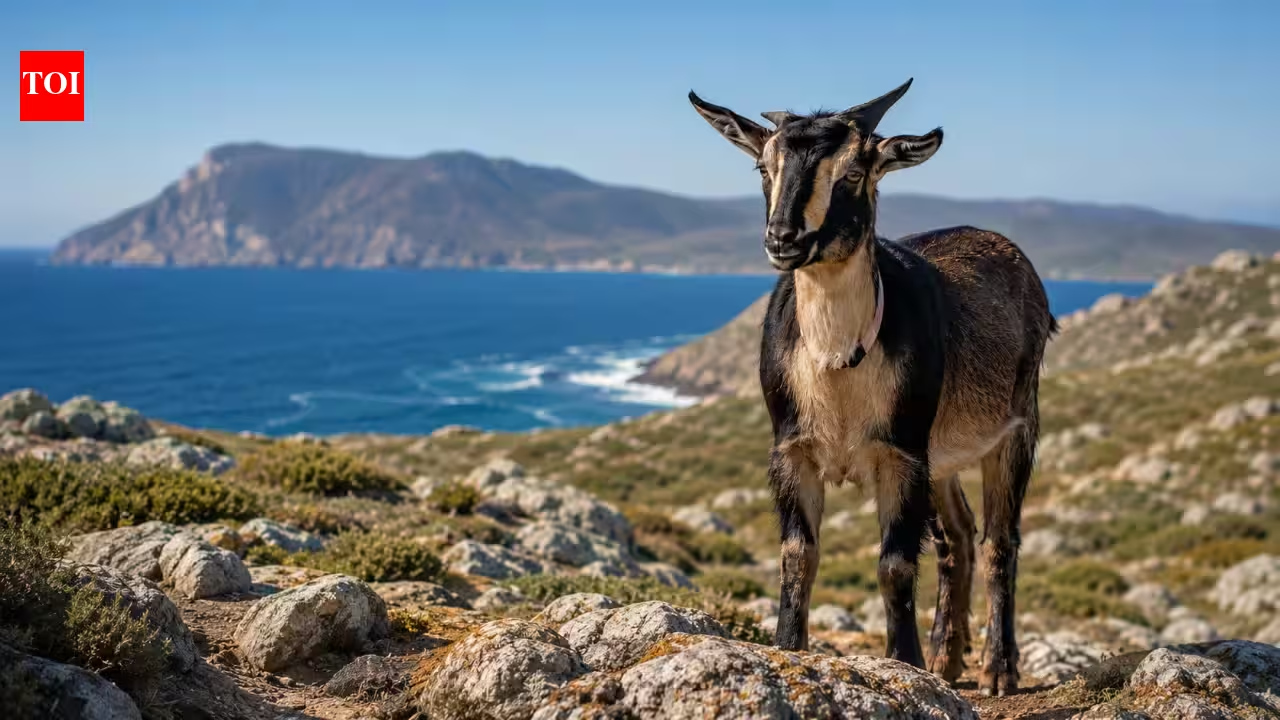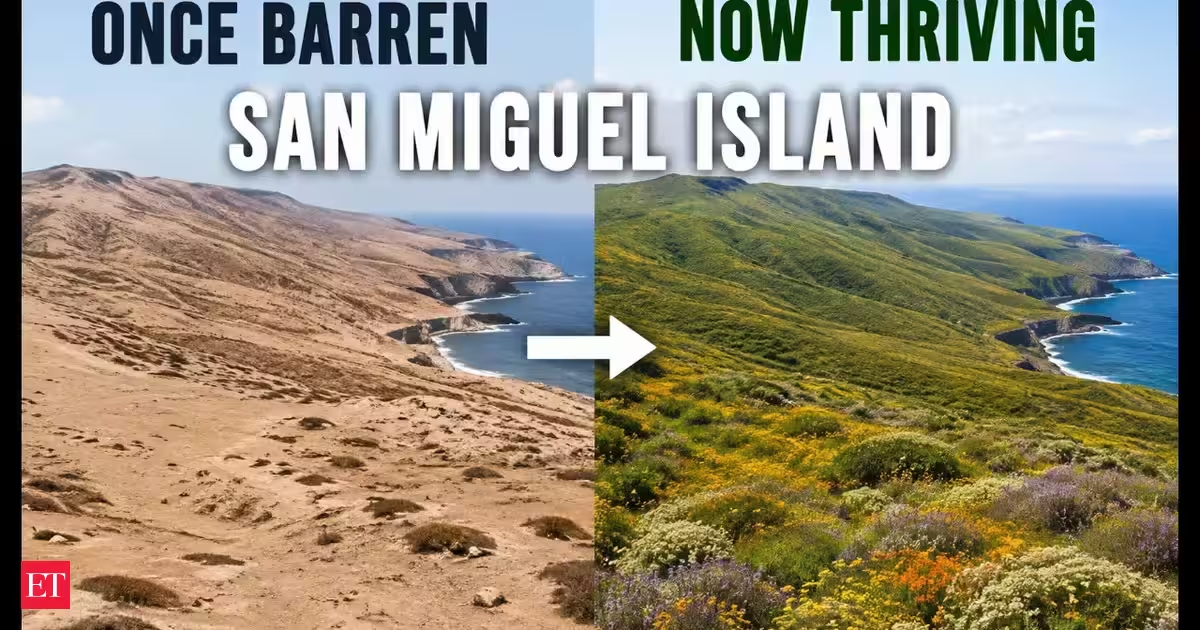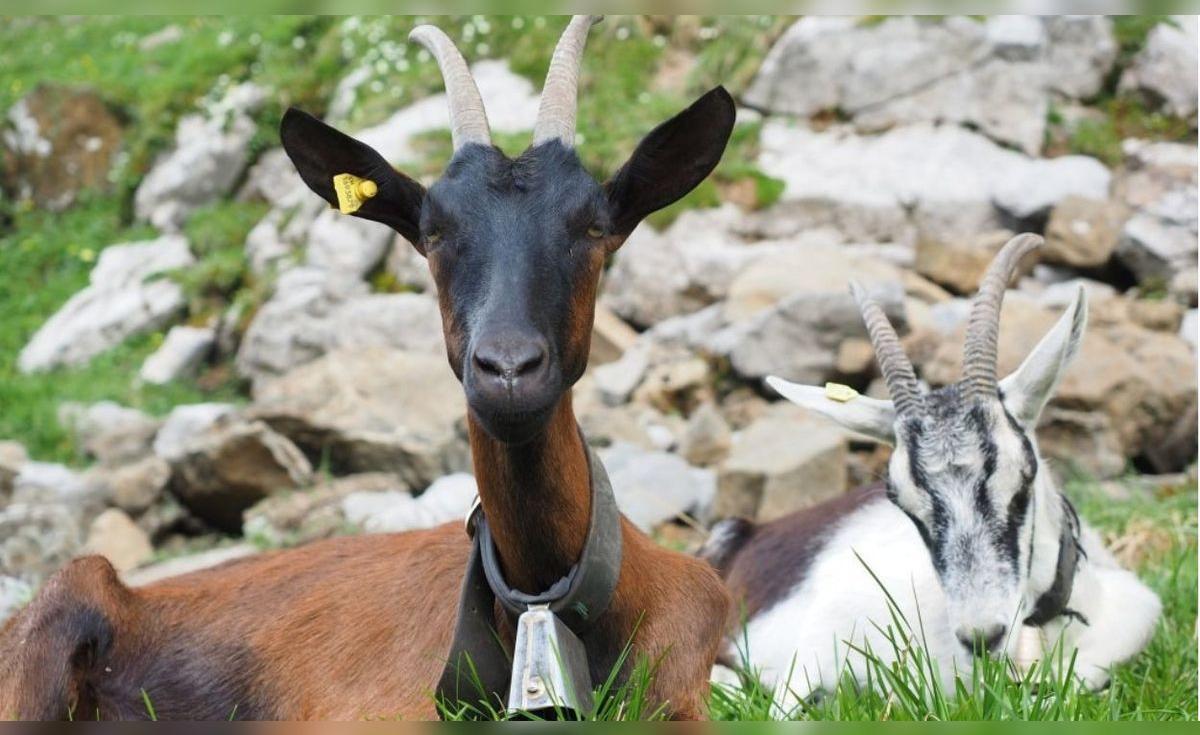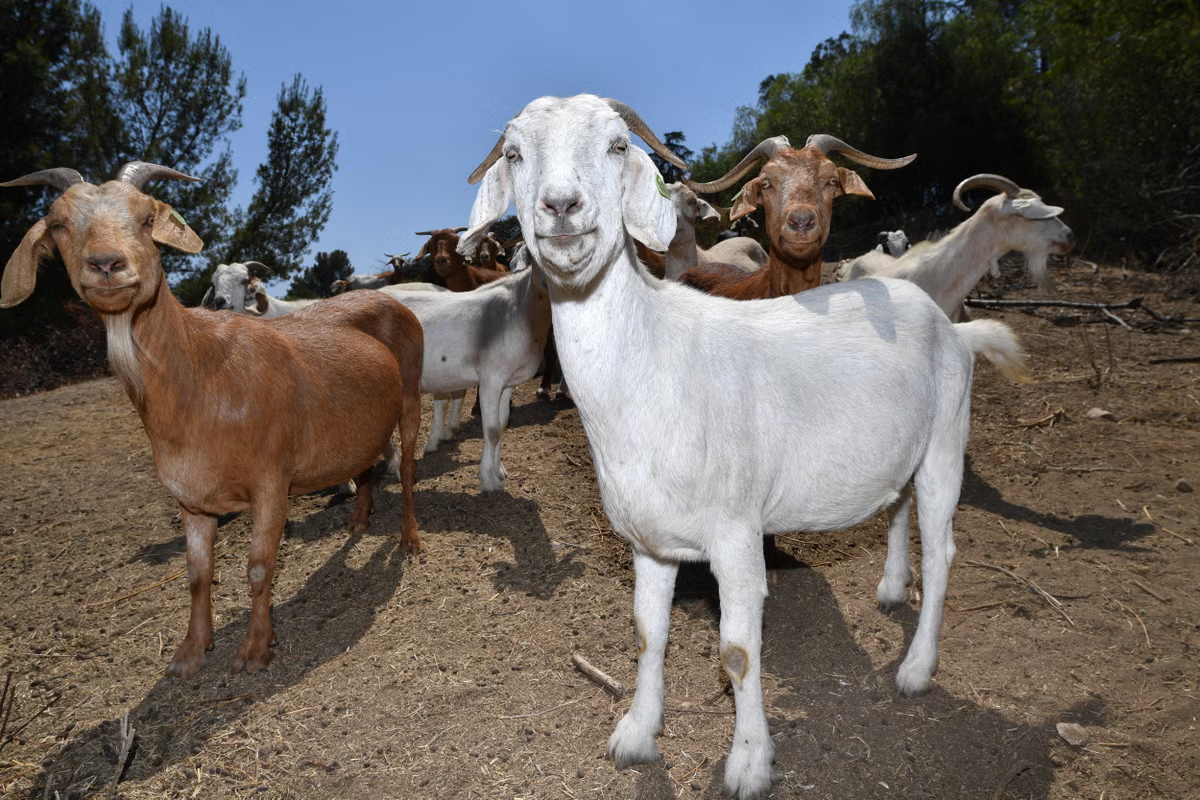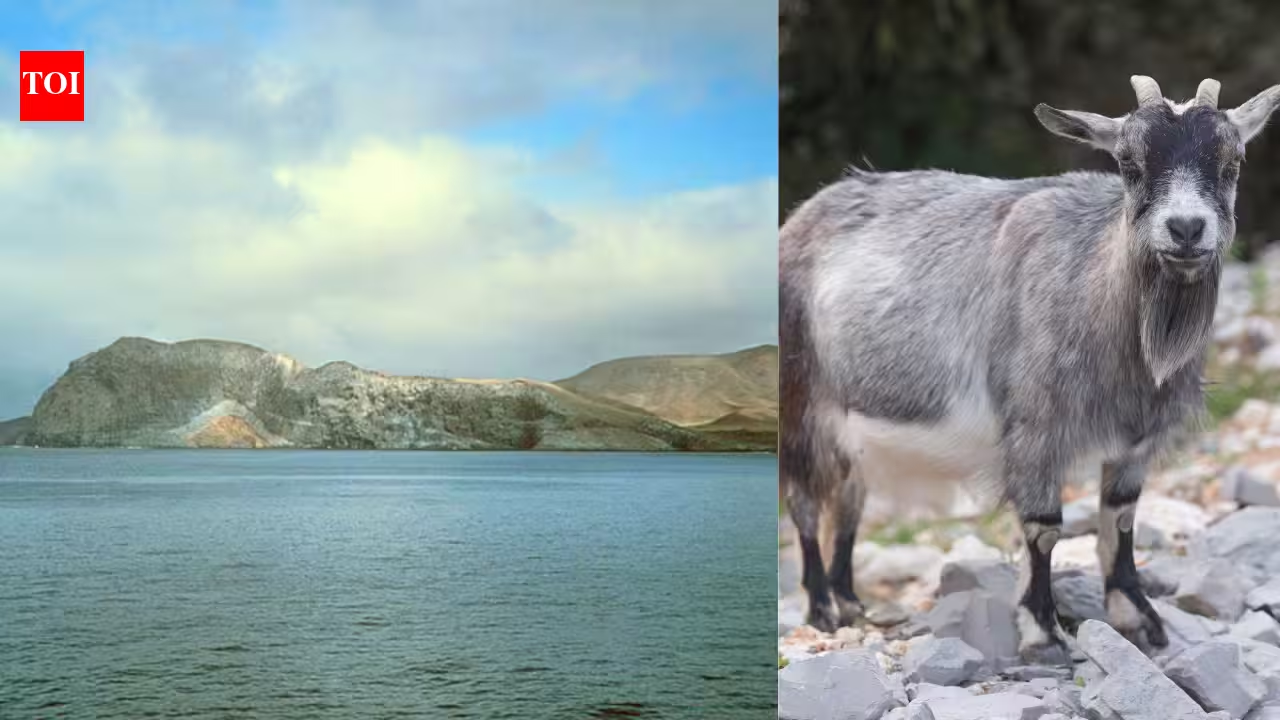
Guadalupe Island is about 260 kilometers off the Baja California Peninsula | Wikimedia CommonsConservation biologist Don Croll reached Guadalupe Island off Mexico's Baja California Peninsula in 2001, and found a landscape that had almost no young trees, since feral goats had been eating new growth for generations. Croll and other researchers fenced small areas to see what would happen when the goats were kept away.Hundreds of tree seedlings appeared inside the protected areas within a year. The observation changed the focus of the conservation project, and removing the goats became a priority. According to Island Conservation, Croll was one of the organization's co-founders and worked with Mexican conservation groups on Guadalupe Island, where invasive species had severely damaged native wildlife and vegetation. Guadalupe Island is about 260 kilometers off the Baja California Peninsula | Wikimedia CommonsGoats had been eating the island's new growthGuadalupe Island is about 260 kilometers off the Baja California Peninsula. It contains plant species found nowhere else, including Guadalupe cypress, Guadalupe pine and Guadalupe palm. Goats had been introduced to the island by seal hunters in the 19th century, and were left behind as a source of food during hunting trips. Over time, the animals spread across the island and fed on native vegetation. The damage was rather serious for trees, as mature trees could survive for decades, but young seedlings were repeatedly eaten before they could grow. Many of the island's forests had been reduced to scattered old trees by the time conservationists began their restoration work.A 2005 paper by Bradford Keitt, Steve Junak, Luciana Luna-Mendoza and Alfonso Aguirre documented the early stages of the restoration effort. The researchers wrote that the first major step came in 2001, when Island Conservation, Grupo de Ecología y Conservación de Islas, the Santa Barbara Botanic Garden and Mexico's Instituto Nacional de Ecología sent a team to survey the island and identify locations for goat-exclusion fences. The team eventually established 12 fenced areas. The paper states that the first protected areas showed promising results and that the fences allowed researchers to observe what happened when goats could no longer reach the vegetation. The fences showed what the island could still doCroll later described the change as evidence that the island retained the ability to regenerate naturally. The problem was not simply a lack of seeds or suitable tree species, since grazing pressure was preventing much of the new growth from surviving. The early work also helped researchers identify plants that had been considered extinct or absent from parts of Guadalupe Island. The protected areas provided small examples of what could happen across a much larger area if the goats were removed.Guadalupe Island is remote, mountainous, and difficult to reach. Equipment and supplies had to be transported by sea, while workers had to operate in areas with limited infrastructure. The conservation groups began a larger goat-removal program in December 2004. The operation continued for several years. The feral goat population had been eradicated by 2007, and about 10,000 goats were removed from the island during the campaign. Their removal did not mean that every part of the ecosystem immediately returned to its former condition. Some vegetation communities had suffered extensive damage, and invasive plants remained. But the difference in tree recruitment was already measurable.Native vegetation had begun recovering naturally after the 2007 goat eradication | Wikimedia CommonsThousands of young trees appeared after the goats were goneA 2001 survey had estimated only about 220 adult trees remained, and ten years after the goats were eliminated, researchers reported several thousand new seedlings. Native shrubs and other plants also began returning to areas that had previously been dominated by bare ground or invasive grasses. A 2019 study by researchers from Grupo de Ecología y Conservación de Islas and Mexican government agencies reported that native vegetation had begun recovering naturally after the 2007 goat eradication. It also recorded the rediscovery of plants considered extinct or locally eliminated.The researchers measured substantial changes in some areas. One site that had been dominated almost entirely by European grasses had reached 52% native vegetation coverage after the goats were removed. The study was published in the IUCN's Island Invasives proceedings, and says the number of new Guadalupe pine seedlings increased from the small population of mature trees recorded before eradication to several thousand within a decade. The recovery also showed why removing the goats was only one part of the work. Some plant species returned naturally from surviving seeds, while others were too rare or isolated to recover without assistance. In 2015, conservation groups began a more active restoration program involving nurseries, planting and erosion-control work.By June 2018, researchers reported that nearly 40,000 trees had been planted as part of that active restoration program. The long-term objective was to rebuild vegetation communities that had been severely reduced by decades of grazing. Guadalupe Island is now a protected biosphere reserve managed by Mexico's National Commission of Natural Protected Areas. Its forests are still recovering, and conservation work continues. The 2001 fences therefore marked an early turning point. They gave researchers a simple comparison: vegetation that goats could reach and vegetation they could not. Inside the fences, young trees appeared. Six years later, the goats were gone from the island. The native forest did not return overnight, but the surviving trees finally had seedlings that could grow.
In 2001, a California biologist found goats blocking new trees on a Mexican island; after 10,000 were removed, native vegetation began recovering
Conservation biologist Don Croll reached Guadalupe Island off Mexico's Baja California Peninsula in 2001, and found a landscape that had almost no young trees, since feral goats had been eating new growth for generations. Croll and other researchers fenced small areas to see what would happen when the goats were kept away.
886 words~4 min read