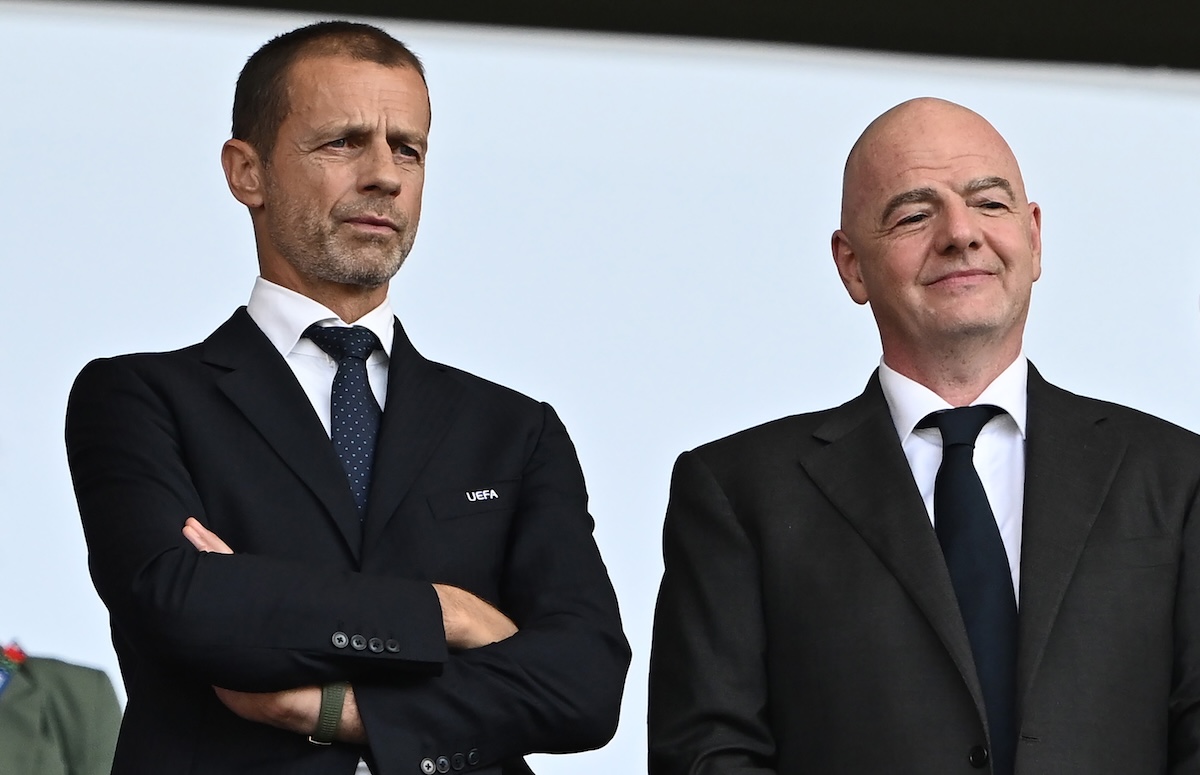
The world football governing body FIFA and the European football governing body UEFA have, as is well known, not been seeing eye to eye for some time, even though their acronyms are derived from French names (Fédération Internationale de Football Association and Union des Associations Européennes de Football, respectively), UEFA was only allowed to be established in Basel in 1954 with the approval of FIFA, which had already been founded in 1904, both organizations have their headquarters in Switzerland (Zurich and Nyon, respectively), and they are, of course, also closely linked institutionally through their core business.
The latest bone of contention was FIFA President Gianni Infantino’s plans to increase the involvement of private investors. However, in the face of strong opposition, the plans were withdrawn just a few days after their launch. Nevertheless, calls for the FIFA President to resign have not died down, as demonstrated by the «open letter to the football family» published on Monday..
UEFA is led by Slovenian Aleksander Čeferin, a name that is considerably less well known than that of his counterpart from Valais.
Ensuring liquidity is the priority
By its very nature, however, finews is less interested in the undoubtedly fascinating history of the football associations and the occasionally colourful characters among their leaders than in the figures and facts in the field of finance. At the beginning of August it took a close look at FIFA's accounts and discovered financial investments and liquidity of almost 7 billion dollars. Bonds are the main focus of the investment strategy, and FIFA places a high value on remaining liquid at all times.