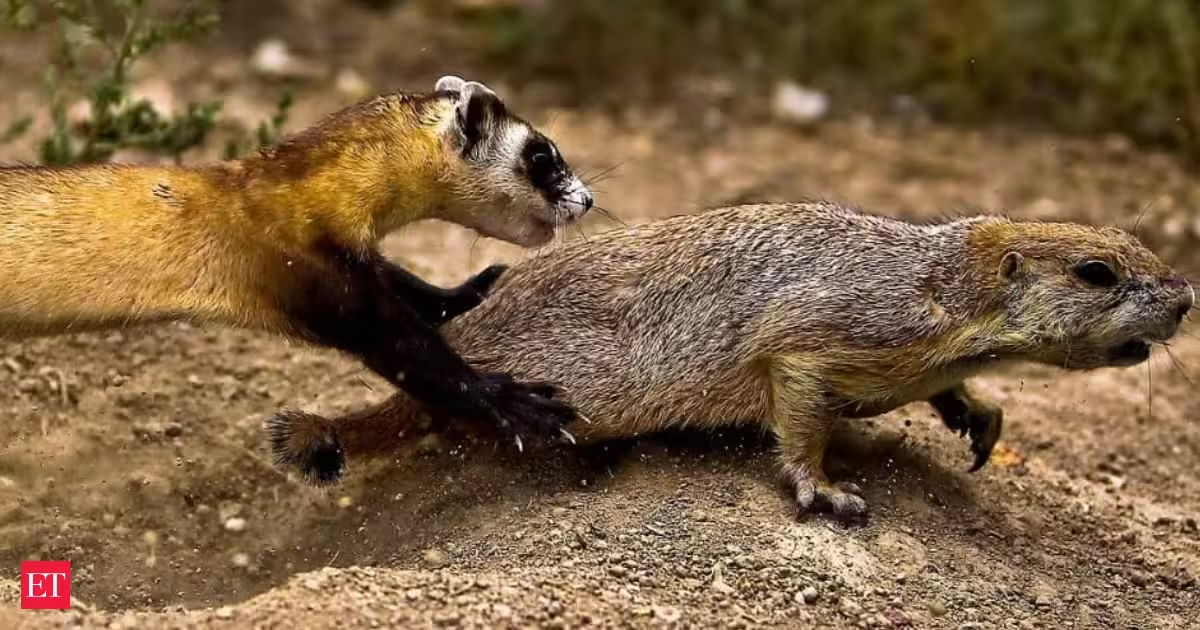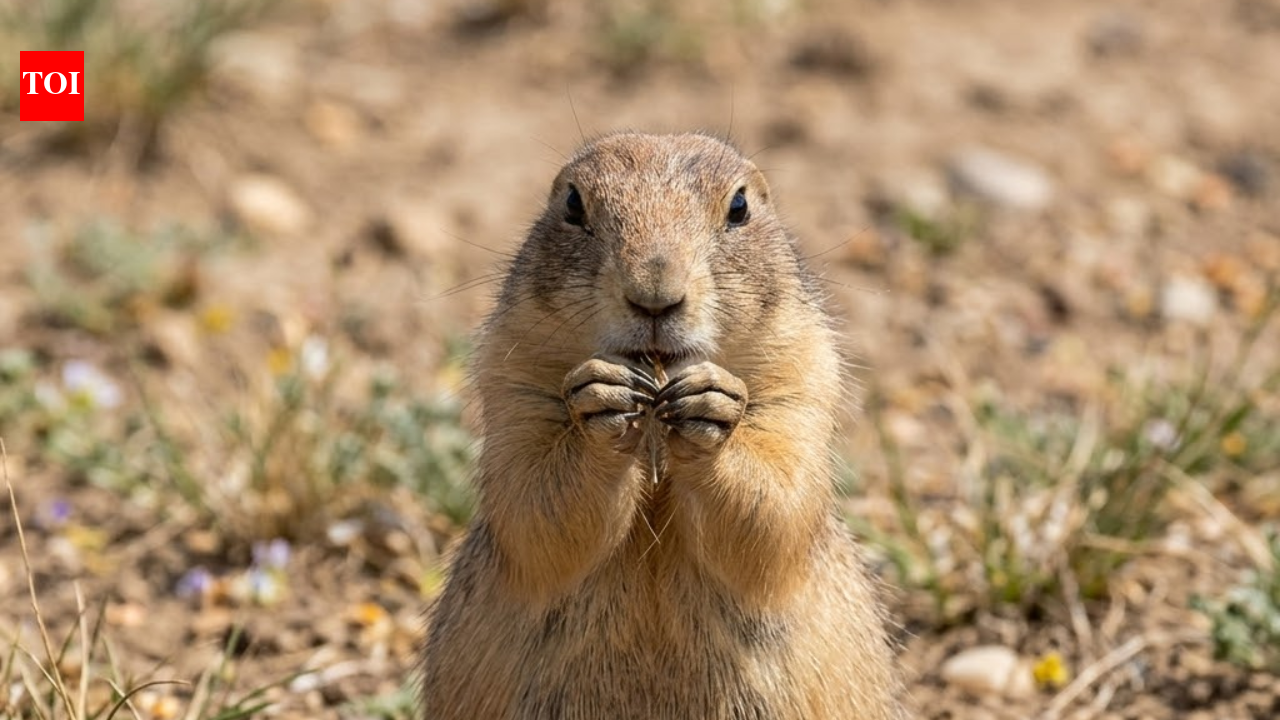
For generations, prairie dogs were often treated as a problem rather than an ecological asset.
Their burrows were blamed for competing with livestock, while their colonies were targeted through shooting and poisoning across large parts of their former range.But removing them had consequences far larger than the disappearance of one small mammal.
Scientists studying black-tailed prairie dogs found that the animals were quietly reshaping the grasslands around them.
Their burrowing loosened soil, improved water infiltration and redistributed nutrients, while their grazing helped maintain open grassland instead of allowing woody shrubs to take over.A study led by Lourdes Martínez-Estévez, Patricia Balvanera, Jesús Pacheco and Gerardo Ceballos, published in PLOS ONE under the title ‘Prairie Dog Decline Reduces the Supply of Ecosystem Services and Leads to Desertification of Semiarid Grasslands,’ found that grasslands containing prairie dog colonies provided greater levels of several ecosystem services than areas where the animals had disappeared.
These included groundwater recharge, soil-erosion regulation, soil productive potential, soil carbon storage and forage availability.