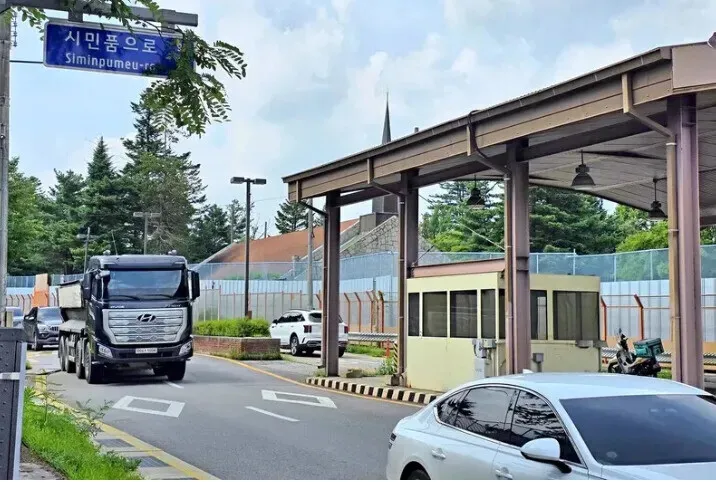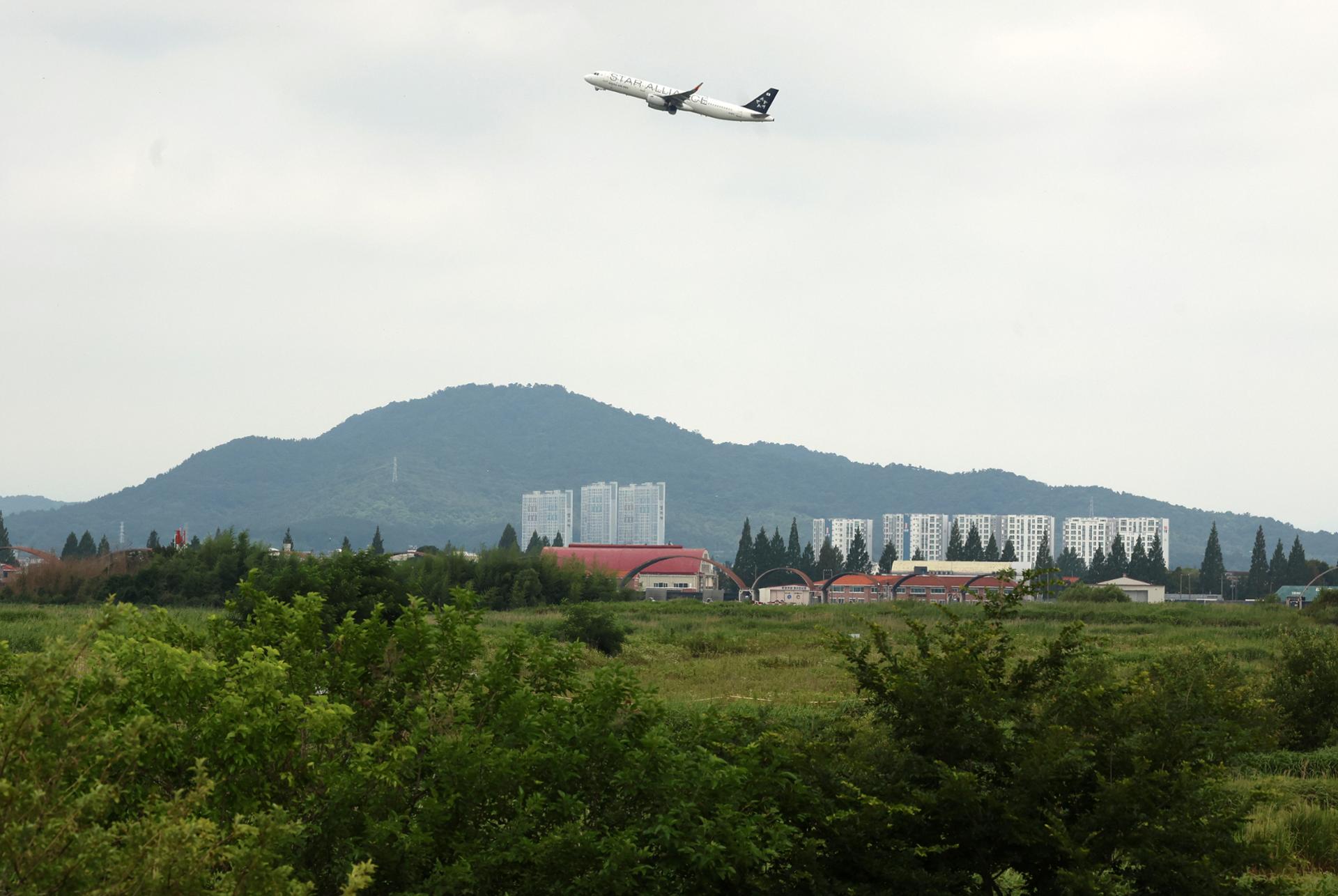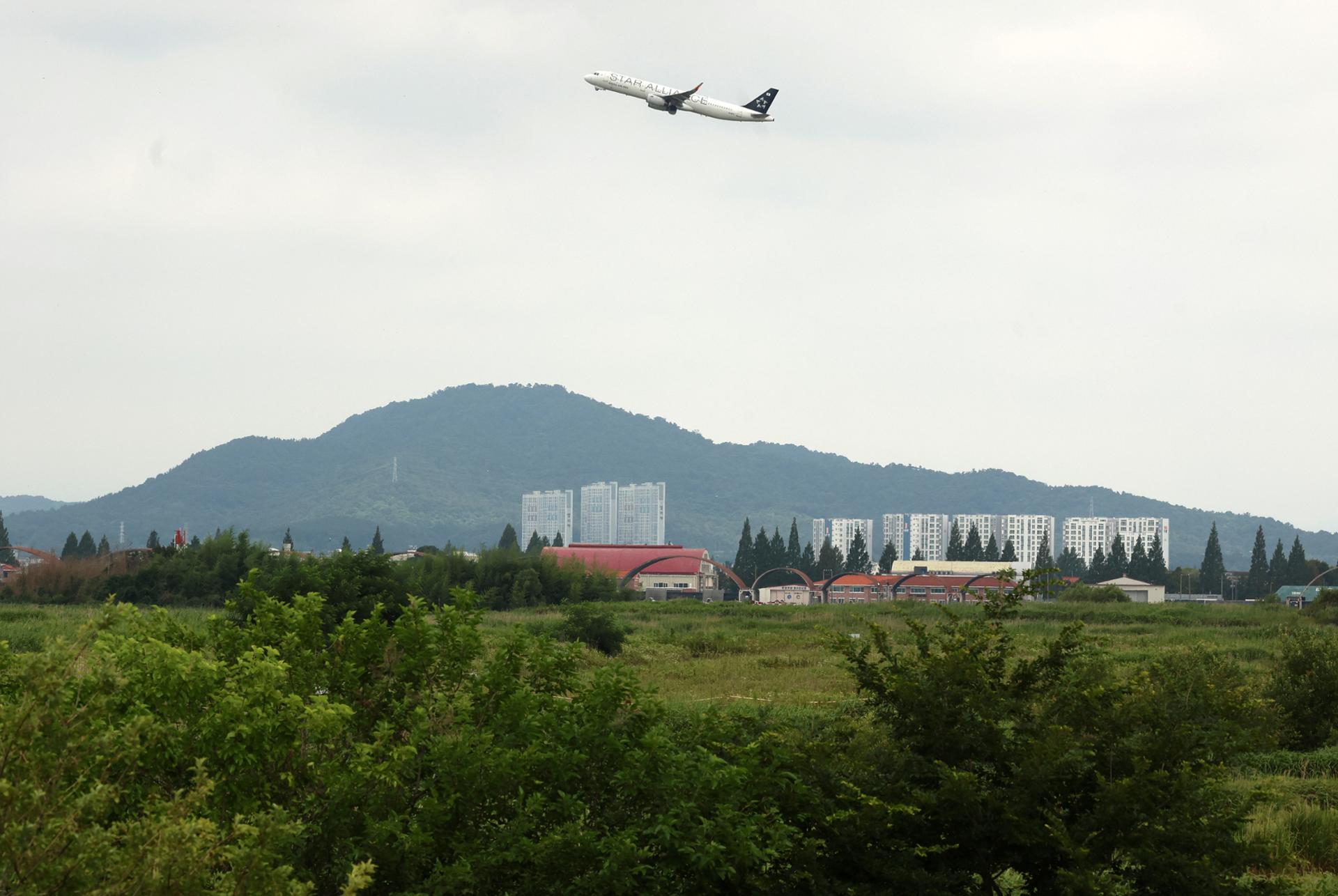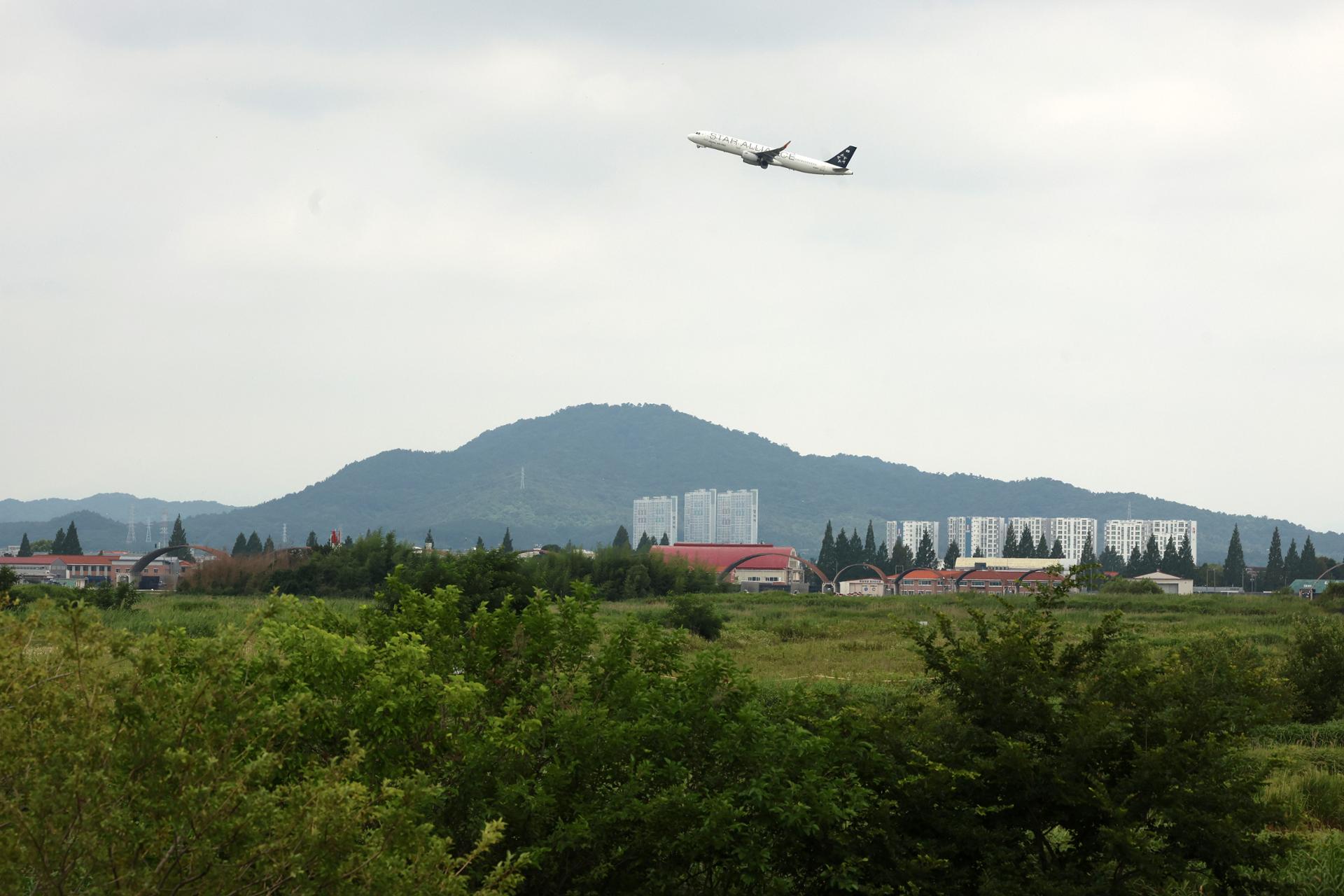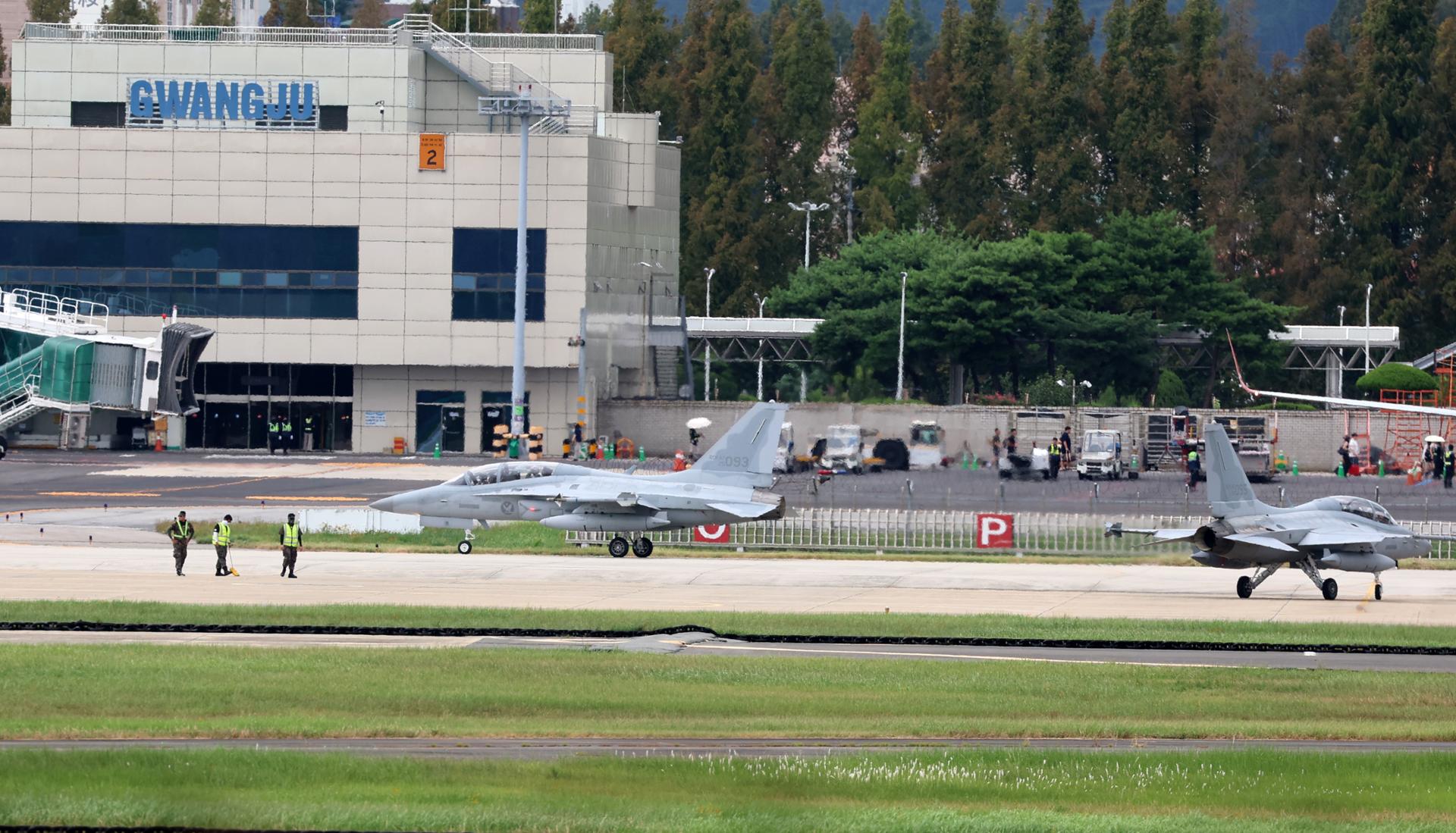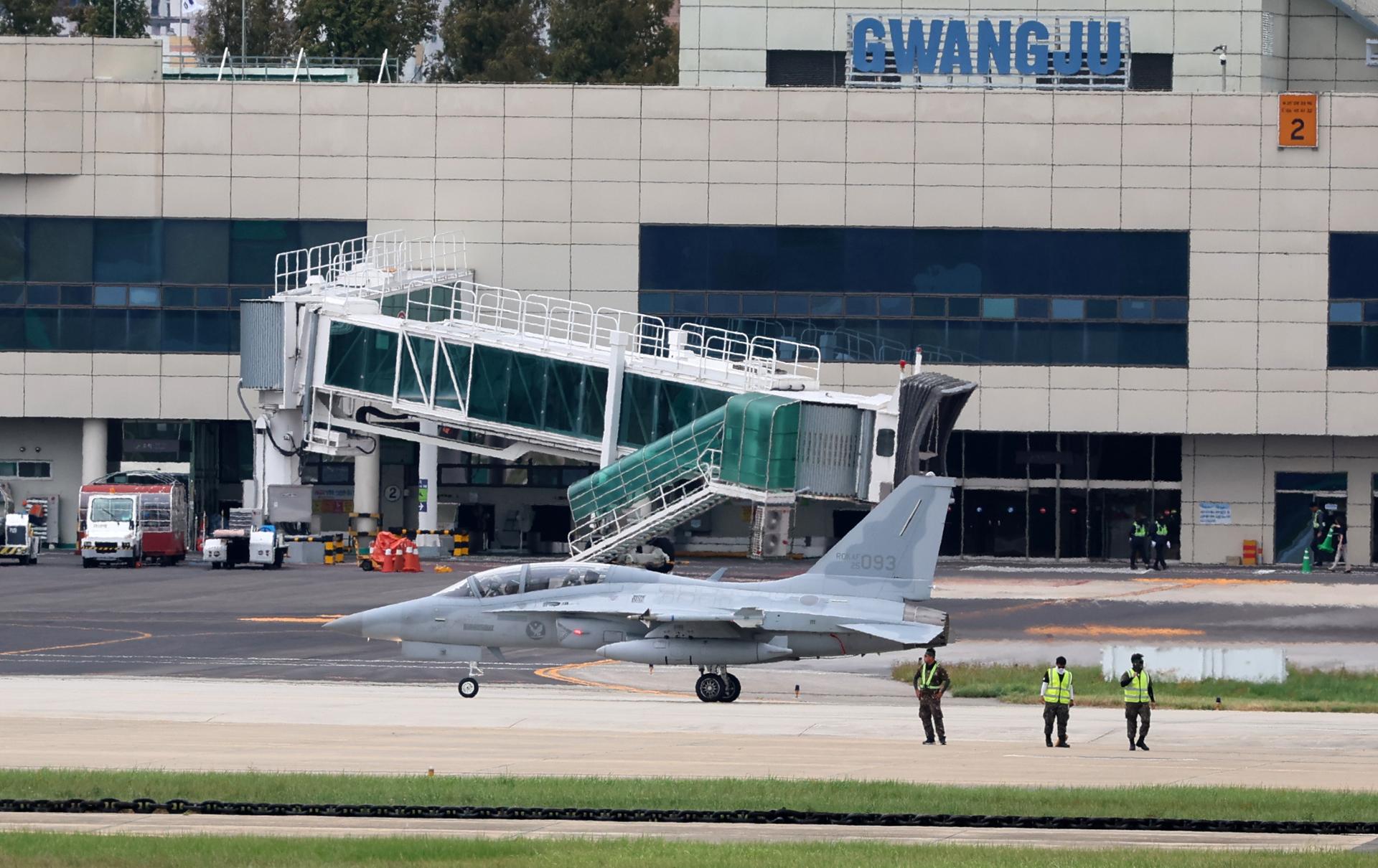
A fighter jet prepares for takeoff at Gwangju Air Base, also known as Gwangju Airport, in southwestern city of Gwangju, Monday. Yonhap
South Korea's plan to convert Gwangju Air Base into a semiconductor cluster by mid-2028 is drawing criticism from defense experts who say President Lee Jae Myung's unilateral announcement of a hard deadline may have undermined Seoul's negotiating position with Washington before talks have even concluded.
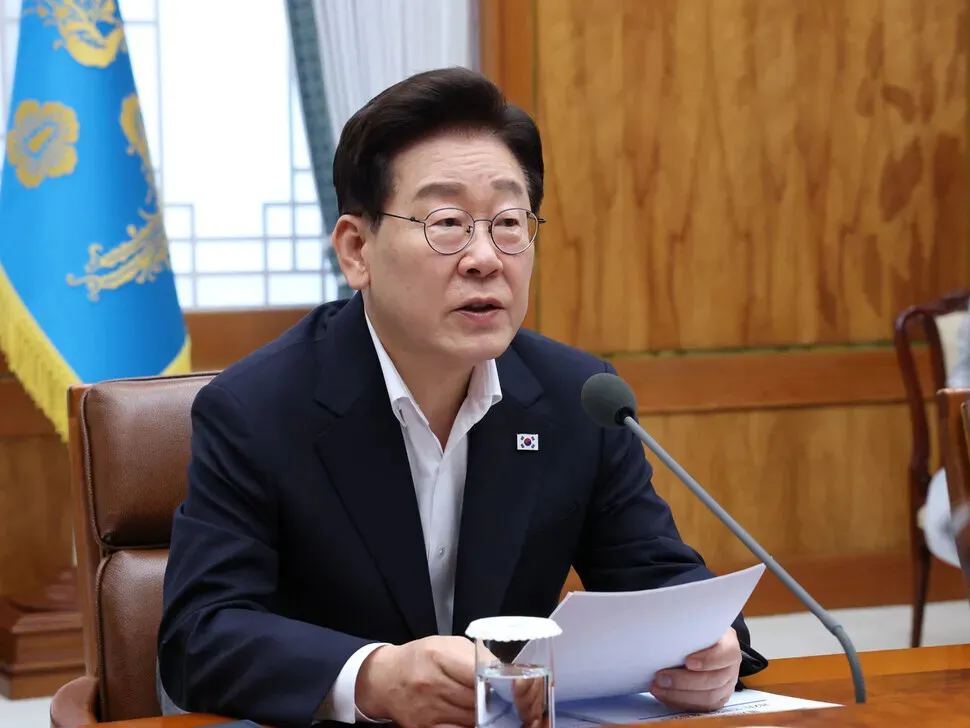
During a checkup meeting on progress of the so-called megaproject — a large-scale new chip hub planned for southwestern Korea — Lee said Monday that Gwangju Air Base, a dual-use facility also known as Gwangju Airport, would be relocated by mid-2028 to make way for the new industrial complex.
The Ministry of National Defense followed Tuesday with a statement saying it would cooperate with the plan while minimizing any impact on national security and defense readiness. "The ministry will actively review and advance a plan to temporarily relocate Gwangju Air Base's operations to another military airfield by mid-2028," it said, adding that it would coordinate with the U.S. side for the return of land currently granted to American forces.
The base is currently jointly operated by Seoul and Washington as a collocated operating base under Article IV of the Mutual Defense Treaty, which grants U.S. forces free use of designated facilities and areas in South Korea. Though no U.S. combat units are permanently based there during peacetime, the facility is designated as a critical contingency entry point for American air assets in the event of conflict on the peninsula. A small number of U.S. personnel are stationed on-site to support logistics functions, alongside limited facilities used for that purpose.