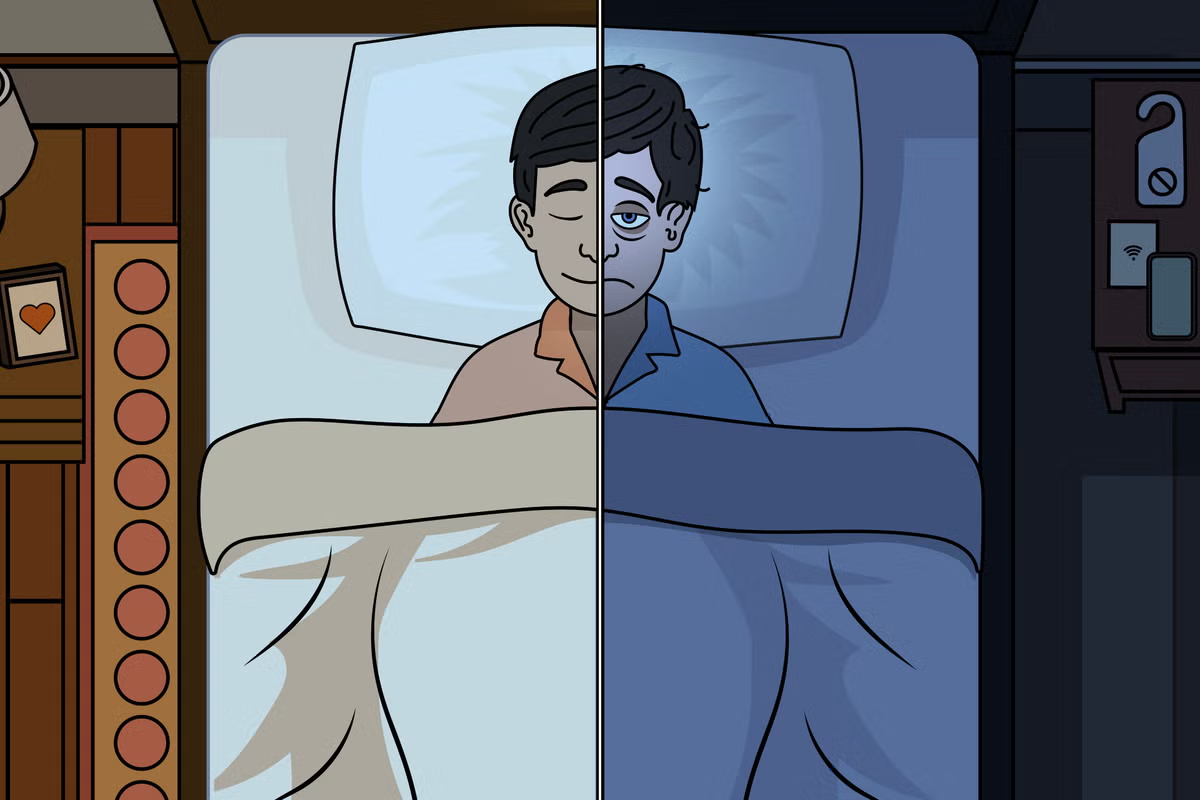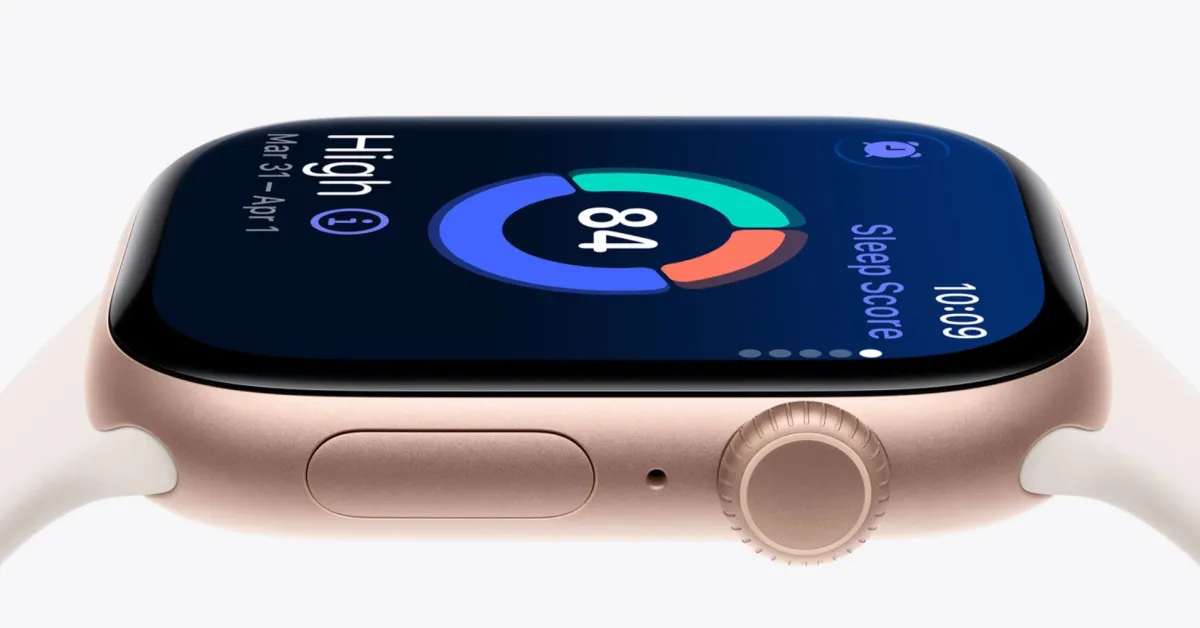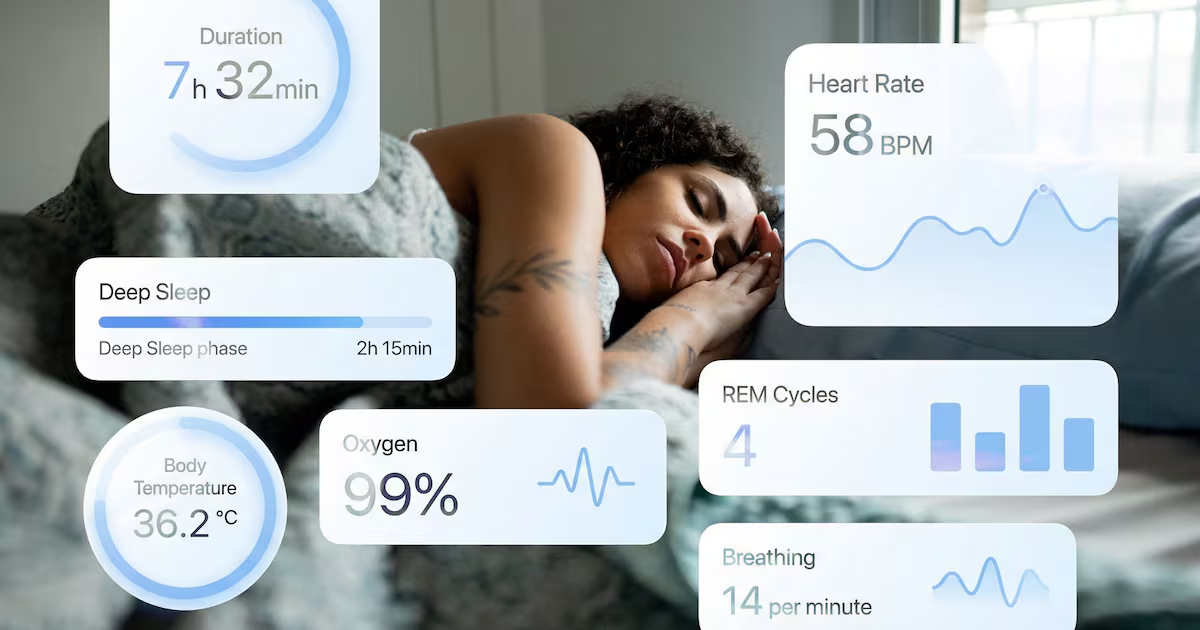
Falling asleep and waking up eight hours later – give or take an hour and an odd visit to the bathroom – used to be the gauge of a pretty good night’s sleep for an adult.That was before “smart” wearables came into the lives of an estimated one in two people in Ireland. Most of these devices claim to measure time spent not only asleep, but in the different stages of “deep”, “light”, “REM” and awake.For those consulting their smart watch or ring for a daily “sleep score”, the question of insomnia becomes more complicated. Worrying about not being asleep may not be the only thing keeping them awake at night.What if sleep comes but not the right kind, in the right quantities, for good health?“You slept long enough but not well enough,” the app for my own device frequently admonishes in its commentary on a numerical sleep score for the night before. Even knowing that such readings are extremely unreliable does not entirely banish a concern that the “smart” watch might be on to something.There is increasing emphasis on quality sleep being a core pillar of good health. That means a sleep cycle, consisting of four stages and typically lasting 80-100 minutes, is repeated four to six times a night to restore body and mind.How useful is wearable technology for tracking sleep?Dr Cailbhe Doherty. Photograph Nick Bradshaw/The Irish Times They are moderately good at measuring total sleep time, says Cailbhe Doherty, researcher and assistant professor at UCD’s school of public health, “but I don’t mean clinically useful”.However, for different stages of sleep, wearables rely on proxies for the biological signals that would be measured in a lab with sensors and video. The calculations are based on the proxy of heart rate and heart rate variability, as measured by the lights on the back of the wearable, he says. Its sensors for wrist movement equate that with the movement of the whole body. “I would go as far as to say they’re bad at measuring the different sleep stages.”That’s not to say the sleep tracking feature is completely useless. “You can measure someone’s sleep time, and you can look at trends over time.”The figures may not be accurate but the “consistently, moderately inaccurate” information can be worth monitoring.“You might not actually be sleeping, let’s say, seven hours, every single night, but if you’re measuring trends over months, years, you might be able to spot deviations. It’s not the specific number that’s of value; it’s the change.” But the algorithms are improving all the time, says Doherty.With millions of people now using wearables, there is a market for improved accuracy. For example, the Oura ring has a reputation for being good at sleep tracking “and it is definitely much better than it was five years ago”.As one Australian study of six wearable devices puts it: “We could consider that the whole world is becoming a sleep laboratory.”Doherty says while he personally has a problem with a “sleep score”, he believes the widespread uptake of wearable devices is positive for increasing health literacy. For all its limitations, their sleep tracking raises awareness, he says, of good sleep hygiene practices. However, it is not going to do much to advance the science of sleep. How do sleep scientists measure it?“Polysomnography is the gold standard,” says behavioural neuroscientist Prof Andrew Coogan of Maynooth University. Attaching electrodes to the skull to record brain activity is the only way to distinguish different stages of sleep. The scientists also observe eye movement, muscle tone, breathing, respiratory rate and heart rate. In scoring each sleep stage, “we’re actually drawing on very many different measures at the same time. The idea that something that you wear on your wrist could substitute for that is a bit fanciful.”He says wearables are “pretty good” at estimating total sleep time, at least for some people. Validations are usually from research on young, healthy people, so they would work less well for older people and those with illnesses, such as arthritis, which change how you move in bed.What kind of sleep is important for brain health?Research suggesting links between disrupted sleep and neurological diseases such as stroke, dementia and Parkinson’s has contributed to increased interest in sleep needs for good brain health.“In terms of what the different stages of sleep do, there is no single answer,” says Coogan. But rapid eye movement (REM) sleep, during which we dream, is probably linked to how the brain processes emotions. For example, he says, people with post-traumatic stress disorder often have severe nightmares that disturb their sleep. There is a hypothesis that sleep disturbance stops the brain from stripping the emotional component of the memory, leaving people to re-experience those emotions over and over again. “What’s really key for sleep is that we go through all the stages of sleep, in the right order, unbroken.”That seems to be more important, he says, than how much we get of the different sorts of sleep, ie three non-REM stages and one REM stage.Is remembering dreams linked to sleep quality?No, it depends when we wake. We normally don’t remember the dreams from REM sleep, Coogan says, because when we go back into non-REM sleep, we wipe the memory.“If we want to remember a dream, we have got to wake up pretty near that dream.”That often happens in the morning because REM sleep is more common in the second half of the night. To complicate matters, while we like to think about sleep as a “whole brain thing”, he says, in fact parts of the brain can be in different stages at different times. Can we take steps to improve sleep quality?The term “sleep hygiene” is about creating a clean sleep environment, says Coogan. “The bedroom should really be for sleep and sex and nothing else. We don’t want screens; we don’t want intrusions of other aspects [of life], but sometimes that’s easier said than done.”For example, somebody working from home may have a PC set up in a corner of the bedroom.“We try to create the right conditions and then hope that our bodies and brains do their business basically. This is a very complicated and evolved system. We really just want to let that take over and not try to control it but create the right environment for it just to happen.”[ How can new parents be better prepared for the impact of sleep deprivation?Opens in new window ]We do know that any substance that alters brain behaviour will affect sleep in some way. Take alcohol, which sends you to sleep but impairs the deep, restorative stage. “You may sleep eight, nine, 10 hours, but you wake up hungover. One of the reasons for the hangover is because you’ve messed with the sleep cycle.”The difference between a wearable device tracking sleep and counting steps is that the latter is pretty much in a person’s control. Sleep is very different.“We can’t just sleep more or sleep better by willing ourselves to do that. Often actually the way to sleep worse is to try to will yourself to sleep better.”So more awareness could be counterproductive?Coogan believes so, saying: “Good sleepers don’t think about their sleep a lot and bad sleepers think about their sleep too much.” Sleep consultant Lucy Wolfe sees how wearables have created a “hyperfocus” on quality of sleep, on REM sleep versus non-REM sleep, among some of her teenage clients.“Sleep is all about stress response, and once something becomes a big thing, especially in the adolescent population, of course it begins to act in the opposite way that we like it to. They’re becoming obsessed and stressed, which is then counterproductive to quality of sleep.”She too is sceptical about the devices’ efficiency and accuracy. Her advice would often be to deactivate the app that gives sleep readings, pointing out that it may be part of the problem.But, on the positive side, wearables “are putting emphasis on sleep and maybe helping people to make changes”.Why do adolescents have particular challenges?Generally, it is said adolescents need eight to 10 hours’ sleep a night, but Wolfe prefers to focus on individual needs rather than averages. She looks at aspects of regulation to support the circadian system, such as regular wake and sleep times, eating and drinking patterns, “so that you’re really running your body in sync with itself. Sleep at the right time for the body is generally indicated by a better quality of sleep.”The challenge for adolescents is, due to a hormonal shift, “they are in a late sleep phase biologically”. That is all very well during the summer holidays but when they go back to school, they have to get up early, which means they probably get less sleep. They may compensate by sleeping in at the weekend, “creating a social jet-lag dynamic”.Wolfe recommends no more than a one- to two-hour “drift” at the weekend from weekday wake times. Other common factors mitigating against adolescents’ sleep quality are energy drinks and eating too close to bedtime.Studies don’t all agree that screens, per se, have a detrimental effect on sleep. Perhaps it is what they are being used for that matters. Gamers, she says, seem to be the teenagers most vulnerable to shorter sleep duration. They find it harder to get to sleep. “I’m pretty realistic with screen use,” says Wolfe, a mother of four, “but you’re looking for more passive use as opposed to active. If you can turn them off an hour or so beforehand, brilliant. But what parents will often report is that trying to stop the screens is rubbishing the relationship and then we’re in a vicious cycle.” When do sleep difficulties become a disorder?Sleep disorders are common, and sleep hygiene will not solve them, says Coogan. “You won’t sleep hack your way out of a sleep disorder.” About 10 per cent of people have an insomnia disorder. “How we define that is that you’re having problems falling asleep, and/or staying asleep and/or having unrefreshing sleep, so waking up groggy the next morning. And that happens most days a week for at least a month because it’s perfectly normal for all of us to experience that one night every so often.”It’s also when there isn’t another explanation for the sleep disturbance. “If you’ve got a small baby in the house or something, it’s completely normal.”Sleep apnoea is also common, with maybe one in five people having some form of the condition, which he believes often goes undiagnosed. “It’s hard to estimate accurately because to diagnose it you need an in-clinic sleep study.” Clinics are probably seeing only the most severe cases.This disorder is suspected if a sleep partner reports excessive snoring and observes stop-start breathing many times over a night. For those who sleep alone, excessive daytime tiredness may be a sign. One of the questions used in screening is: “Do you fall asleep when you’re driving, and you’re stopped at traffic lights? “What is the best way to judge sleep quality?“The thing that’s most important is your subjective experience,” says Coogan, “because it’s how you feel. It’s telling us something that we can’t measure with electrodes or other stuff.”So if you wake up refreshed, don’t let a “smart” watch tell you otherwise?“Exactly. We don’t want to make a problem when there isn’t a problem,” he says. Even if these devices were good at delineating the sleep stages, what would you do with that information?It is not like anybody can control how long they spend in one phase and not another.“I honestly assume, slightly cynically, that the tech companies want to create a problem that they can then market a solution to,” he says. “But the problem is they haven’t figured out what that solution is.”
What is quality sleep? Don’t ask your ‘smart’ watch
With millions of people now using wearables, there is a market for improved accuracy
1,951 words~9 min read