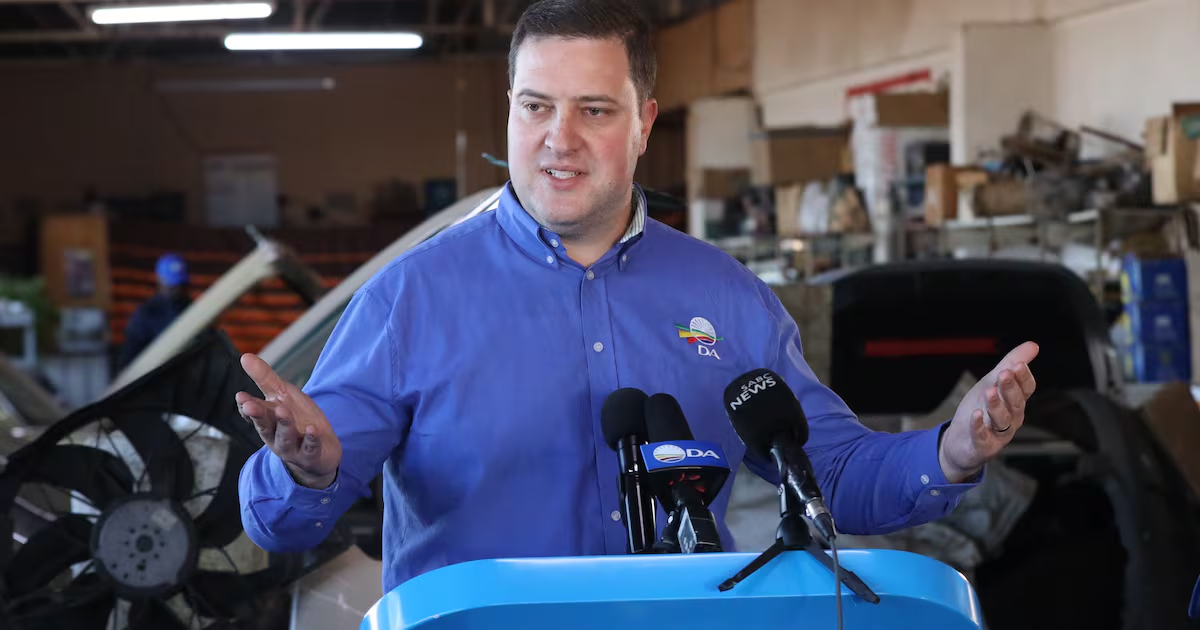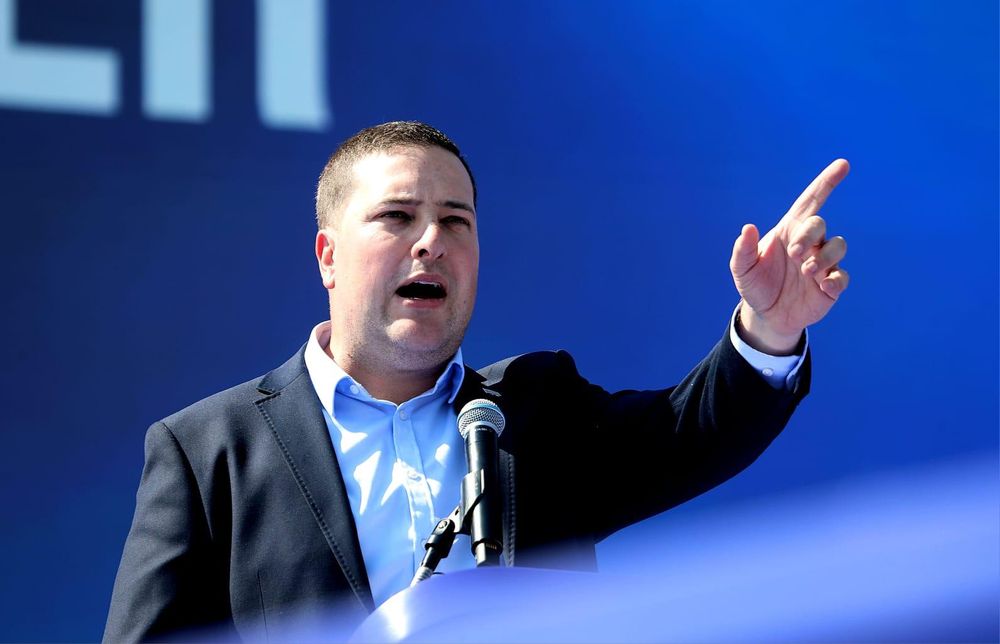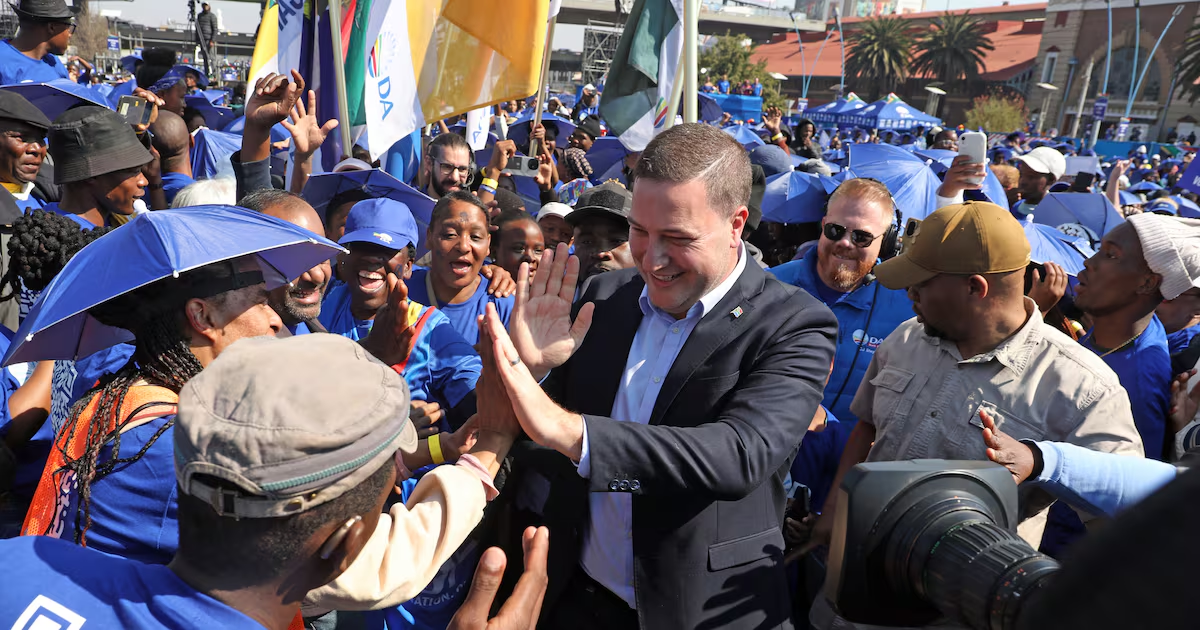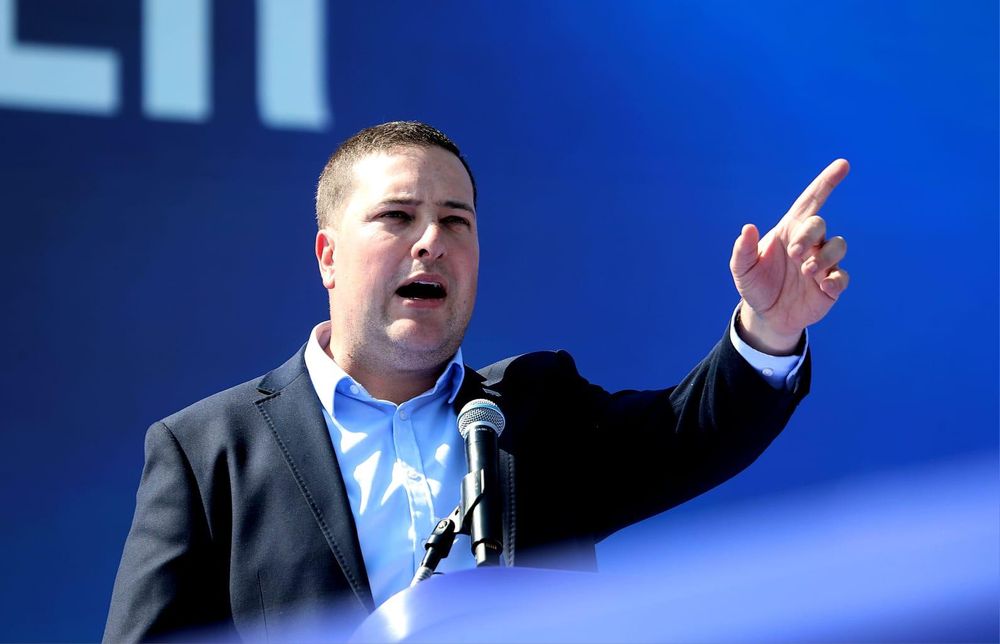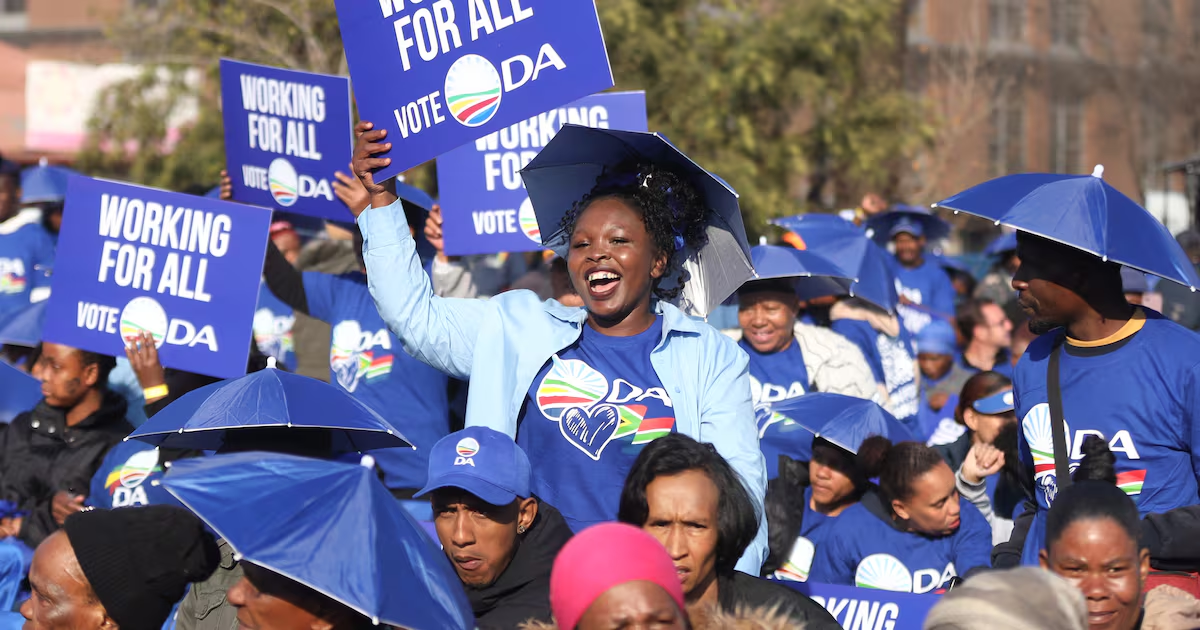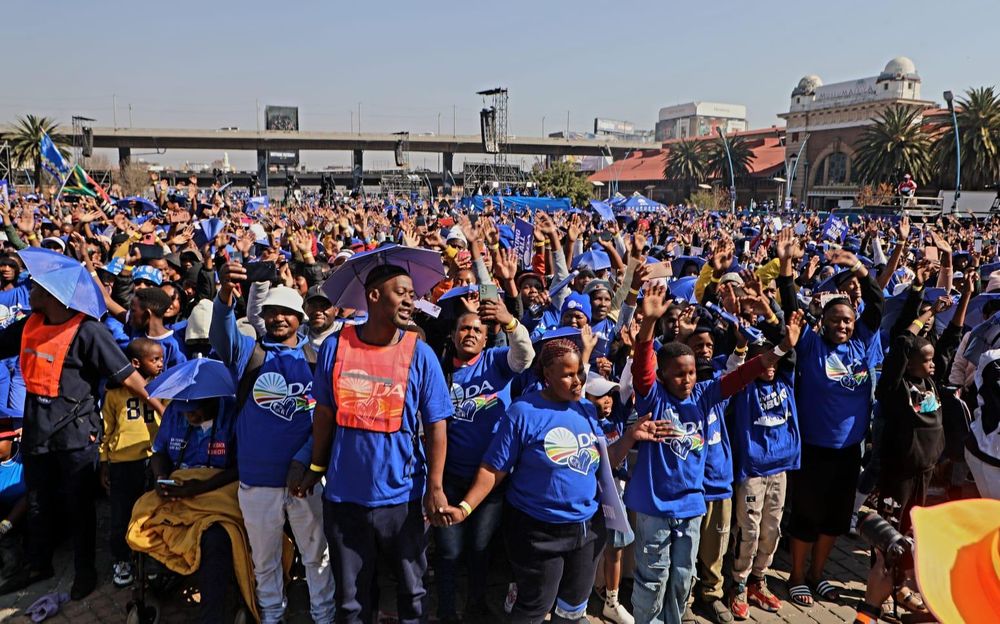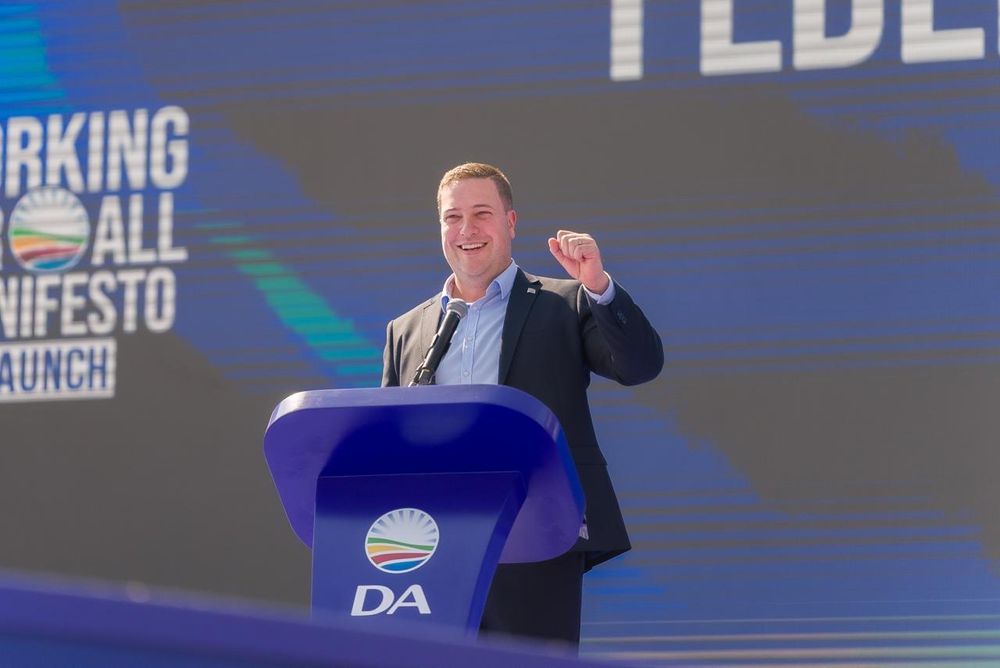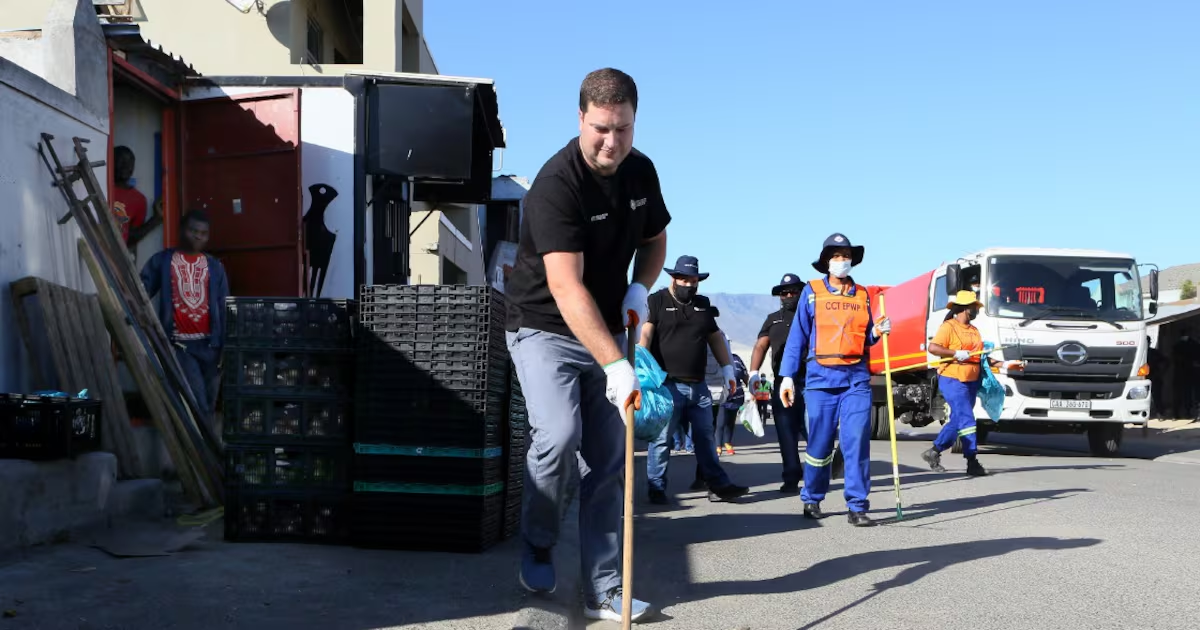
These past two months in Bonteheuwel and Gugulethu I handed residents the title deed to their homes. Nothing about that moment was complicated. A piece of paper that should have been hers years earlier finally was. She could now borrow against her house, improve it, sell it, or leave it to her children. A small piece of paper, and an enormous change to a family’s fortunes. That is what local government actually is. Not an abstraction or a line item. Local government is the layer of the state that touches people’s lives every single day. It is the water tap, the streetlight, the refuse truck, the clinic queue, the building plan, the title deed. When local government works, people can get on with their lives. When it fails, everything else our country is trying to do fails with it. This weekend the DA launched its local government manifesto for the November 4 elections. Our promise is deliberately unglamorous: we will get your municipality working. In 2023/24 just 41 of South Africa’s 257 municipalities achieved a clean audit. Eighty-four percent could not meet the basic standard of accounting properly for public money. Between 2021/22 and 2023/24 municipalities burnt more than R17bn in fruitless and wasteful expenditure — money that should have gone to replacing pipes, maintaining substations and fixing roads. Households and businesses now owe municipalities R427.7bn, of which about 88% is realistically uncollectible. But the figure that should trouble us most is this one. The National Treasury funds more than 10-million indigent households to receive free basic water and electricity. Fewer than a quarter of them actually get it. The money is appropriated, and these people are entitled to it, but their municipality simply fails to deliver it. The poorest South Africans are being failed not by a shortage of funds but by a shortage of competence. Moreover, where the municipality fails, business pays twice — once in rates and again for the borehole, the generator, the private security contract, the water tanker, the fleet damage from unrepaired roads. Every one of those is capital diverted from expansion and job creation to substituting for a state that has stopped functioning. There is no national growth strategy that survives a decade of municipal collapse. You cannot build a competitive economy on top of broken local governments. None of this is normal, and none of it is inevitable. It must never be accepted as the future of South Africa. At the heart of municipal failure lies the ANC’s cadre deployment scheme. When politically connected people are handed multibillion-rand budgets and critical infrastructure they are not qualified to manage, institutional memory dies, engineers leave, maintenance stops, audit findings are ignored and nobody is ever held responsible. The result is a culture in which loyalty is rewarded and failure carries no consequence. So the first commitment in our manifesto is to end cadre deployment in local government, like the DA has done where it already governs locally. Appointments on merit, with real qualification criteria. Fully functioning public accounts and audit committees staffed by people who can actually read a budget. Consequences for corruption and nonperformance — including accounting officers personally repaying losses they cause. Nothing is more anti-poor than allowing a municipal service to collapse.Nothing is more anti-poor than allowing a municipal service to collapse. When payment becomes optional, revenue disappears, maintenance stops and the first people to lose water and electricity are those who cannot afford a private alternative. The DA will not allow this to happen. The second reform the DA will implement is ringfencing. When you pay your water bill you are not paying a general levy on being alive. You are paying for water. Yet in municipality after municipality the revenue collected from water and electricity sales is spent on everything except the infrastructure that produced it — until the pipes fail and the grid fails and the revenue itself collapses. The DA will maximise water and electricity revenue reinvested directly into maintaining, repairing and expanding that infrastructure — replacing ageing pipes, cutting leaks, upgrading wastewater works, maintaining grids and freeing municipalities to buy and sell their own power. Some critics will predictably describe our willingness to work with private providers as “privatisation”. They are wrong. Under our plan, municipalities will remain responsible for setting policy, determining tariffs, protecting residents and enforcing service standards. What we reject is the idea that residents must endure dry taps, broken grids and uncollected refuse simply because an incapable municipality insists on performing every task itself. The DA is relentlessly committed to outcomes that improve the lives of South Africans. Where a municipality lacks the capital, equipment or expertise to repair an electricity network, operate a water treatment plant or maintain a refuse fleet, it should be able to bring in a capable provider under a strict and transparent performance agreement. A public service does not become less public because a qualified engineer from outside the municipal payroll repairs the pump. It becomes more meaningfully public when the water starts flowing again. From there the rest follows. Safer communities, by bringing policing closer to people — we will keep fighting for capable municipalities to receive the policing powers, investigative capacity and resources to tackle crime on the ground. Cleaner towns and cities, through an adopt-a-public space programme that partners with responsible private companies to restore clinics, libraries, parks, beaches and sports fields. Can our municipalities be saved?And working local economies, by cutting red tape, letting informal traders operate legally instead of criminalising the hustle, releasing well-located land, delivering title deeds, improving public transport and equipping municipalities with investment-ready toolkits so that an investor gets a decision rather than a runaround. But can our municipalities be saved? The evidence says yes, and it is not the DA’s evidence alone. President Cyril Ramaphosa himself has acknowledged that the municipalities doing best are often DA-run ones. Municipalities in the Western Cape invest R2,860 per person in capital expenditure against R1,055 in Gauteng. In 2023 only four municipalities scored above 90% in the No Drop water report — Cape Town, Overstrand, Swartland and Midvaal, all DA-governed. Between 2014 and 2023 Cape Town led South Africa’s cities in employment growth at 20.2%. Six DA municipalities were honoured at the inaugural Sapoa/Ratings Afrika municipal performance awards, with the West Coast District recognised for 14 consecutive clean audits. I am not going to claim that every DA municipality is perfect. They are not. There are queues that are too long, potholes we have not reached, waiting lists that are too slow. What I will insist on is the standard we hold ourselves to: every DA government must be corruption-free, financially sound and able to show measurable progress that residents can see and verify. Where we fall short, hold us to it. That is the accountability we are asking voters to impose on everyone. Great countries are built from the ground up — street by street, suburb by suburb, town by town. On November 4 the choice is between more of the same decline and change that works. Because when local government works South Africa works. And South Africa can work — for everyone. • Hill-Lewis is DA federal leader and mayor of Cape Town.
GEORDIN HILL-LEWIS | Get your municipality working, and SA works
DA manifesto promises end to cadre deployment and ringfenced spending
1,203 words~5 min read