“Drinking Holland gin is like the fanciful cliché about eating olives—when you like one you always like them.”—Charles Baker Jr., A Gentleman’s Companion, 1939.
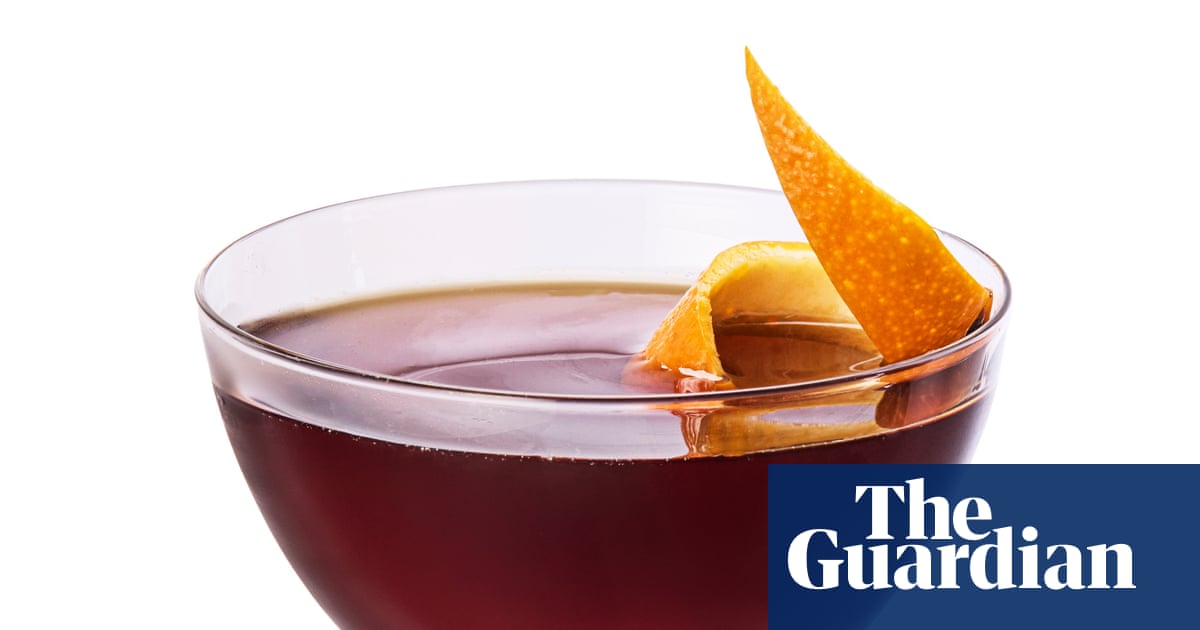
Some spirits, as you likely already know, are more challenging than others. On one end of that spectrum is vodka, which tastes like mildly electrified tap water, while on the other end you’ll find something like mezcal, which tastes like a dozen tiny fire-chimps trying to fight their way out of your mouth. So while you might be brightened to hear that the Death in the Gulfstream cocktail is made with gin (which is very much on the friendly end of that spectrum), you’d then perhaps be disappointed to discover that gin is from Holland (which is very much not).
Holland Gin is also called “genever,” and is, if you haven’t met it, weird. It’s a fat, malty, proto-gin, and dates from the 1600s or so, when the Dutch would infuse juniper berries into alcohol believing them to be medicinal, then additionally infuse other spices for more medicine or better taste or both (the word “gin” comes from “genever,” which literally means “juniper”). It’s the kind of spirit we had before the clean purity of modern gins was technologically possible, and so has much more in common with a botanical white whiskey than any modern gin anyone’s ever had. As for the experience of it—it can be polarizing. Charles Baker Jr., in addition to the above line about Holland gin being an acquired taste, makes a point to mention that “for many years [I] hated the stuff with a passion, holding its taste to be like fermented radishes mixed with spirits of turpentine.”