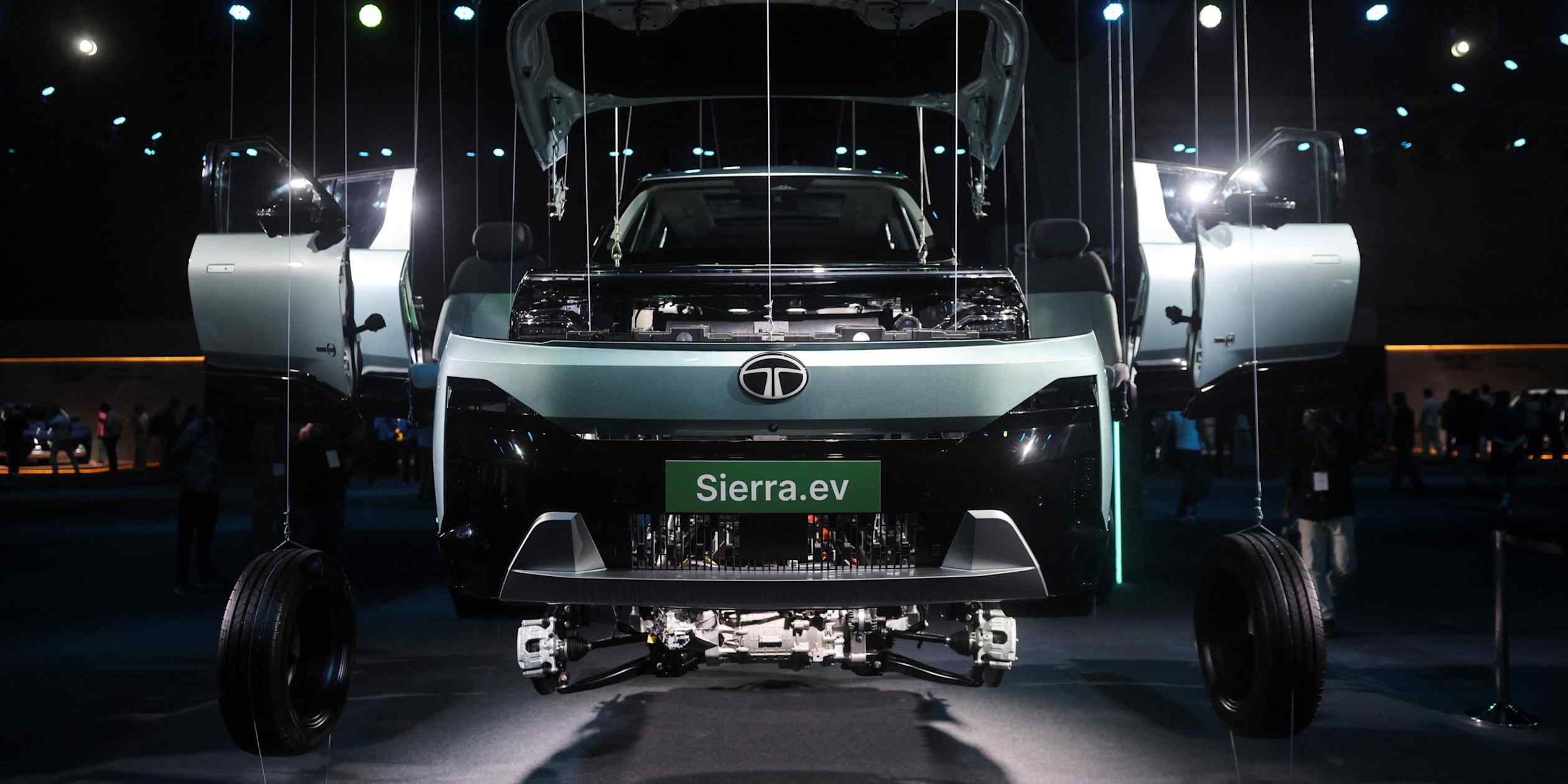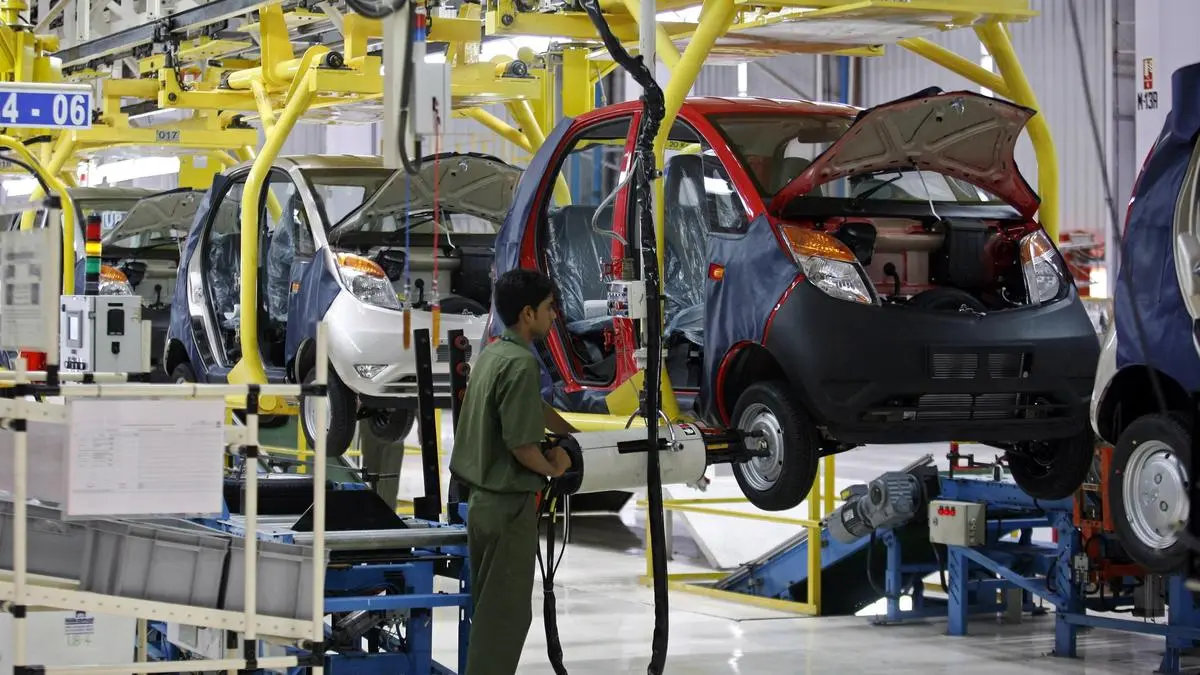
Tata’s Nano car was a prime example of India’s expertise in ‘frugal’ engineering
| Photo Credit:
Two decades ago, on one of my early visits to Japan, I was invited by the then Chairman of Nissan to visit one of their auto plants. The chauffeur drove me from my hotel, and after almost an hour on the highway, exited into what looked like a residential locality. Just as I started to worry that he had lost his way, he turned a corner and, lo and behold, hemmed inside the residential zone was an auto manufacturing plant.The plant was renowned for making a wide variety of vehicles — small cars, pickup trucks, vans and light commercial vehicles, many requiring dedicated lines. Yet, this plant occupied an area that was about one-fourth of a comparable global auto plant. Japanese engineers, growing up in an environment where land use was tightly constrained, had been infused with an innate orientation for space efficiency.Japan’s vaunted lean manufacturing culture and processes were honed over generations and had spawned the practices such as kaizen, just-in-time, kanban etc. Muda, symbolising waste of space or movement was culturally shunned. This upbringing brought forth business practices that were intrinsically lean and efficient of space, effort and capital. Since the 1980s, global manufacturing leaders would make periodic pilgrimages to Japan to understand and adopt these codified efficiency methods.This was a visible manifestation of how environment bred a culture of efficiency.Advantage IndiaAs we in India, eagerly make one more valiant attempt to significantly raise the share of our country’s manufacturing sector in the nation’s GDP, there is much to learn from Japan’s journey. As we assess our manufacturing competitiveness against the EU, Japan or China, a common hurdle is the relatively harder access to low-cost capital and, simultaneously, brutally stringent pricing to suit the purses of Indian customers. Indian industry and Indian consumers are immersed in an environment that demands that every rupee of capital employed and every paisa imbedded in product cost is squeezed to deliver more.During the conceptualisation and development of the Tata Nano, this was a lesson that was made evident to the company with every decision that needed to be taken. Many global industry pundits awoke to the realisation of the challenge involved and its likely implications. Carlos Ghosn, then Chairman of Renault-Nissan was a fan of Indian engineering prowess and popularised the phrase, frugal engineering.The sincerity of his flattery became evident when he assigned the development of that global alliance’s next small car platform to India and to Indian engineers. Likewise, German component industry leaders committed their organisations to become a part of that project to sharpen their cost-efficiency skills and acquire this competitive advantage. They saw more method to this than the regrettable characterisation of such cost driven innovation as jugaad — these global leaders saw the intrinsic drive of Indian businesses to get more value out of every dollar expended. This healthy obsession with capital efficiency and cost-innovation has the potential of becoming a platform for competitive advantage for India, just as lean manufacturing became an exploitable platform for Japan.Many examples of the outcomes of such Indian prowess tumbled out of other sectors as well. ISRO’s satellite launch platforms and their Mangalyaan Mars mission gained similar kudos for accomplishing commendable success on a shoe-string budget. India’s pharmaceutical industry likewise has showcased its ability both in capital efficiency and turning out affordable products that set new global benchmarks. It is important to realise that the path to capital efficient businesses that turn out affordable products does not emerge from avoiding technology but rather from intelligent adoption of technology, and pragmatic specification of product performance and requirements.EV experienceSadly. the trajectory taken by current global electric vehicle (EV) evolution seems to have focussed on vowing customers with flamboyant performance, ostensibly defeating the primary objective of the migration to EVs — a more sustainable mode of transportation. So, 300 horsepower motors, blindingly fast acceleration (self-proclaimed by one manufacturer as “ludicrous”), and large batteries to travel over 500 km were a part of the specifications of a large number of the pioneering EVs on offer. There was disregard of appropriate concern of the “true” cost of carrying almost 100 kWh of battery energy, itself often weighing over 500 kg, in a vehicle topping 2 tonnes, just to deliver a human occupant weighing a median 60 kg to the neighbouring supermarket or the 15-km commute to work. Such specifications scoff at considerations of sustainability or affordability, even if one cannot deny that they can turn some businesses into darlings of stock markets.It was therefore with considerable satisfaction that one noted the recent publication by the respected ICCT (International Council on Clean Transportation) of the average energy consumption of pure EVs, after an assessment of automakers from across the globe. The graph depicts the “the average energy consumption of EVs after the adjustment by vehicle’s weight and the score for this metric, by manufacturer”.While allowance must be made for the fact that the product portfolio of different manufacturers will vary depending on the markets they cater to, it is encouraging, in a technologically competitive industry, to see Indian manufacturers take the top two global spots. There is no intent to present this as a result of superior technology. Rather, this is the result of sensible and pragmatic specification of products keeping in mind the affordability for customers and capital-efficiency for the automaker. What is left unsaid in the graph is result of what product development engineers call the “virtuous spiral”. Modest specifications lead to lower weight, thereby improved efficiency and to reduced cost.As a result, Indian manufacturers like Tata are able to offer pure EV cars starting from a price of below ₹6 lakh (excluding an affordable battery subscription) — a mouth-watering price in any global market. Looking beyond, India has a fast-growing fleet of EV 2-wheelers and 3-wheelers and buses which also offer similarly frugal and efficient solutions that are better suited to sustainability goals that the bloated over-specified products of many global manufacturers.Ancient traditions, not only from Hinduism but from other religions and cultures as well, made a virtue of frugality and advocated limiting one’s environmental footprint to a minimum. In a world that needs to urgently realise that there are finite limits to resources, will this theme that is so native to Indian businesses provide lessons to global business, just as Japan’s space-efficiency obsessed society provided global lessons in sustaining lean enterprise? One certainly hopes so.The writer is Designated Partner, Celeris TechnologiesPublished on August 11, 2026