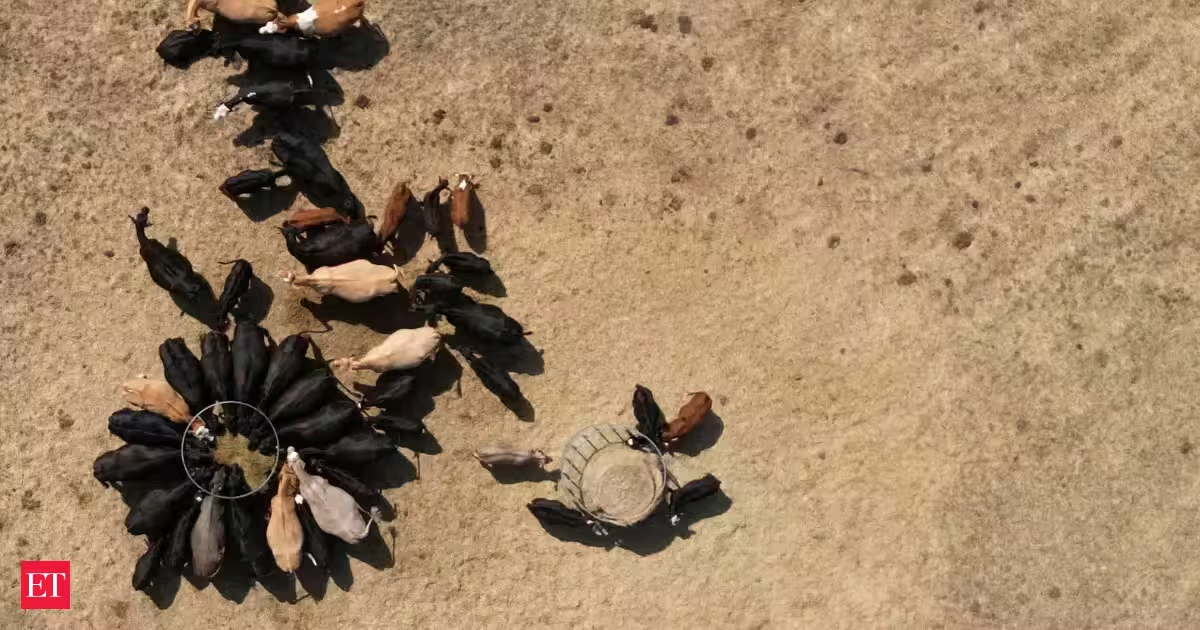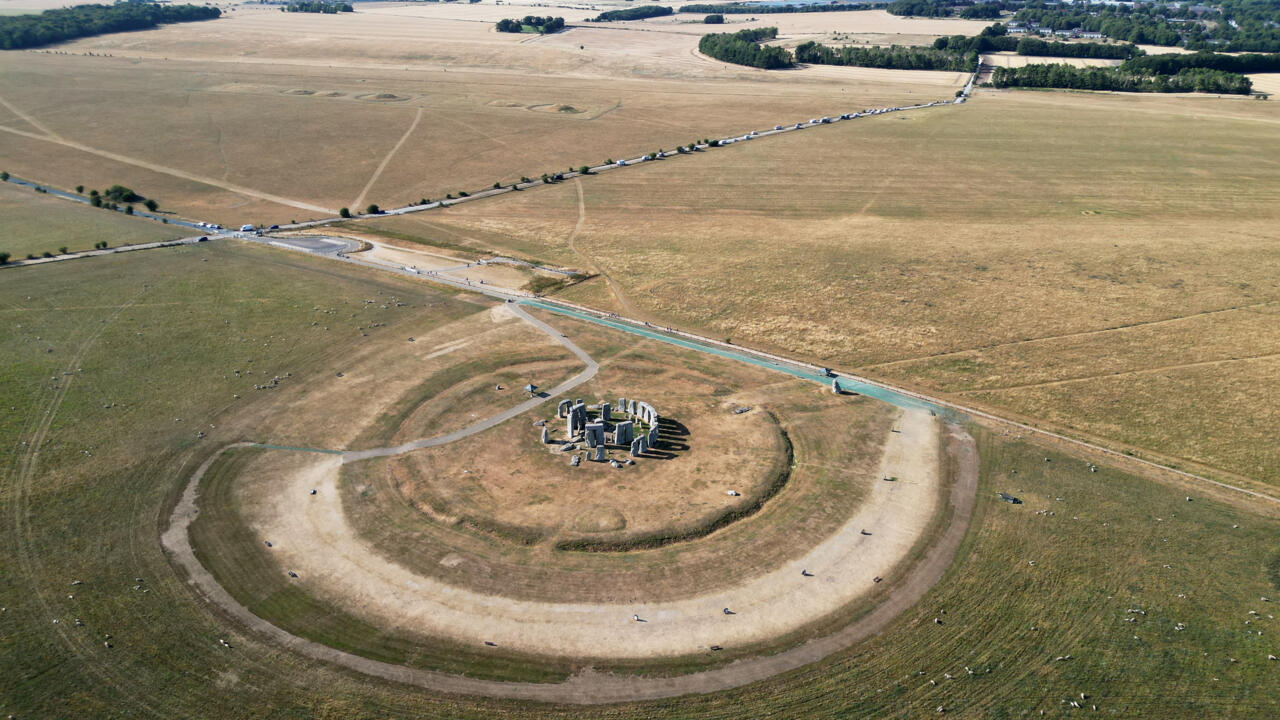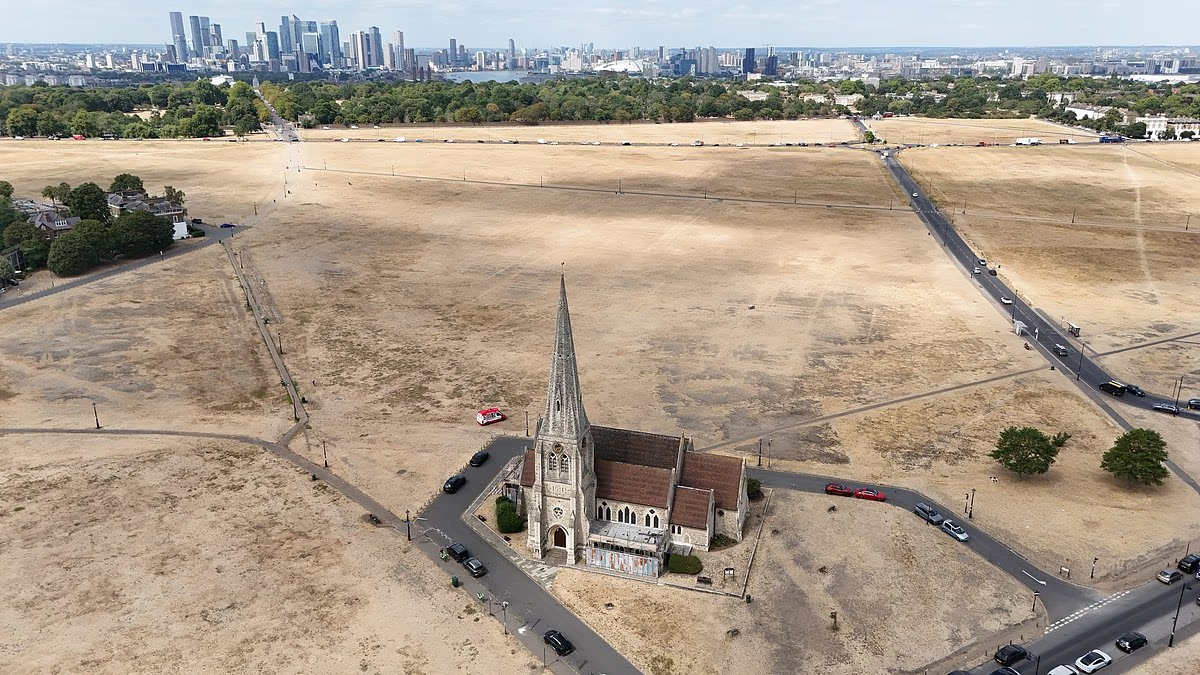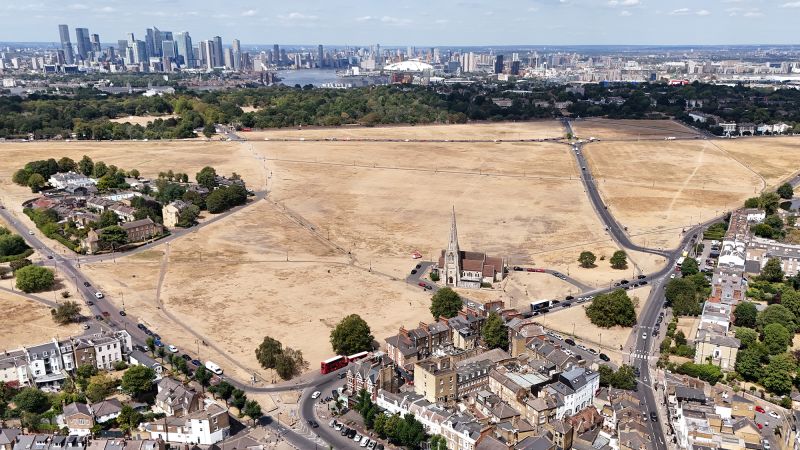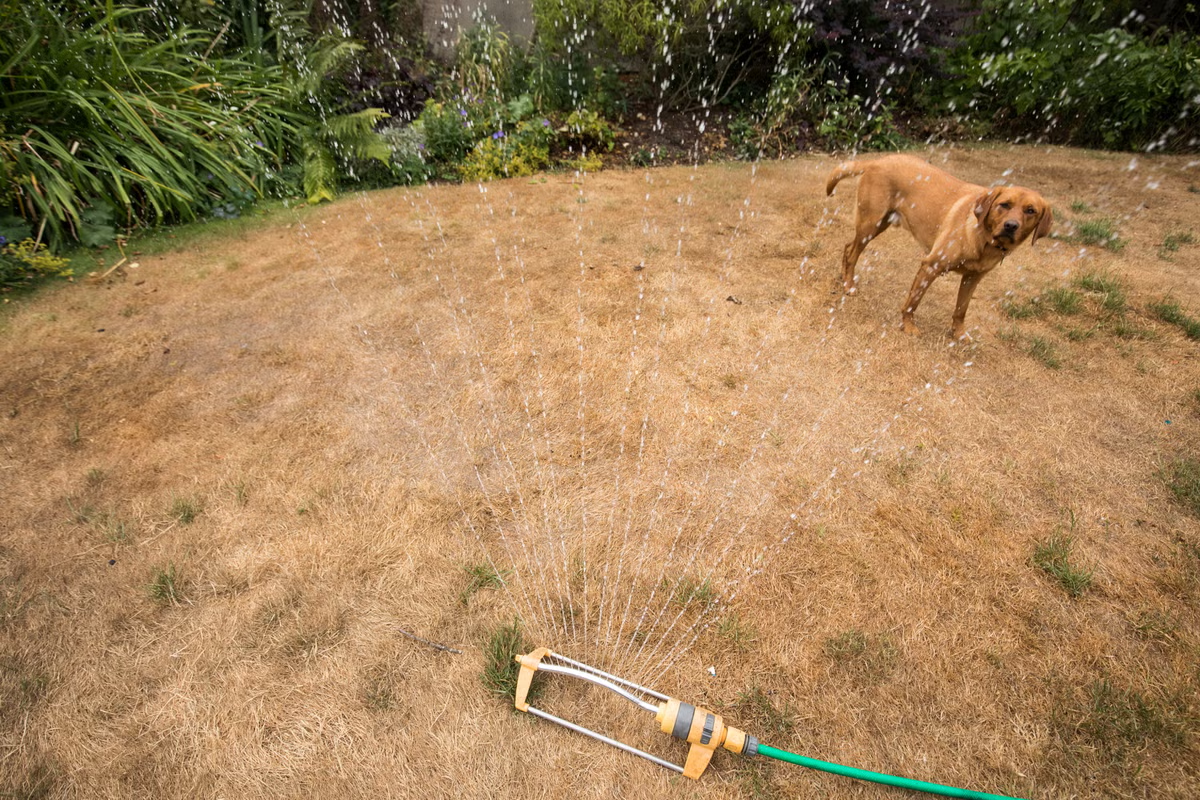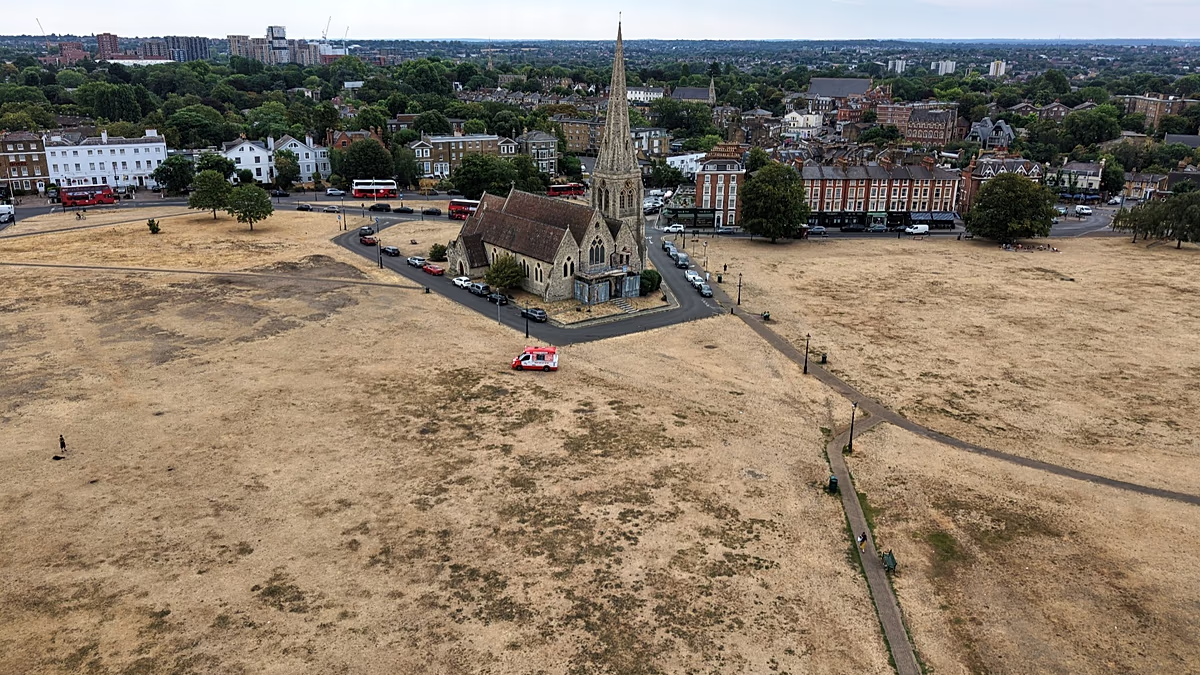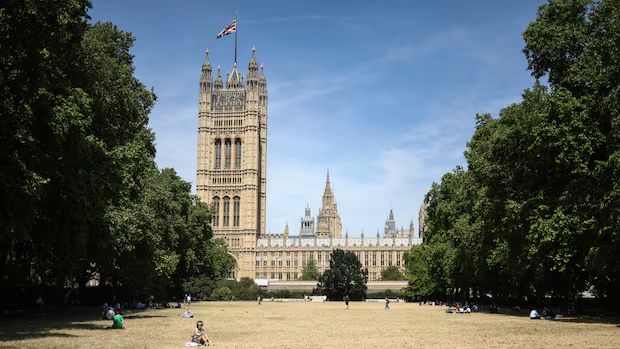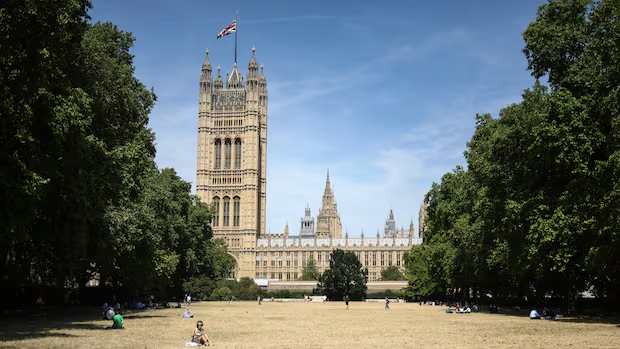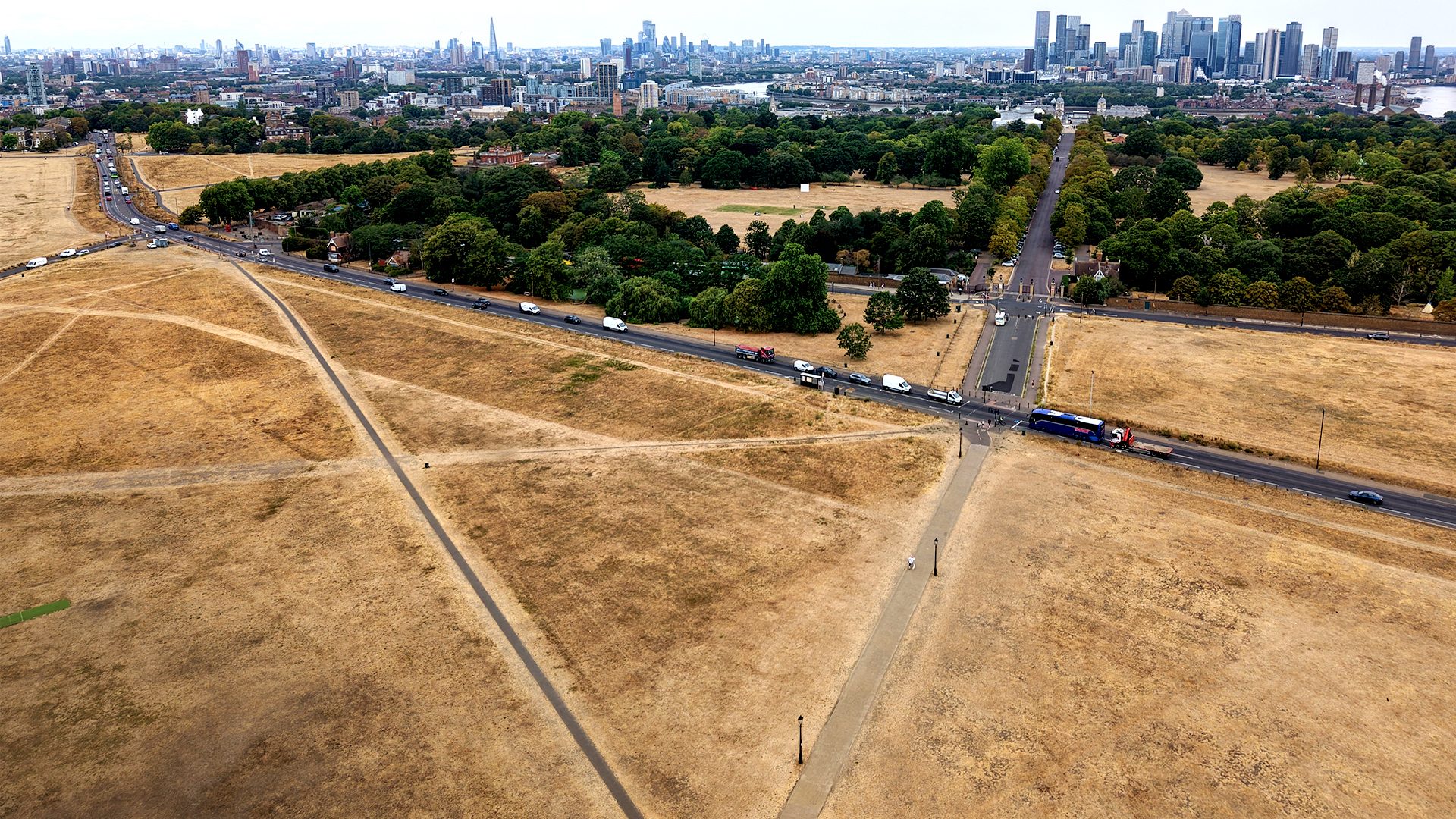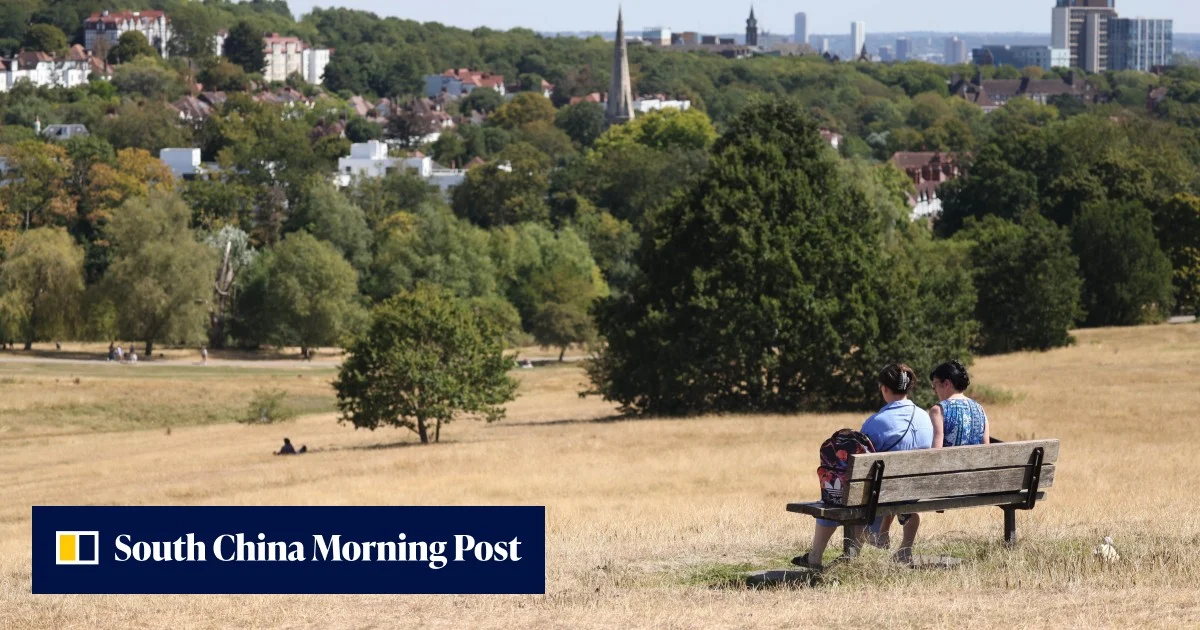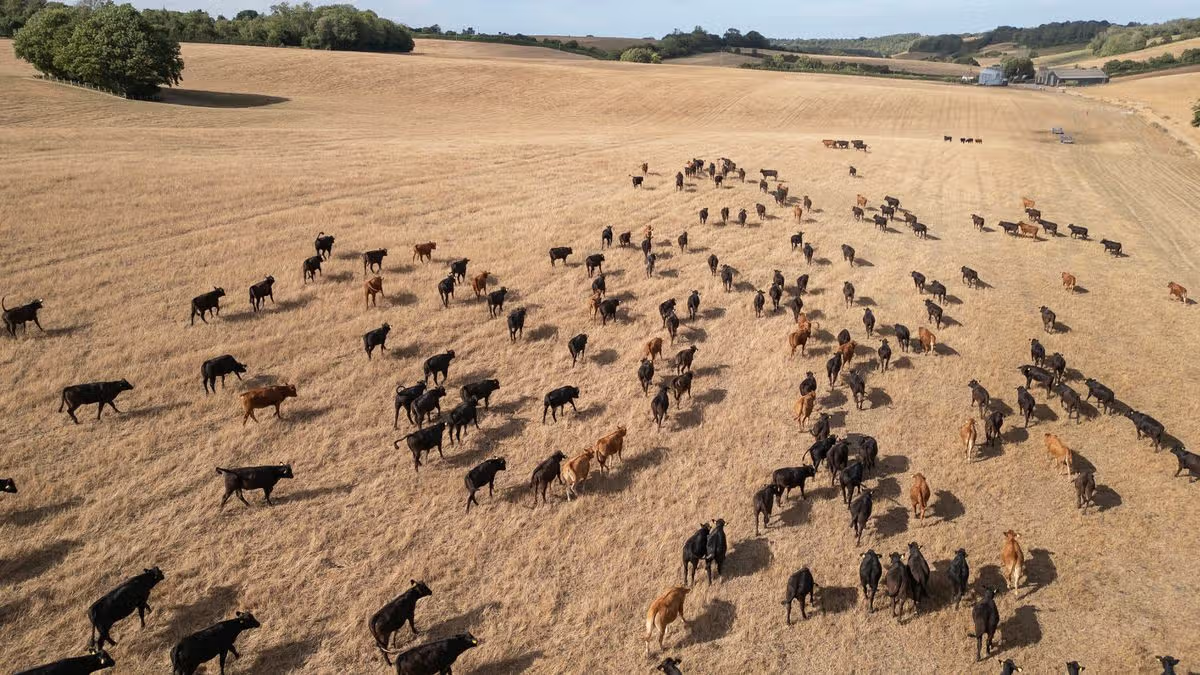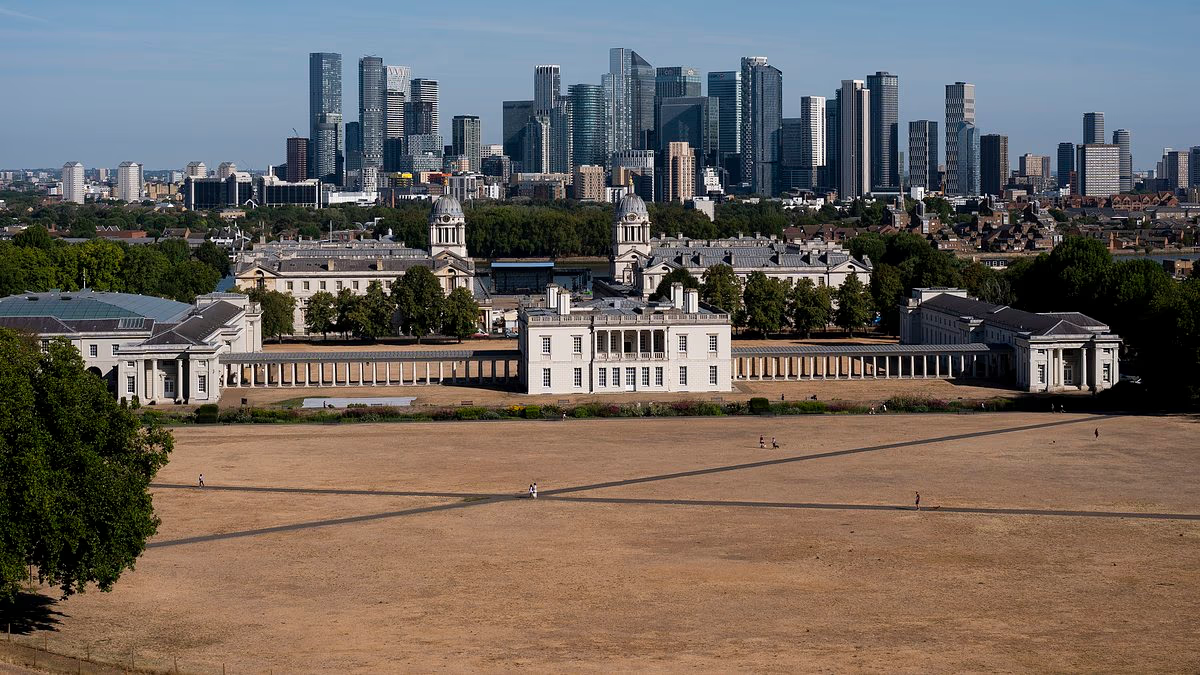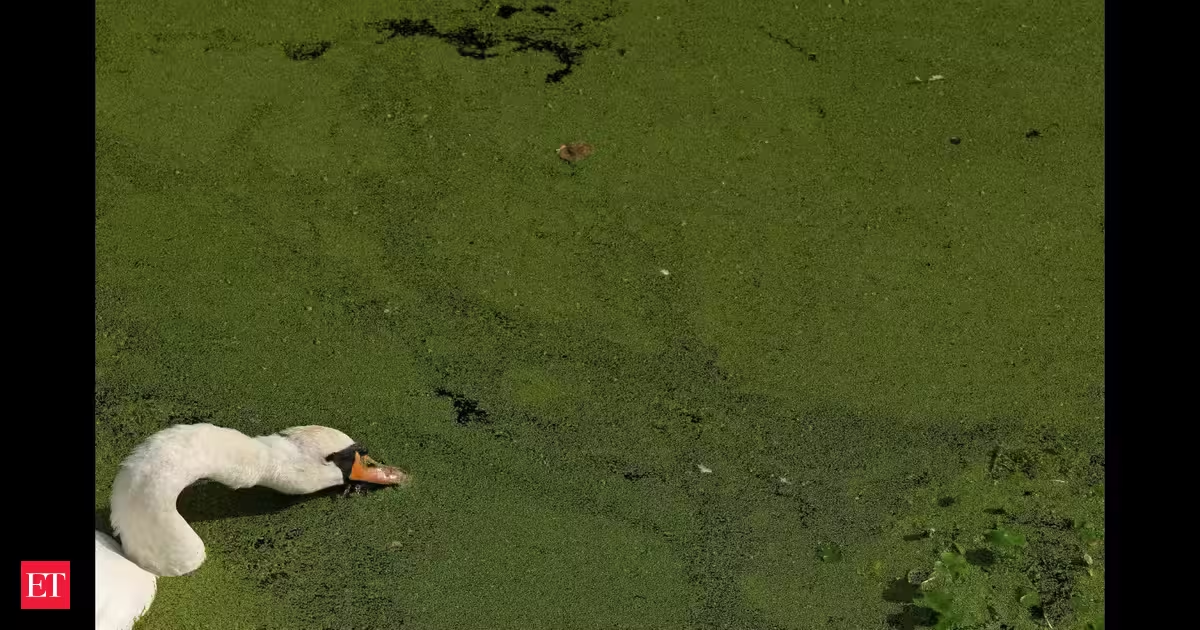
SynopsisBritain is now experiencing a flash drought caused by a combination of very low rainfall and higher temperatures. Rivers, reservoirs, and groundwater levels continue to decline while the continued hot and dry conditions are increasing the risk of wildfires, the government said.ReutersA swan looks for food among green algae, after Britain's Environment Agency declared seven areas of England to be in drought, in Isleworth, London, Britain. (Reuters photo)Britain is in the grip of its fifth heatwave this year and England and Wales have provisionally recorded their driest July in 190 years. Southeast England received just 1 per cent of its expected average rainfall. Some 71.3 percent of England is in drought, the UK government said Monday, after the nation experienced its driest July on record, with a fifth heatwave and scant rain forecast for the week ahead. Parks and fields that are usually green at this point in the year were parched and yellow, according to AFP photos, as river levels dwindled and farmers battling low crop yields warned of possible food shortages."Almost three-quarters of England is now in drought as conditions worsen following a dry start to August," the environment department said, as parts of the central Midlands and northeast England joined other areas of the country experiencing prolonged dry weather."All regions of the country are experiencing pressure on their water resources," the department said, with "nowhere" in the UK having a "normal" status.The Department of Environment, Food and Rural Affairs (DEFRA) said most of England is experiencing a "flash drought", which develops quickly and is the result of very low rainfall and high temperatures.It is the third drought Britain -- usually known for its unpredictable wet weather -- has experienced in five years. More than 50 percent of England was declared to be in drought at the end of July.You Might Also Like:Britain was also facing its fifth heatwave of the 2026 summer that has seen multiple temperature records being broken.As much of Europe braces for another heatwave and prolonged dry conditions, scientists warn climate change is making extreme weather events more intense and frequent.England and Wales both experienced the driest July on records, the UK's Met Office weather agency announced earlier, with England recording just 10 percent of its usual longterm average rainfall."There are warnings of more dry weather and another heatwave on the way, with temperatures tipped to reach the mid-30s in some places," DEFRA said.The government has imposed irrigation restrictions on farmers and introduced a hosepipe ban in some regions, with more than 27 million people living under water-use restrictions.There are now 45 million people living in a drought area, according to official figures. The total population of the United Kingdom is estimated at 69.3 million."We know the hot and dry weather is taking a real toll on farming and there will be long-lasting impacts on our environment," said the Environment Agency's Tony Grayling, who heads the National Drought Group.Almost three-quarters of England is now in drought, the British government said on Monday, highlighting the worsening impact of prolonged dry weather on agriculture, public water supplies and wildlife. Most of the country, 71.3 per cent, is now experiencing a flash drought caused by a combination of very low rainfall and higher temperatures. That has risen since late July, when almost half the country was declared to be in drought.The latest update put 45 million people in a drought area and 27 million living under restrictions on water use."We know how challenging this summer has been ... We are stepping up our support including working to make it easier for farmers to build more on-site irrigation reservoirs," Water Minister Emma Hardy said in the statement.Rivers, reservoirs, and groundwater levels continue to decline while the continued hot and dry conditions are increasing the risk of wildfires, the government said.An estimated 2,877 people in Britain have died from heat-related causes this year, UK health authorities said last month. The heat is also impacting breeding birds, amphibians, and freshwater fish stocks, the government added.Read More News on(Catch all the US News, UK News, Canada News, International Breaking News Events, and Latest News Updates on The Economic Times.) Download The Economic Times News App to get Daily International News Updates....moreless
In 190 years, England witnesses driest month, now Britain usually known for its unpredictable wet weather faces third drought in five years
Britain is now experiencing a flash drought caused by a combination of very low rainfall and higher temperatures. Rivers, reservoirs, and groundwater levels continue to decline while the continued hot and dry conditions are increasing the risk of wildfires, the government said.
700 words~3 min read