Back to Articles
Every voice interaction has a latency budget.
By the time a user hears your application respond, you've already spent precious milliseconds capturing audio, transcribing speech, running an LLM, retrieving context, and generating a response. Text-to-speech (TTS) is the final step — and the one users notice most. If speech generation is slow, the whole experience feels slow.
The more of that pipeline you can run and tune yourself, the more of the latency budget you get back.
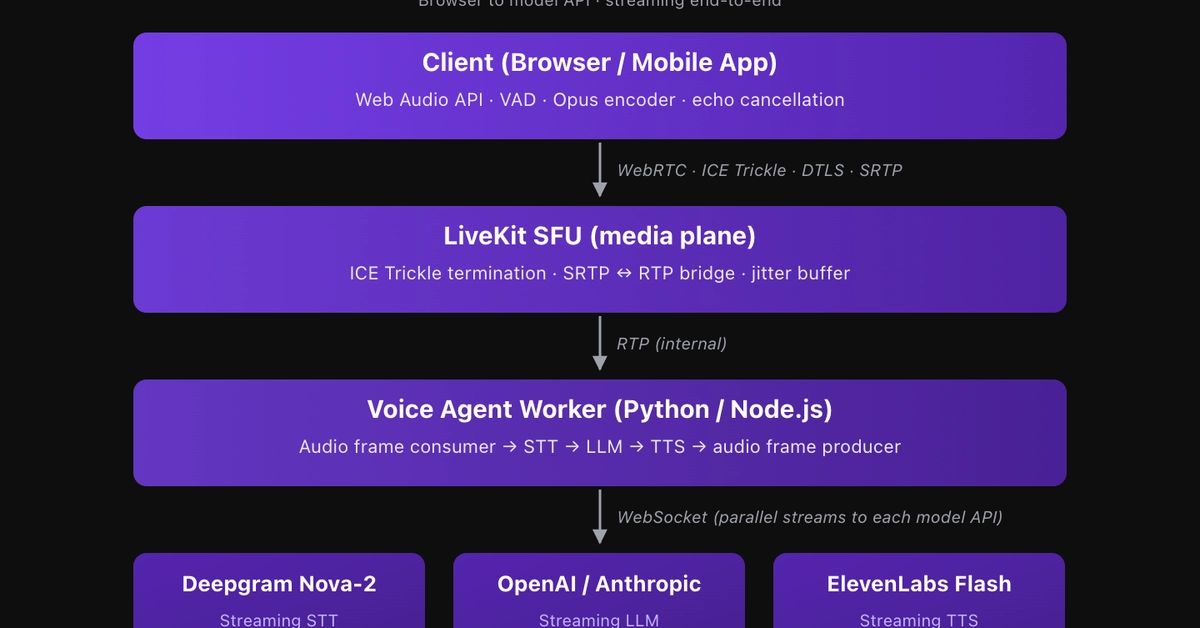
Voice AI is moving fast. Integrated speech models offer simplicity — one API call, audio in, audio out — but they trade the ability to fine-tune each component for your domain, swap in better models as they ship, enforce data residency, and understand exactly where latency is coming from. For more control, a cascaded architecture — purpose-built ASR, TTS, and LLM components running together — keeps each layer independently tunable and deployable on infrastructure you own.