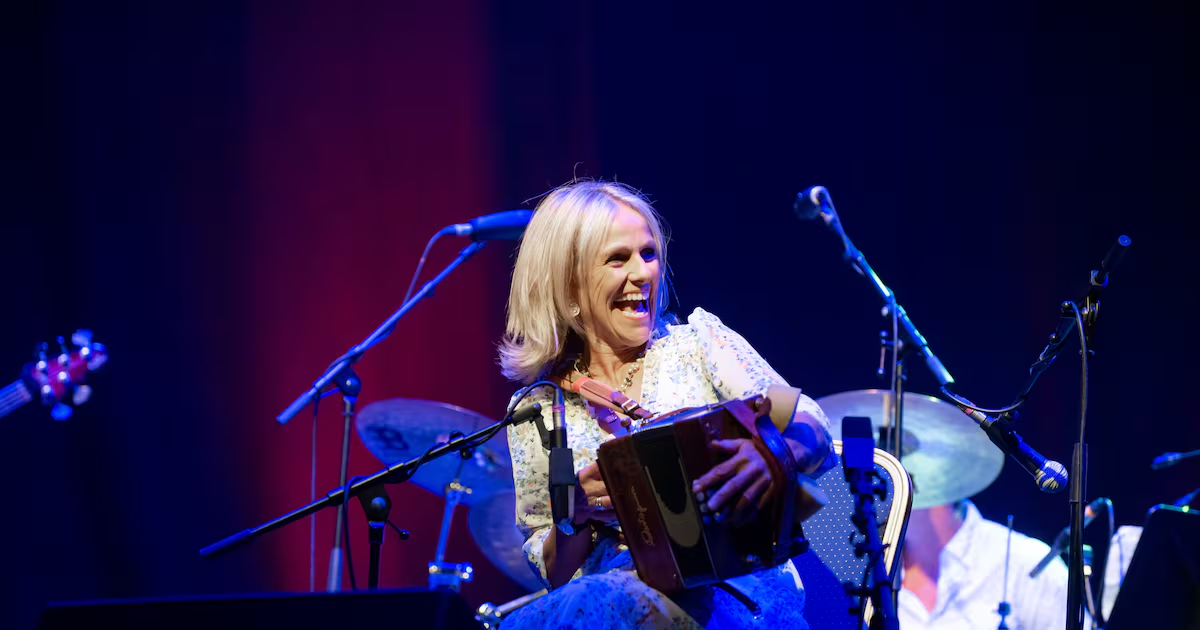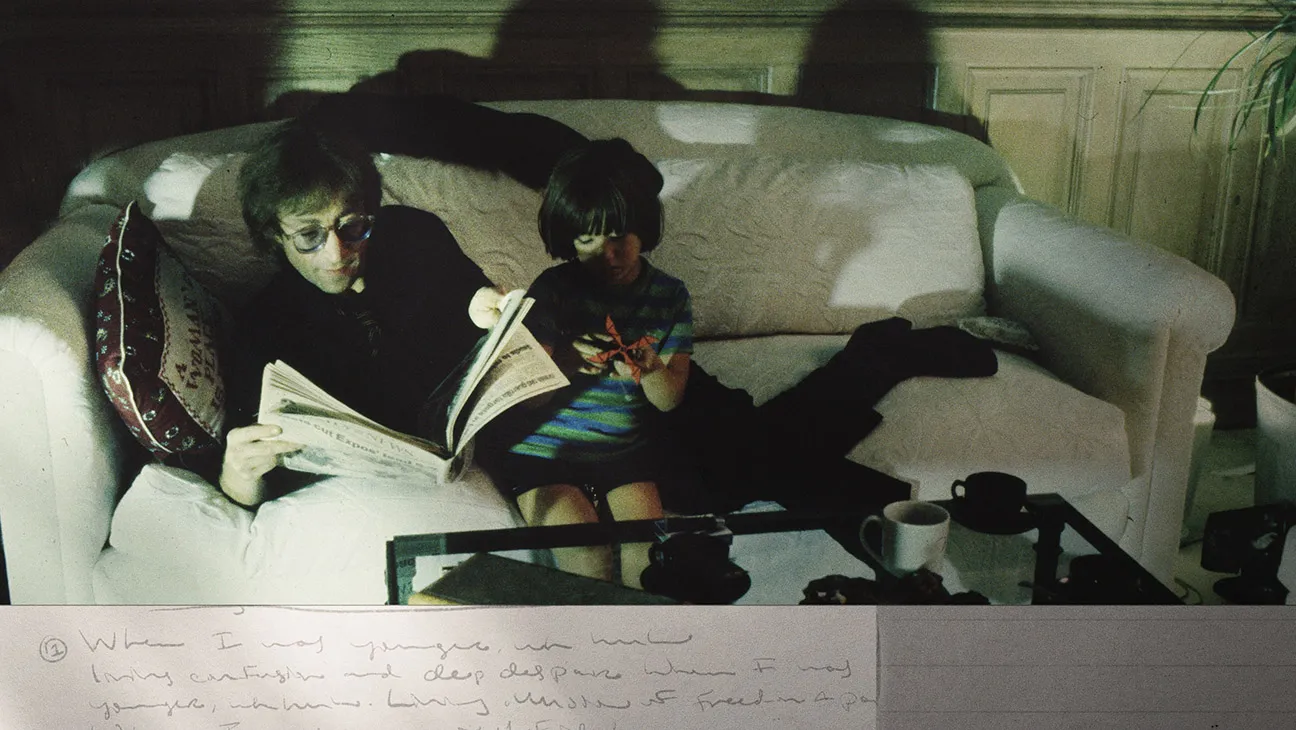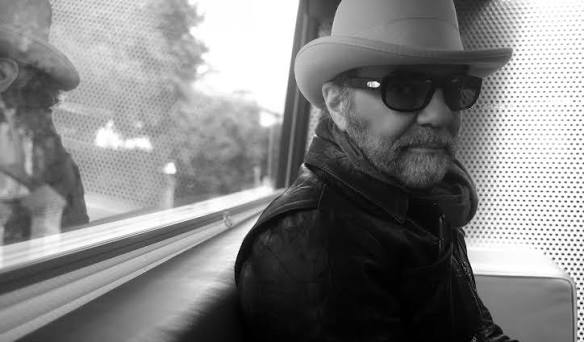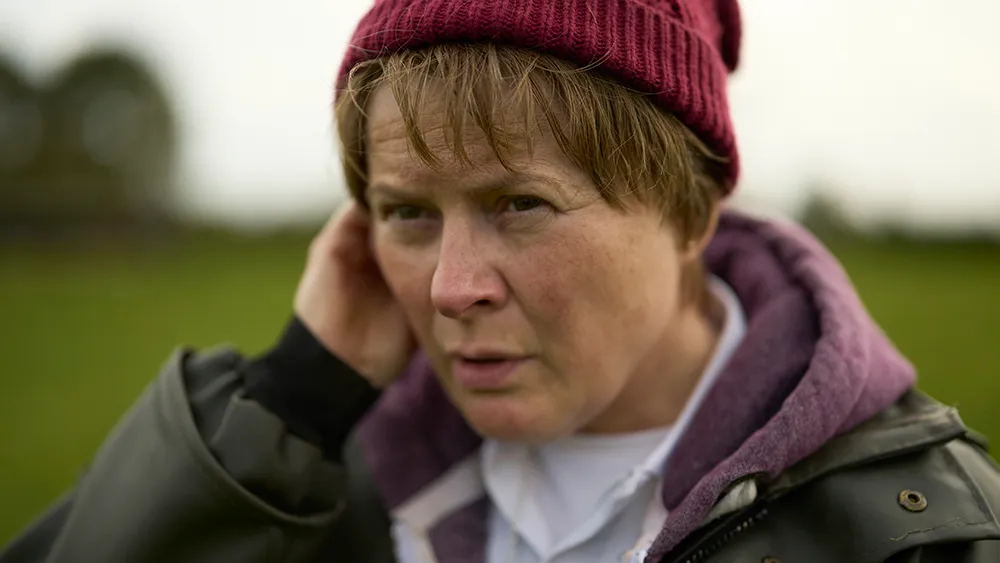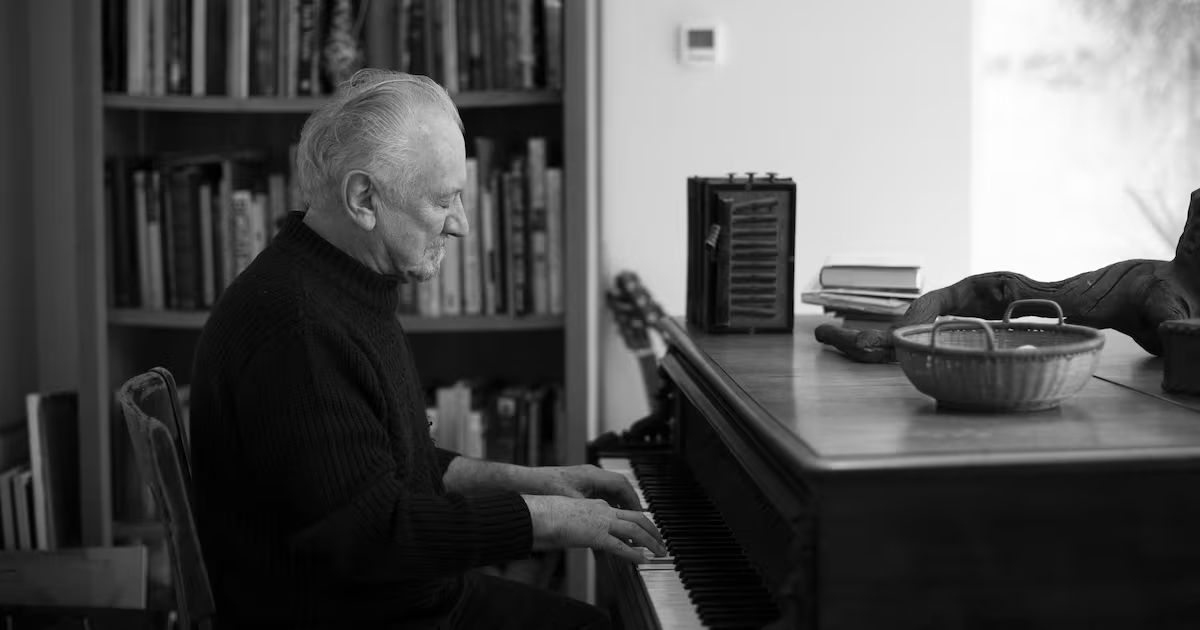
Filmed in black and white and announcing itself with footage of a poet reciting Irish over a shoreline, Nuala O’Connor’s feature-length documentary about musician Dónal Lunny is self-consciously avant-garde. But where that framing might be awkward in other circumstances, it is a good fit for Lunny, the mischievous and enigmatic pied piper of Irish folk music.He is perhaps best known to some for having fathered a child with Sinéad O’Connor. His recollections of Shane, and of his death by suicide in 2022 at age 17, serve as the emotional core of this powerfully melancholic In Time: Dónal Lunny (RTÉ One, Monday, 9.35pm). Nothing is worse than losing a child, and all of Lunny’s mystique and twinkle-eyed charisma falls away as he talks about standing in the woodland where his son died and hearing the chirping of a robin – a presence which he feels is in some way connected to Shane.“I could hear a robin in the area. It was obviously flying around us, from bush to bush,” he says. “Eventually it appeared and it stayed there as long as we were at the place. It interposed itself right in front of us: it’s like it had something to tell us. Its presence was unavoidable and it has meant something to me ever since.”It’s the most honest and straightforward moment in a documentary that otherwise comes at the story from an elliptical angle – all that black and white and poetry – which is the perfect way to approach the life and work of Lunny, given that he came at folk music in much the same way.There is lots of footage of brooding skies and dramatic treelines as we follow Lunny’s early years at Newbridge College in Co Kildare. Here he befriended a young Christy Moore, coinciding with his subsequent pioneering use of the Greek bouzouki stringed instrument as a staple of Irish folk.Long before Sinéad O’Connor, he had a colourful personal life. His first marriage to Julia Buthe unravelled as Lunny emerged as a fixture on the Dublin folk scene. The young couple’s flat became an unofficial stop-off for musicians and their associated hangers-on, and it was more than their union could bear. His later marriage to Japanese musician Hideko Itami was undone by his relationship with O’Connor. “This was an absolute disaster for my relationship with Hideko,” he says. “Because of the rupture of my marriage… my connection with Sinéad broke down completely.”The film also functions as a secret history of Irish traditional music. How fascinating to trace Lunny’s life from his days as a pop heart-throb with Emmet Spiceland to his pioneering work alongside Moore in Planxty and, separately, as a founding member of the Bothy Band.Lunny became ill during the making of In Time, and while this is not addressed directly on screen, a deep ennui hangs over the film. The most moving scene comes at the end as Lunny and Moore, his dear friend and old comrade in arms, perform Moore’s ballad Natives (originally written by Paul Doran).“The scars of the past are slow to disappear / The cries of the dead are always in our ears,” sings Moore. At the end, he places his hand on his friend’s shoulder, and Lunny tries not to cry. It is a poignant conclusion to an intense, if sometimes obtuse documentary that functions both as a portrait of one of folk’s most influential figures and as a study of an artist waylaid by tragedy.Samaritans can be contacted on freephone 116 123 or email jo@samaritans.ie
In Time – Dónal Lunny review: Intense portrait of an enigmatic folk artist waylaid by tragedy
Television: Influential musician became ill during the making of In Time, and while this is not addressed on screen, a deep ennui hangs over the film
586 words~3 min read