SEBI: Move to curb volatility
| Photo Credit:
bl-online Administrator
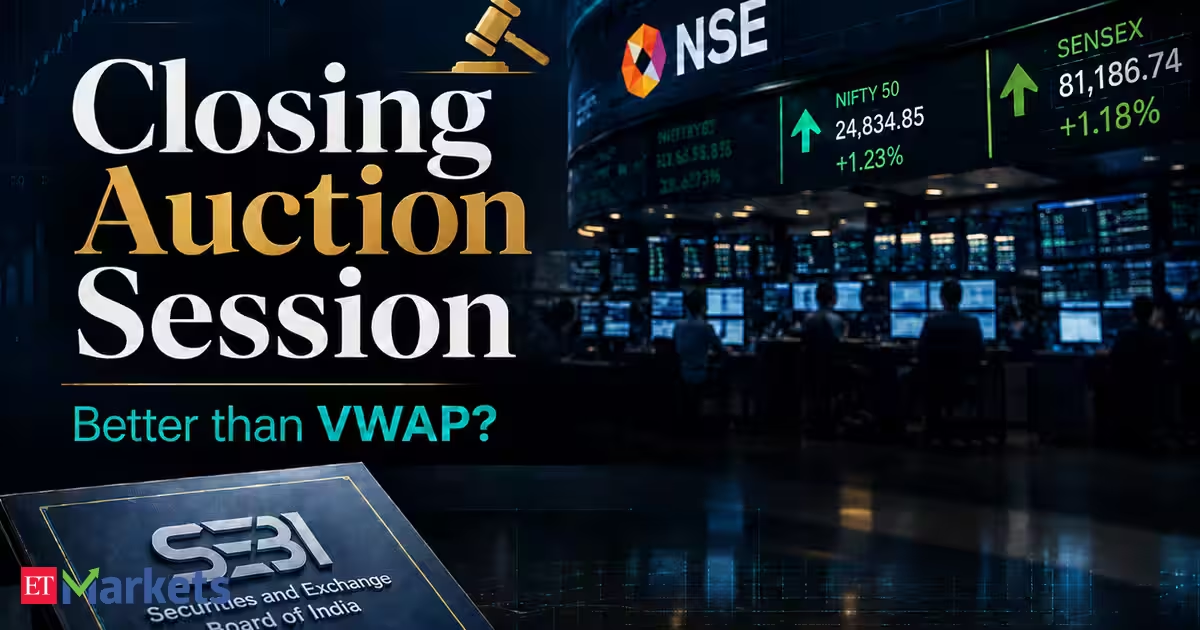
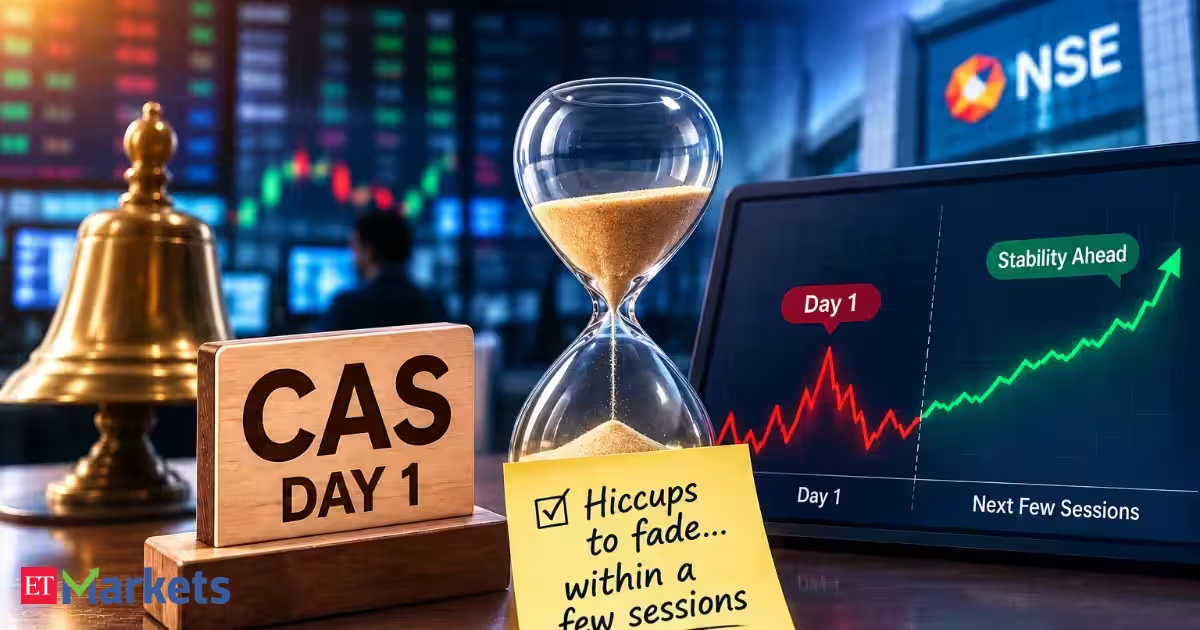
The turbulence in the first few sessions of the closing auction session (CAS), introduced by the Securities and Exchange Board of India, has caused quite a flutter. The new system should be allowed to find its feet; it is, in fact, the global norm.The CAS, which is held for 20 minutes after the end of the regular session, collects all the buy and sell orders in a 15-minute window and arrives at an equilibrium price, at which the greatest number of trades can be executed. The closing price thus discovered through the equilibrium price has been found more reliable and tamper-proof compared to the volume weighted average price (VWAP) method being used on Indian exchanges. Large institutional orders punched towards the end of the trading session would tend to distort closing prices under the VWAP method. Not surprisingly, major global stock exchanges including the NYSE, London Stock Exchange and Hong Kong Stock Exchange use auctions to discover the closing price.The first two closing auction sessions were indeed very volatile with the Nifty 50 jumping sharply from the closing level in the regular session and a large difference emerging in the gains registered by the Sensex and the Nifty 50. Problems also emerged because the CAS was introduced only in the cash segment, on stocks with derivatives linked to them. While derivative trading takes place in a continuous session, execution of cash trading on the underlying asset halts for 20 minutes. As a result, option prices are very volatile in the last 20 minutes. But order has been restored in subsequent sessions with the gap narrowing between the closing level in regular and closing auction sessions. The differences between Sensex and Nifty 50 have narrowed significantly as well.Market participants appear to have been wary, preferring to stay away from the closing session. But activity in the closing auction has been improving with the market regulator asking intermediaries to nudge their clients to increase participation. As volumes in the closing auction increase further, volatility is expected to subside. According to a survey done by International Organisation of Securities Commissions, between 2020 and 2025, the value traded at closing auctions has generally increased. Market intermediaries should ensure that the indicative price and the quantity of the order book disseminated live by stock exchanges during the closing auction is displayed accurately on all trading terminals. The indicative price will also help in aligning the prices of futures and options with the underlying cash price. With the closing auction being introduced in a phased manner — beginning with stocks in cash segment linked to derivatives, followed by all stocks at a later date — there could be problems in transitioning. If volatility continues, SEBI could consider introducing designated market makers, as in the New York Stock Exchange.Published on August 10, 2026