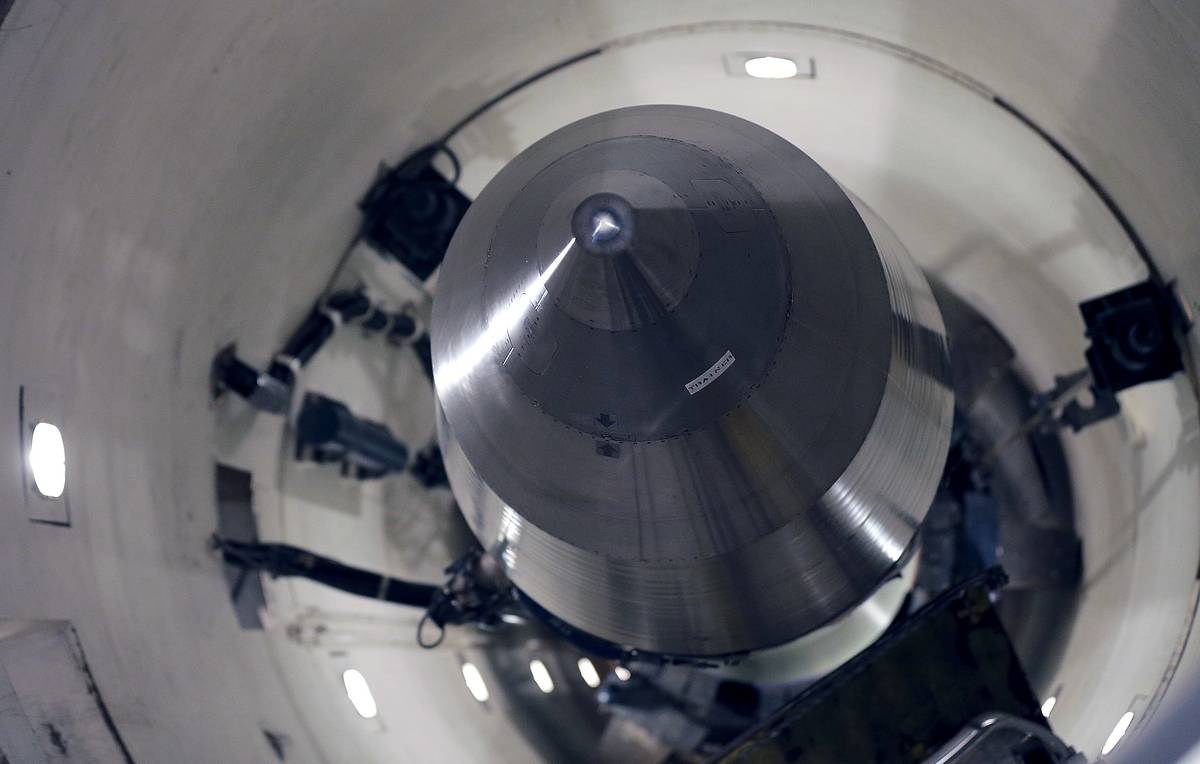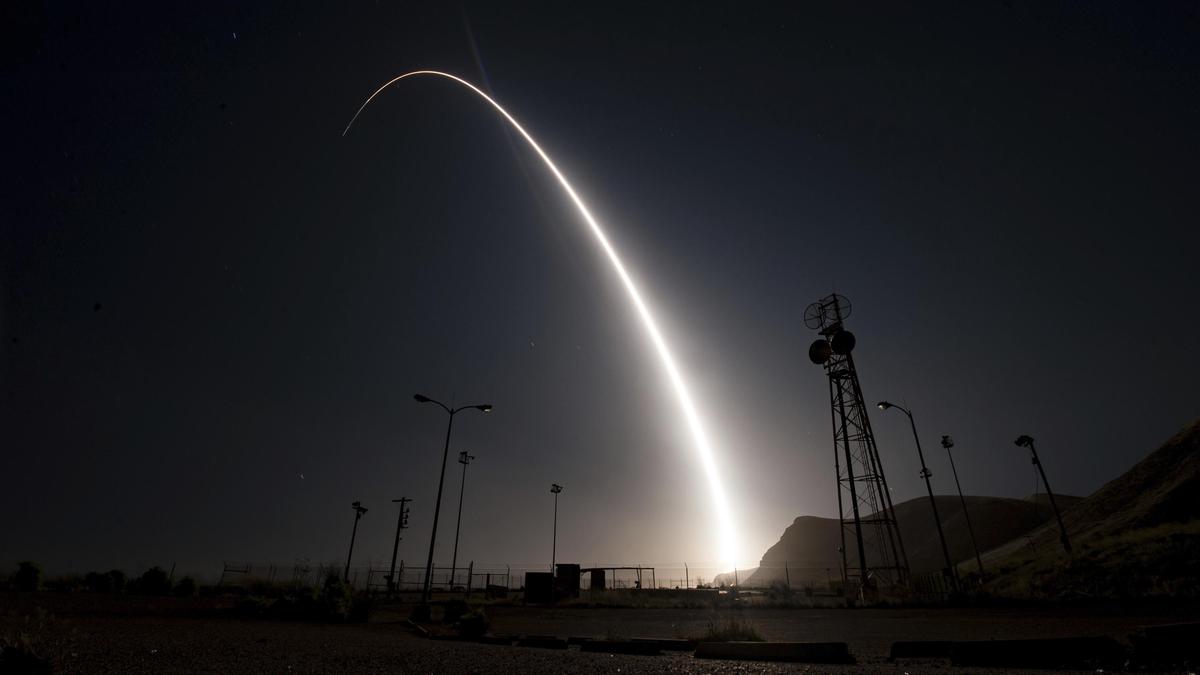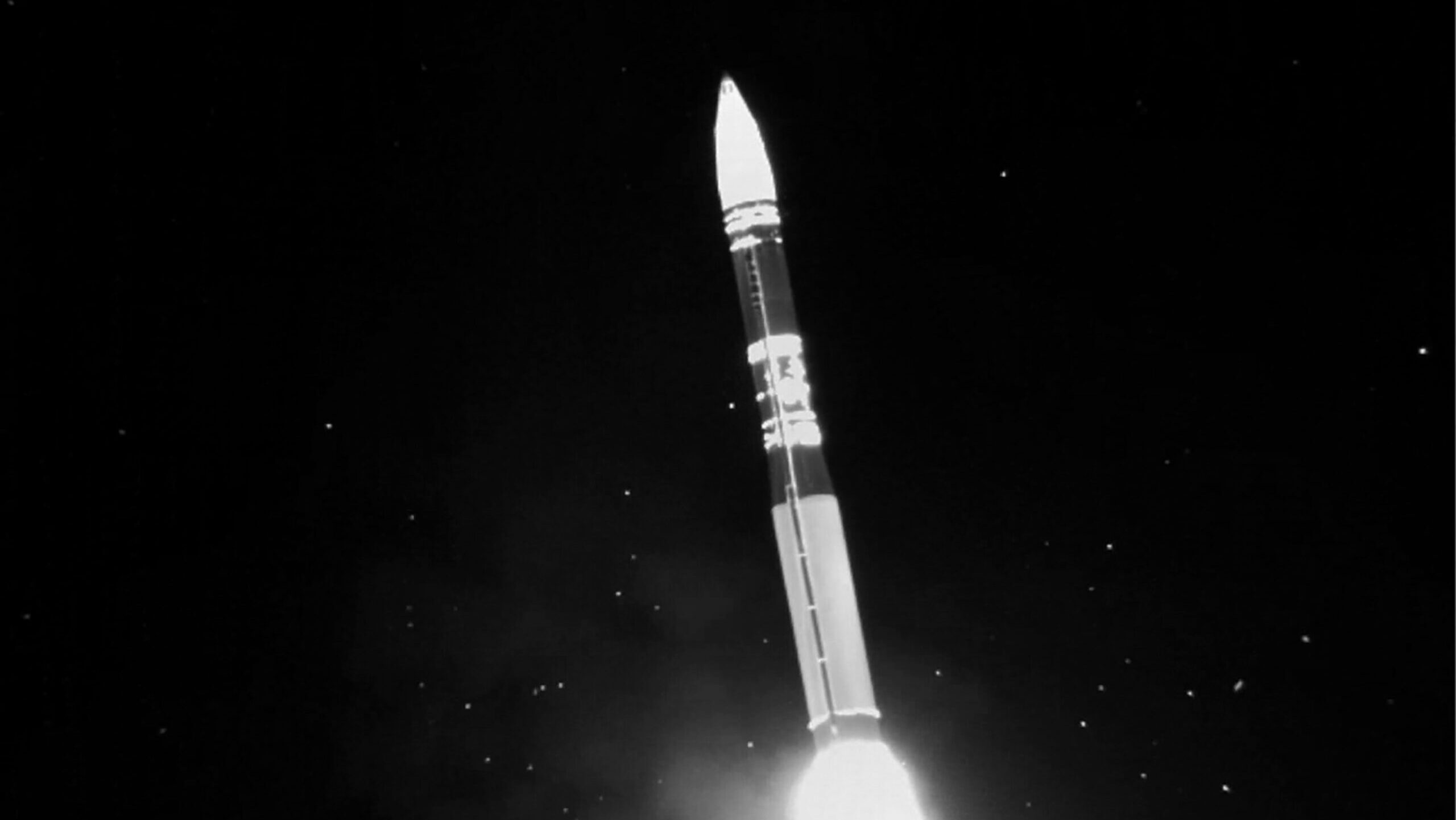
An Air Force Global Strike Command unarmed Minuteman III intercontinental ballistic missile launches during an operational test at Vandenberg Air Force Base, Calif., Sept. 2, 2020. (U.S. Air Force photo by Vandenberg Air Force Base Public Affairs)
WASHINGTON — The Air Force is searching for an artificial intelligent agent that can centralize the various data streams underpinning its aging nuclear ballistic missile fleet, according to an active industry notice.
In a request for information published July 24, the Air Force says the Minuteman III (MMIII) program manages key data across “approximately 60 disparate and disconnected systems,” from “local hard drives” to “shared networks.” But it has no way to centrally govern all of them, requiring considerable manhours for tasks like assessing when parts may need to be replaced.
Sustaining the decades-old MMIII fleet is a national security imperative: The Air Force must continuously keep 400 missiles ready to launch at a moment’s notice, a responsibility often described as a “no-fail” mission since failure could lead to catastrophic consequences. And it’s a job that will continue longer than originally expected, as the replacement for MMIII, dubbed Sentinel, faces years of delays.