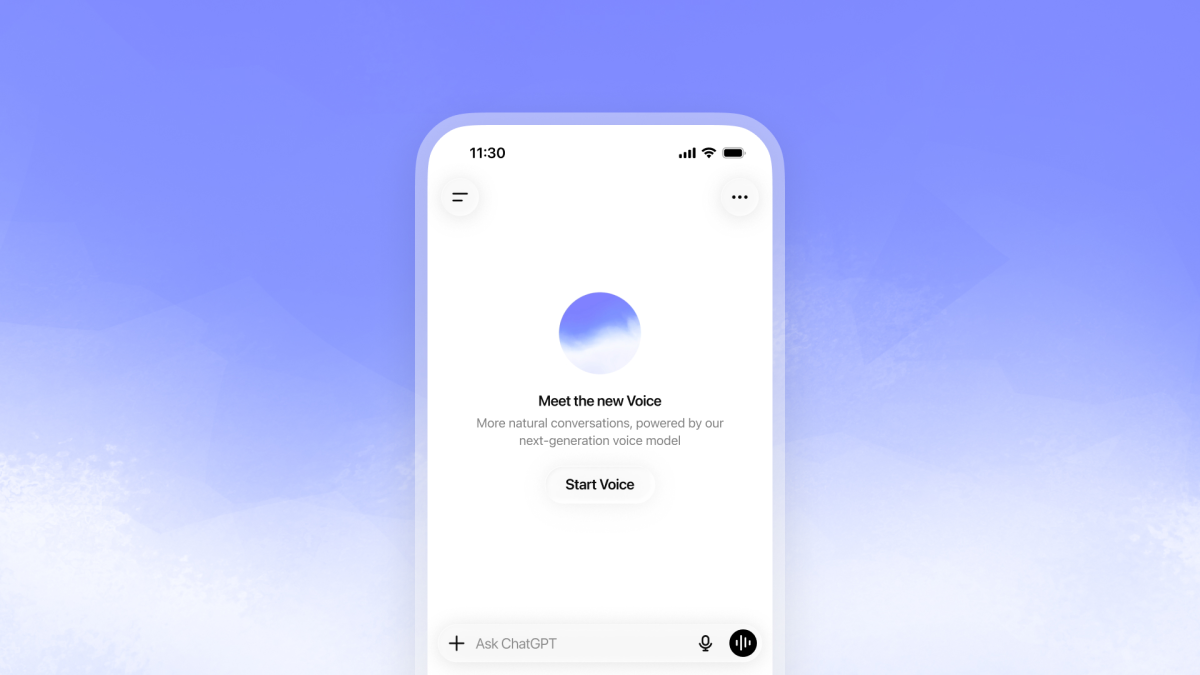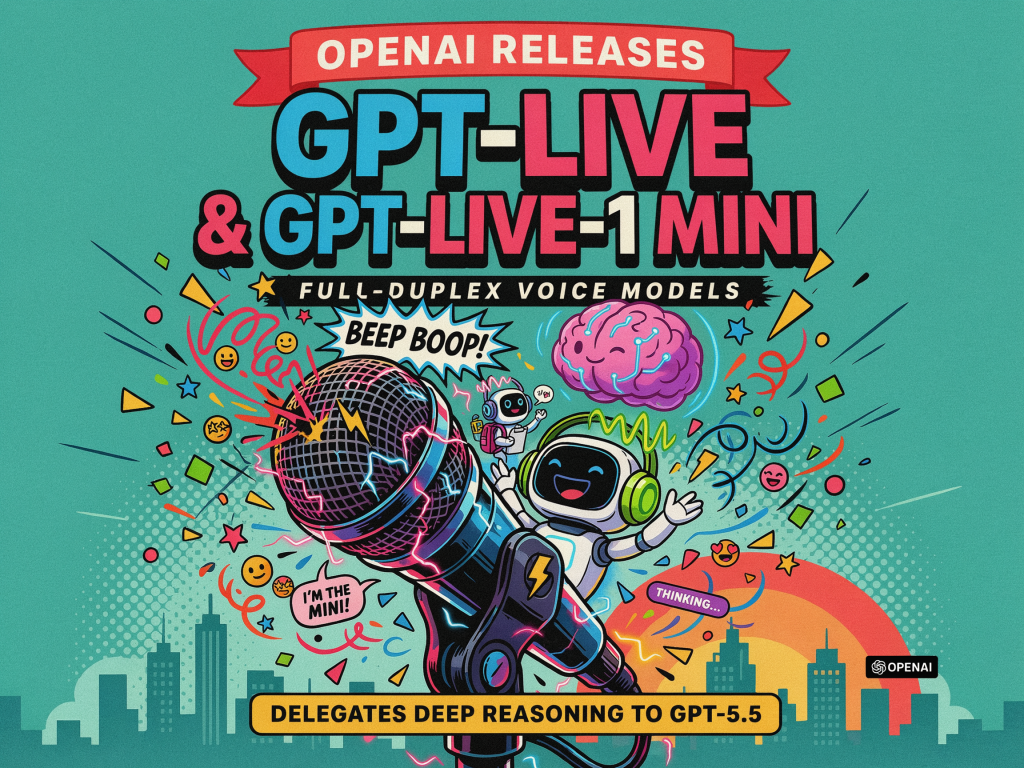
OpenAI launched GPT-Live on July 8, introducing GPT-Live-1 for paid subscribers and GPT-Live-1 mini for free users globally. Google, meanwhile, has been expanding its Gemini 3.5 Live Translate feature since June, adding multilingual real-time translation and deeper integration across its product ecosystem.
What full-duplex actually means for users
The technical term driving both announcements is “full-duplex architecture.” Older voice AI systems required users to speak, wait, then listen, a rigid back-and-forth that made conversations feel stilted. Full-duplex models can listen and speak at the same time, just like a human conversationalist who nods along, interjects with “right” or “got it,” and handles interruptions without derailing entirely.
OpenAI’s GPT-Live models incorporate these acknowledgment cues and handle interruptions more gracefully than their predecessors. In human evaluations, the new models significantly outperformed previous voice systems on naturalness and conversational flow.
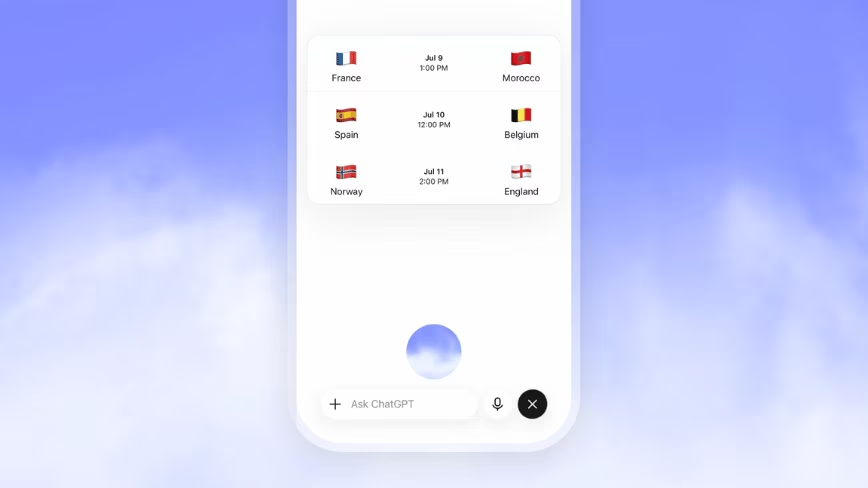
One particularly clever feature: GPT-Live can delegate complex tasks mid-conversation. If a user asks something that requires a web search or deeper reasoning, the voice model hands the work off to a more capable model like GPT-5.5, then keeps talking while the answer is being fetched.