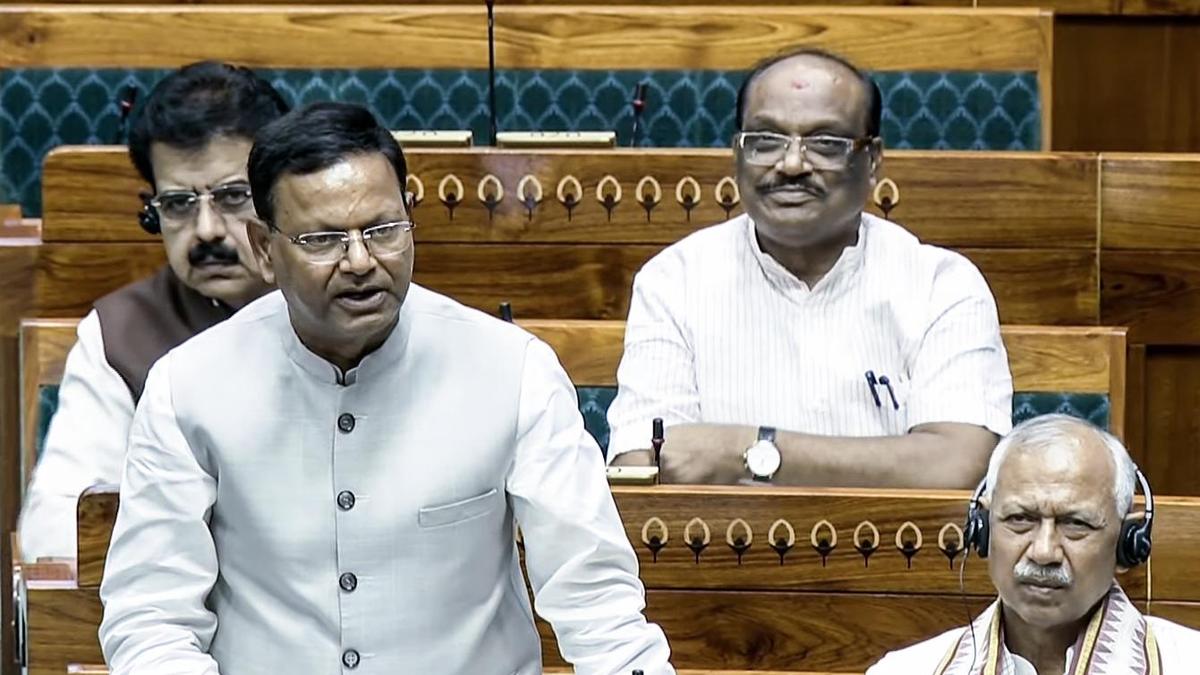
Union MoS Pankaj Chaudhary speaks in Lok Sabha during the Monsoon session of Parliament, in New Delhi
| Photo Credit:
Five southern states – Tamil Nadu, Andhra Pradesh, Karnataka, Telangana and Kerala -- together have share of over 80 per cent in gold loan outstanding as on March 31, 2026, data presented along with a written answer in the Lok Sabha on Monday showed. Meanwhile Non Performing Assets (NPA) in overall gold loan has come down.According to data annexed with written reply by Minister of State in the Finance Ministry, Pankaj Chaudhary, total gold loan outstanding for Public Sector Banks was over ₹11.31 lakh crore. Among States and Union Territories, Tamil Nadu was on on top with over ₹4 lakh crore outstanding followed by Andhra Pradesh with over ₹2.22 lakh crore, Karnataka with over ₹98000 crore, Telangana with over 92000 crore and Kerala with over ₹83000 crore.Though the answer has not given any reason for higher gold loan in southern States, but it is believed that these States also big consumer of gold and holding in the households are high. With rise in the prices, the loan value has also gone up. The reply too gave this kind of indication, but for whole India.rapid growth“RBI has informed that, as noted in the Financial Stability Report (FSR), June 2026, the rapid growth in gold loans has been supported by rising gold prices,” Chaudhary said. Further, loan-to-value (LTV) ratios across Banks and Non-Banking Financial Companies (NBFCs) have declined despite growth in gold lending, thereby strengthening collateral buffers and enhancing lenders’ resilience to movements in gold prices.“It has further informed that asset quality in the gold loan portfolio remains stable, reflecting the sound collateral position of lenders,” Chaudhary added. Loans against gold have been instrumental in promoting financial inclusion and providing access to credit, particularly to rural, micro, small and medium enterprises (MSMEs) and underserved segments of the population by bringing new-to-bank or new-to-credit customers amongst that segment under the ambit of formal lending channels, including banks and NBFCs, and “by protecting such borrowers who could otherwise have moved to unorganized channels and been susceptible to usurious and prejudiced loan covenants,” he said.Despite increase in total gold loan, NPA has come down. The Minister said that the number of defaults in gold loans has declined during the last five years. The Gross GNPA ratio for gold loans of SCBs has declined to 0.12 per cent as on March 31, 2026 from 0.19 per cent as on March 31, 2025. Similarly, the GNPA ratio for gold loans of NBFCs has declined to 0.81 per cent from 2.32 per centFurther, to safeguard borrowers from distress sales during recovery, RBI has prescribed measures, inter-alia, adequate prior notice before auction, a reserve price of at least 90 per cent of the current collateral value, refund of any surplus realised after adjustment of dues, and transparent assaying, valuation, auction and recovery practices.“The regulatory framework also requires upfront disclosure of charges, standardized documentation and compensation for delays in the release of pledged collateral, thereby strengthening consumer protection and ensuring fair treatment of borrowers” Chaudhary said.Published on August 10, 2026