Next.js Proxy usually starts small. You add one redirect from an old path. Then an exception for draft mode. Later come locale handling, security headers, admin protection, legacy URLs after a content migration, and a special case for a crawler.
After a few months, one file becomes a place nobody wants to touch. Every change feels risky: will the redirect run before locale detection? Will Sanity preview still work? Will the private section guard catch static assets? Will a new redirect create a loop?
This article shows a practical way out. The goal is not to switch libraries for the sake of it. The goal is to make edge routing readable, testable and safe to extend. NEMO helps treat Proxy as an explicit set of proxy rules instead of one growing chain of conditions.
Proxy that grew faster than the app
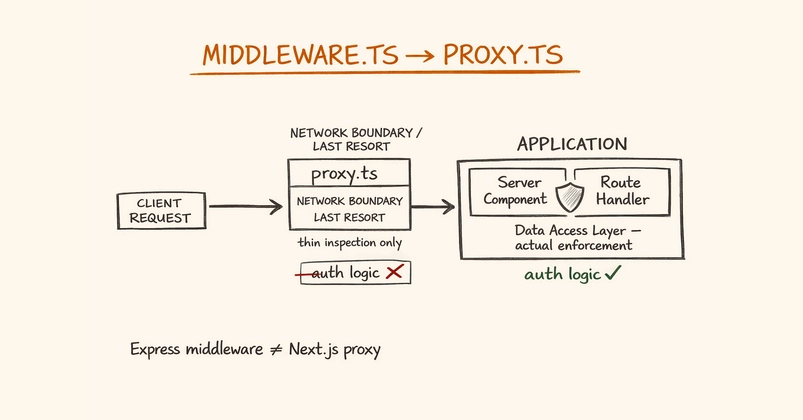
The typical problem is not just file length. It is mixed responsibility. SEO redirects sit next to authentication. Locale detection sits next to draft mode. Security headers sit next to historical paths from a blog migration.