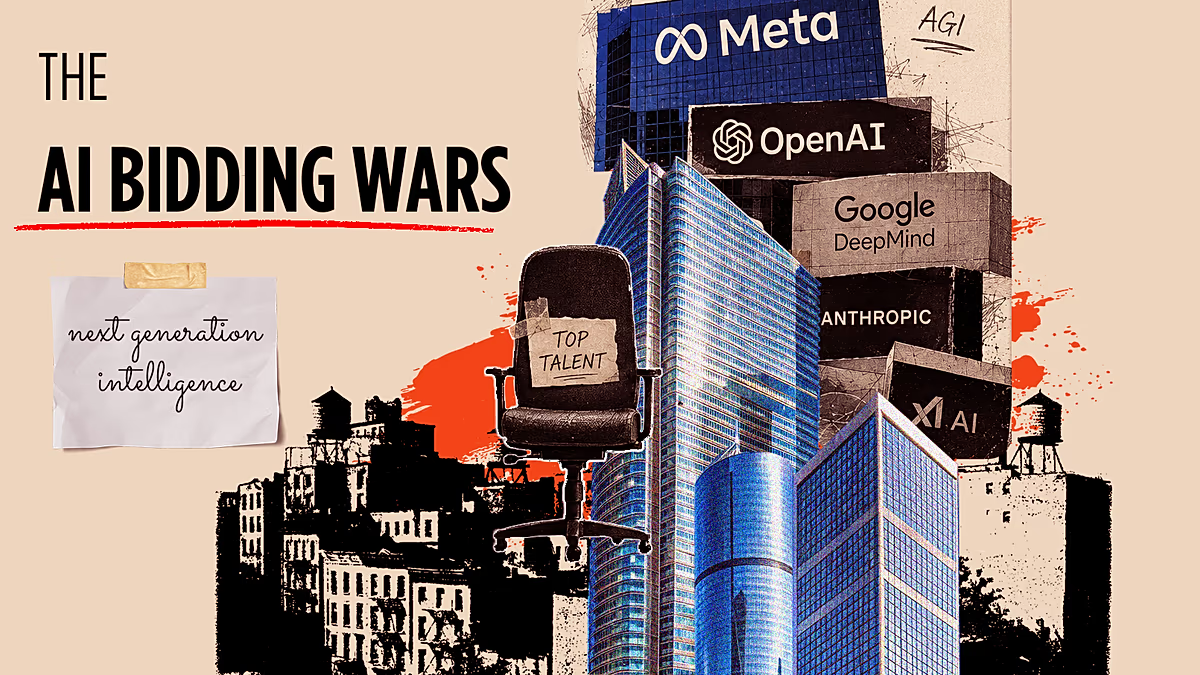
Harvard Business Review LogoAugust 10, 2026Illustration by Anna MicheloniThe competition for AI talent remains strong—and expensive. How can companies possibly compete for skilled AI talent when Silicon Valley behemoths are offering salaries and signing packagesThe tech hiring landscape is in a state of flux. On one hand, companies like Meta have laid off thousands of employees, fueling concerns that artificial intelligence will eliminate many technical jobs. At the same time, many of the world’s largest technology firms are engaged in an intense scramble for AI talent. Despite the recent layoffs, Meta continues to aggressively pursue AI researchers and engineers with compensation packages reportedly worth millions of dollars; Elon Musk is creating an “elite unit” to recruit top AI engineers that reports directly to him; and Amazon recently announced plans to hire thousands of engineering employees and interns in 2026 (including, possibly some of the recently laid off Meta employees). As one AI company department head noted, “If I’m going to spend a billion dollars to build a model, $10 million for an engineer is a relatively low investment.”
What Does AI Talent Look for in an Employer?
The competition for AI talent remains strong—and expensive. How can companies possibly compete for skilled AI talent when Silicon Valley behemoths are offering salaries and signing packages impossible to match? An analysis of CoffeeSpace, a talent-matching platform with over 25,000 users, found that AI professionals of all experience levels responded more strongly to a specific set of founder behaviors that signaled traction, competence, and seriousness. In particular, AI professionals wanted to join founders that were already working full-time on their idea and had already made some progress.
Meta, Amazon, and Musk's X are competing fiercely for AI talent with multimillion-dollar packages despite recent layoffs, signaling scarcity. For tech execs, this bidding war reflects AI researchers' strategic value as core assets worth billions in model ROI.