While direct equity flows turned negative, mutual funds have remained resilient, thanks to better SIP contribution
| Photo Credit:
admin
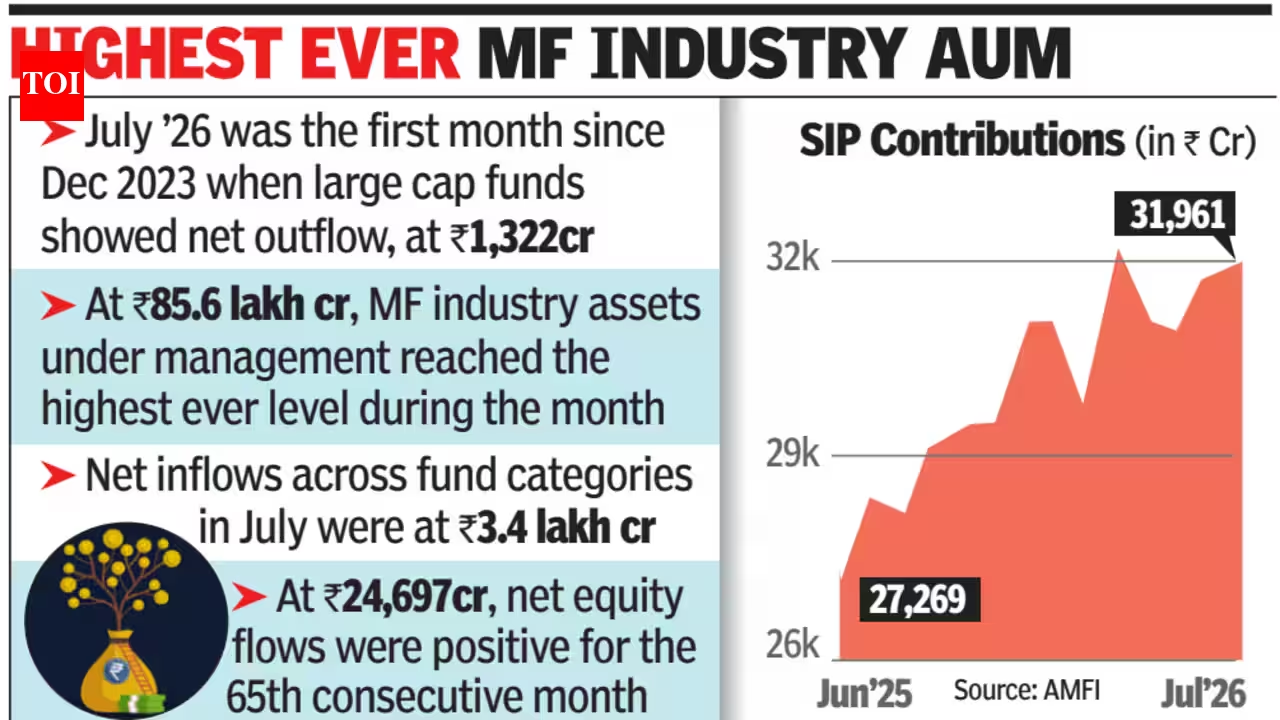
Households in India are shifting towards safer and more liquid assets. In FY26, investments in bank deposits stood at ₹15.3 lakh crore, a 22 per cent increase from the year before, according to a businessline analysis of the RBI monthly bulletin.Currency holdings, too, have nearly doubled to ₹4.15 lakh crore while, equity flows turned negative. From an inflow of ₹40,353 crore in FY25, the asset class saw an outflow of ₹79,890 crore in the year ended March 2026.“Uncertainty from the crisis in West Asia has spooked investors in the equity market, who are uncertain about the returns on their investment,” said Ramkumar Subramanian, Partner at Grant Thornton Bharat.A stopgap choiceAt the same time, the rise in deposits and cash doesn’t necessarily indicate a “structural shift” in household preferences, said Vikram Chhabra, Senior Economist, 360 ONE Asset. Rather, they may be using these instruments as a temporary parking place for savings.The changing composition of household savings is more evident over a longer period. The share of bank deposits in household financial asset flows increased to 36.6 per cent in FY26 from 32.2 per cent four years ago.In contrast, life insurance’s share fell to 13.4 per cent from 18.8 per cent during the same period. Its flows also declined 10.9 per cent to ₹5.62 lakh crore in FY26.Subdued returns amid falling interest rates and the nature of life-insurance products could be behind the decline, said Grant Thornton Bharat’s Subramanian. “Life insurance is a pure risk product, and remains a push product for insurance companies,” he added.Resilient MFsWhile direct equity flows turned negative, mutual funds have remained resilient. Flows into mutual funds in FY26 rose marginally to ₹5.47 lakh crore, while the asset class’s share in household financial asset flows more than doubled to 13.1 per cent in the four years to March 2026.This is partly thanks to systematic investment plans (SIPs), whose contributions rose to ₹3.5 lakh crore in FY26 from ₹2.9 lakh crore the year before, said 360 One’s Chhabra. Direct equity investments, on the other hand, are more cyclical and sentiment-driven, he added.Provident and pension funds remained a major component of household savings, accounting for 20.7 per cent of financial asset flows in FY26, only slightly lower than 21.3 per cent in FY22. These represent structural, long-term savings, and are relatively insulated from year-to-year market movements, the senior economist added.Published on August 10, 2026