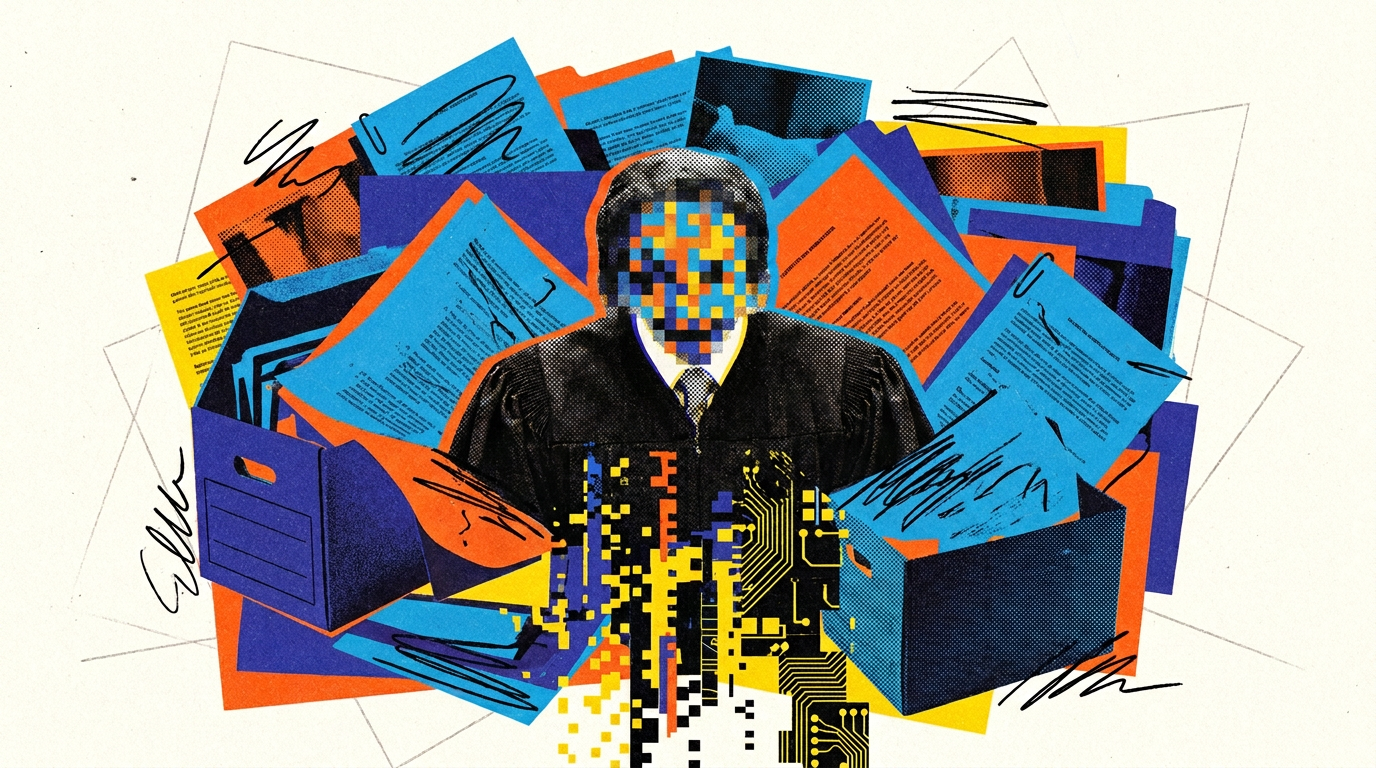
From artificial intelligence to criminal records and consumer credit, seemingly unrelated laws reveal a broader shift in how lawmakers regulate employment decisions.gettyArtificial intelligence. Criminal history. Consumer credit reports. Clean Slate laws. Privacy. At first glance, these subjects appear to have little in common. They arise under different statutes, pursue different policy objectives and often fall within different areas of law.Viewed together, however, they reveal a broader pattern.Across recent legislation, lawmakers have responded to very different policy concerns through a similar regulatory method. They are reaching further upstream in the decision-making process, addressing how employment-related information is created, maintained, disclosed, evaluated and processed before an employer ultimately acts on it.That development builds on another change already underway in employment law. Following the rules may no longer be enough when the rules themselves require employers to exercise judgment. Employers may need to determine whether criminal history is relevant to a particular position, consider rehabilitation or mitigating circumstances, assess the reliability of an automated recommendation, and explain how they reached a decision.But informed judgment depends on the information available to the person exercising it. And that information increasingly comes from somewhere else.Different Problems, A Common Legislative MethodIllinois starts near the beginning of the information lifecycle.The state's Clean Slate legislation addresses the criminal records system itself, including procedures for identifying missing dispositions and correcting incomplete criminal history information. It also expands mechanisms for sealing eligible records. The legislation therefore addresses two separate questions that can ultimately affect employment screening: Is the underlying information accurate and complete, and should it remain publicly available?MORE FOR YOUMissouri's SB 1421 approaches the second question more directly. Signed into law in July, the legislation creates an automated expungement process for certain qualifying drug offenses and makes corresponding records confidential. It also requires the state to provide consumer reporting agencies with information needed to identify and delete affected records. Rather than telling employers how much weight to give an old conviction, Missouri changes whether that conviction remains part of the information available to them.New York moved further downstream when it enacted restrictions on the use of consumer credit history. The sponsor of S.3072 pointed to two concerns: little evidence connecting credit history with job performance and the possibility of material errors in consumer credit reports. The resulting law generally prohibits employers from requesting or using consumer credit history for employment purposes, subject to specified exceptions, and restricts the inclusion of that information in consumer reports furnished for employment purposes.The policy judgment is significant. Lawmakers did not develop a framework telling employers how to weigh credit history against other qualifications. They largely removed that category of information from the employment process.Washington's expanded Fair Chance Act moves closer still to the employment decision. The law restricts when employers may obtain criminal history and establishes a process for evaluating certain conviction records once they have them. Before taking adverse action based on an adult conviction, an employer must have a legitimate business reason, consider specified factors, identify the record at issue, provide the applicant an opportunity to respond and document its reasoning.Washington therefore reaches beyond the availability of information to the reasoning that connects information with an employment outcome. A criminal record alone does not answer the relevant legal question. The employer must consider its relationship to the particular position and other contextual information before acting.California's SB 947 carries many of the same questions into artificial intelligence. The pending legislation responds to concerns that automated systems may generate inaccurate, biased or opaque outputs affecting workers. Among other provisions, it would restrict certain inferences, require independent human corroboration before specified automated outputs support consequential decisions, prohibit reliance on outputs that cannot be corroborated or are found to be inaccurate or misleading, and provide workers access to information about the system and its role in the decision.The examples address different policy concerns and use different legal mechanisms, but together they trace much of the path information takes toward an employment decision, from the integrity and availability of underlying records to the way information is evaluated, processed and ultimately relied upon.Why This MattersEmployment decisions increasingly sit at the end of a much larger information ecosystem.Much of the information employers consider originates outside the organization and may pass through several sources or intermediaries before informing an employment decision. Criminal records originate with courts and government agencies, consumer reporting agencies compile information from multiple sources, and HR technology providers increasingly organize, analyze or draw conclusions from that information before it reaches an employer.That creates more places for law to intervene.A legislature concerned about an employment outcome can regulate the employer's ultimate conduct. It can also address the accuracy of the underlying record, remove information that should no longer circulate, restrict access to information with limited employment relevance, require additional context before information may support a decision, or regulate the technology that processes it.Regulating information that affects employment decisions is hardly new. What appears to be changing is the breadth of regulation directed at different stages of the information lifecycle. Artificial intelligence is the latest and most visible manifestation of this development, but the pattern predates AI. The Fair Credit Reporting Act has long imposed requirements concerning the accuracy and use of information assembled for employment purposes. Fair chance laws have progressively restricted access to and consideration of criminal history. Clean Slate laws alter the records available for future searches. Privacy laws govern the collection and movement of personal information.That perspective may also provide a useful way to evaluate what comes next. A new bill affecting employment may appear to address AI, privacy, criminal history or another discrete subject. One of the more revealing questions may be where in the information lifecycle lawmakers have chosen to intervene.Parting ThoughtsNone of these developments establishes a new legal doctrine, and the examples do not share a single policy objective. They do, however, reveal a recurring legislative approach across areas of law that are often considered separately.Employment law has always regulated decisions and the conduct surrounding them. What appears to be changing is how far upstream lawmakers are willing to go. The information that reaches an employer, the information that never reaches an employer, the context required to interpret it and the technology used to process it are becoming part of the regulatory architecture surrounding the ultimate decision.Seen this way, AI regulation, fair chance laws, Clean Slate reforms, consumer reporting requirements and privacy protections begin to look less like separate legal developments and more like different interventions in the same decision-making process.The employment decision may still be where the consequences are felt. Increasingly, the law is doing its work before the decision is ever made.
Employment Law Is Becoming The Law Of Information
From AI and criminal history to consumer credit and privacy, lawmakers are increasingly regulating the information that shapes employment decisions.
TL;DRAI
Laws now regulate employment information upstream—from criminal records to AI bias—requiring employers to exercise informed judgment. HR teams must implement human review for automated hiring, audit vendor data, and document decisions, fundamentally reshaping compliance architecture.
1,102 words~5 min read