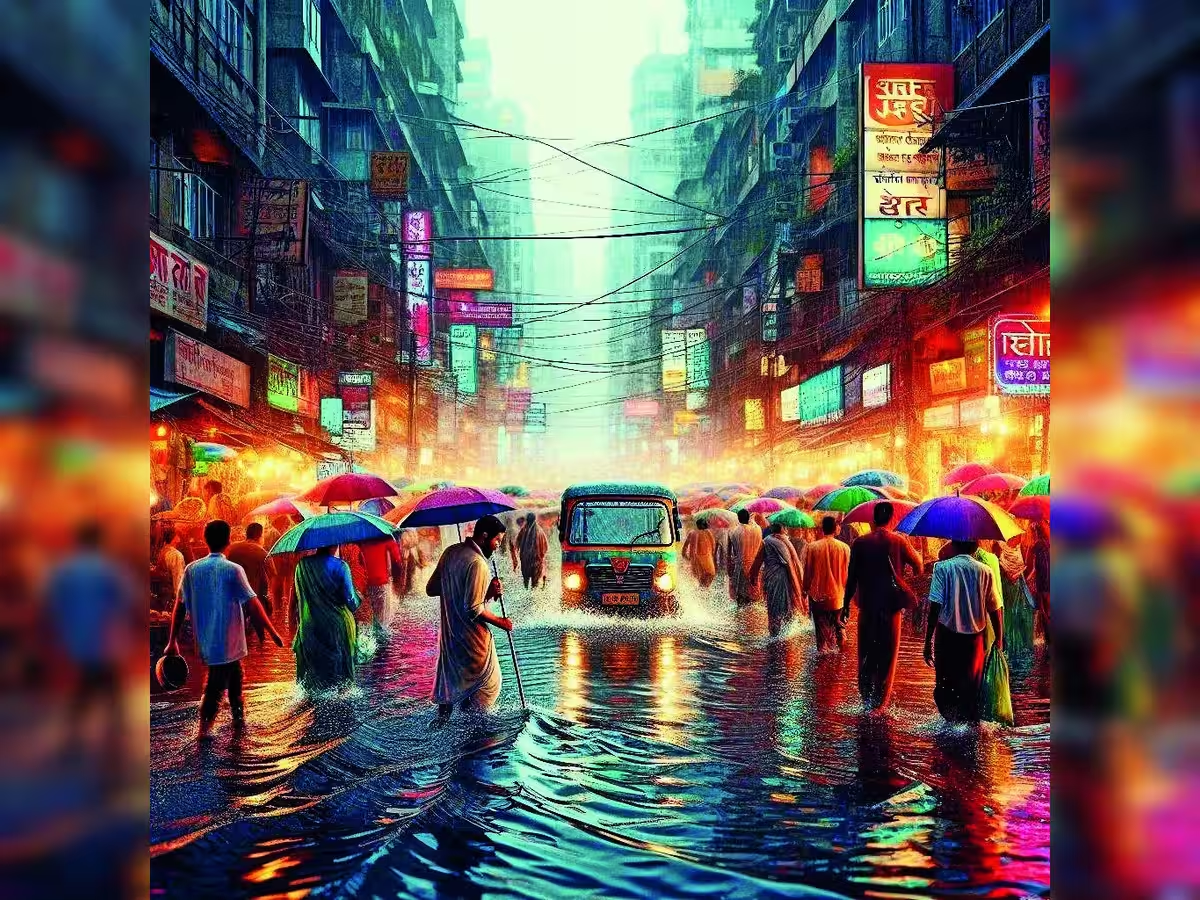
As you read this, the city you live in is either flooded by overflowing rivers or drowning under its poor drainage and water harvesting systems. Every year, the monsoon arrives not only as a relief from the scorching summer heat but, increasingly, as a curse. Developing cities that lack adequate infrastructure, a sophisticated and efficient drainage system, and functioning water harvesting systems quickly transform into the proverbial ‘Venice of the East’, though without the romance.
And if you are fortunate enough not to be living in a flooded city, spare a thought for our rivers. Many of them now flow through broken and damaged ecosystems, their natural courses disrupted by development and the relentless expansion of human settlements. It is the reason thousands of villages are swept away each year. Just last year, Punjab was badly affected by the rain, and this year, floods in Assam have displaced thousands of people and have caused many casualties. The monsoon cycle has become erratic, with some parts of the country experiencing repeated floods, yet there is a 16 per cent rain deficit. More than half of India’s districts remain rain deficient.While the central government is quiet on this issue, experts can’t help but question if this is a man-made disaster. In a 2023 paper, a review of a plethora of data from 2010 to 2020 was used to understand the nature of these repeated events and the underlying issue. The review concluded that anthropogenic (man-made) factors such as urbanisation, deforestation, absence of drainage, and choking of natural waterways outweigh the natural factors for floods in Assam.