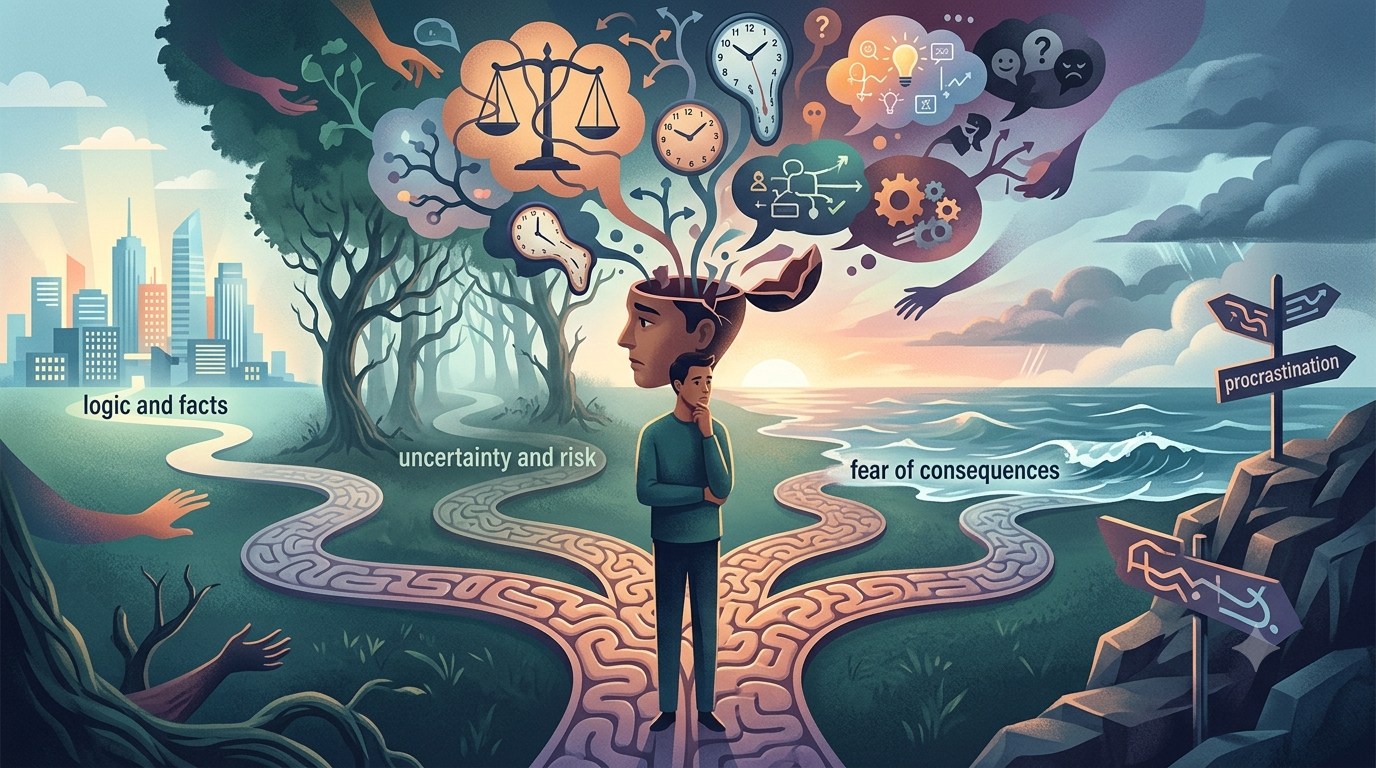
Doing hard things offers many benefits.gettyPeople are increasingly doing things the easy way, the fast way and the convenient way. And while this might seem wise, it can get in the way of being smarter, more capable and more resilient. In fact, research proves that protecting challenge and doing hard things can be terrifically beneficial for all kinds of wellbeing.Unfortunately, people are increasingly taking the easy path, even when they know it won’t deliver the best outcomes. In fact, data from the Hint App finds that among more than 14,000 people globally (in the US, UK, Canada, Europe, Australia and Latin America), 64% of people said they had chosen a simple option over a higher quality option because it required less effort.Overall, people are prioritizing ease over effort and outcomes. They are opting out of complexity, hard work and difficulty even when they believe the outcomes would have been better. We’re seeing a devastating decline of desirable difficulty; including the process to overcome challenges that build our esteem, capability, wellbeing and resilience.The Value of Doing Hard ThingsHard work, challenge and difficulty are part of life, of course, but rather than something to avoid, they offer significant benefits in five primary ways.1. Challenge Increases LearningWhen we are more challenged, we learn more. ‘Desirable difficulty,’ is when something is tough in a good way, causing us to dig in and work harder to acquire information; and hence more deeply embed it and be able to call on it and use it later. Specifically, research finds that when challenges are introduced in the learning process; called ‘desirable difficulty;’ people learn more deeply and retain learning longer term, according to research published by the Association for the Study of Medical Education (ASME). But 62% of people reported to Hint App that they avoid activities they think will be mentally draining even if they think the activities will ultimately help them. But when we learn more, we not only increase our smarts, but also our ability to make sense of things, respond, solve problems, innovate and create the conditions for a good life. 2. Challenge Increases Engagement and MotivationWhen we’re challenged, we are also more likely to be more deeply engaged. When tasks require greater cognitive load and when they are more complex and difficult, the process causes us to think and process more deeply, leading to increased learning and performance, according to research published in Instructional Science.But 66% of people in the Hint App report said they often abandon options that feel too complicated before determining whether those options are actually better. We need to try, test, and hang in long enough to assess whether our effort will be worth it. When we try something new, we’re not guaranteed success, but we are guaranteed the chance for learning and engagement.3. Challenge Increases RewardFascinatingly, when we put in more effort, we also find processes more positive and rewarding. This is known as the effort paradox: When we have to work hard at something, we feel more motivated and we feel a greater sense of control, according to research published in Trends in Cognitive Science.Hard things cause us to immerse in an activity. And immersion is one of the fundamental elements of engagement. It is also linked with a state of flow and happiness. 4. Challenge Increases DisciplineInterestingly, when challenge is higher, it also fosters emotional regulation, according to a study published in Educational Psychology Review. When something is harder, it requires us to manage and monitor emotions, staying calm to think clearly and reach goals. Perseverance; which is persistence, determination and dedication in the face of difficulty; is related as well. In longitudinal study of more than 3,000 people over 18 years published in the Journal of Abnormal Psychology when people cultivated a sense of perseverance, they experienced reduced depression, anxiety and panic.Importantly, 69% of people reported their confidence declined when they had to complete multiple steps, even when those steps would lead to a better outcome. On the other hand, when we choose to persist, we develop emotional control which is fundamental to discipline and a sense of mastery as well as confidence that we can work through things thanks to the capabilities we’ve built.Importantly, emotional regulation is also connected with happiness and success in life. When people can manage their emotions and reactions, they tend to have better relationships and more fulfilling lives. 5. Challenge Increases SatisfactionAnother example of the challenge dynamic is the IKEA Effect, named for the work it takes to assemble IKEA furniture. It demonstrates that when we accomplish something that requires a lot of effort, we tend to feel a greater sense of reward and satisfaction, compared to when something is much easier to accomplish. This is according to research published in the Journal of Consumer Psychology.Unfortunately, 68% of people believe life should involve fewer complicated decisions than it did five years ago. But difficulty is part of life and in fact, investing and putting in the work to get to an outcome drives positive feelings. We increase our sense of esteem and value ourselves for the effort we put in and the outcomes we see as a result. And in a period where levels of wellbeing are at record lows, this is worthy work for sure.How to Get SmarterSo how do you get smarter by doing hard things? There are four primary implications based on all the data.Appreciate Hard ThingsToo often, we equate ease with things that are good and difficulty with things that are negative. But the happiness paradox is that often the most challenging things in life are the most satisfying. Raising children can be hard but so incredibly fulfilling. Building a strong relationship with a partner can include difficult interactions but so rewarding. Getting through a huge issue at work can require hours of toil, but the achievement feels so good. As we’re faced with hard things that are a natural part of life, we can lean in and learn from them. We’ll have stressful days and tough projects to complete, but framing them as opportunities to expand our capabilities and build our resilience can change how we approach them and improve the outcomes we accomplish.Seek Out Hard ThingsFind what positively challenges you and set yourself up for desirable difficulties. It may be physical challenges like a tough ruck or a Go Hard program. Or it may be cognitive challenges like puzzles or taking on thorny problems at work. It may be an emotional difficulty like improving a problematic relationship or working to improve the ways you interact or build relationships with others.Avoid Cognitive SurrenderWe can also ensure that we’re not handing off too much to technology or AI. With systems that can do practically anything, we face AI gravity which pulls us toward cognitive surrender. Instead, we need to protect opportunities for connection, creativity and curiosity and avoid handing off what we love to do best. Use AI with intentionality, so you’re gaining efficiency without losing your passion, purpose or opportunities to use your own brain.Reinforce the Value of Challenge for ChildrenAccording to The Nation’s Report Card, children are reading less than ever before, which is correlated with lower overall school performance. They are also spending more time in front of screens rather than putting in effort to explore, discover or learn in real life. And test scores show it, with a decline in reading scores of seven points and a decline of math scores of 14 points over a decade. We can reinforce the value of challenge, set high expectations and hold kids accountable for doing hard work that pays off in their capability, esteem and resilience. Benefit from Desirable DifficultiesOverall, hard things can be good for our sense of esteem and capability. Desirable difficulties are indeed desirable. When we face them, we have the opportunity to build the belief that we can grow, improve and accomplish results, and this allows us to see things with more hope and optimism, believing we can succeed in the face of difficulty.Life isn’t getting any easier, so when we protect and enhance our ability to meet the inevitable challenges, we pave the way for wellbeing, happiness and fulfillment.
5 Surprising Benefits Of Doing Hard Things, According To Science
We tend to avoid difficulty even when the results will be better, but challenge has benefits. Discover benefits of challenge and ways to increase desirable difficulty.
1,362 words~6 min read