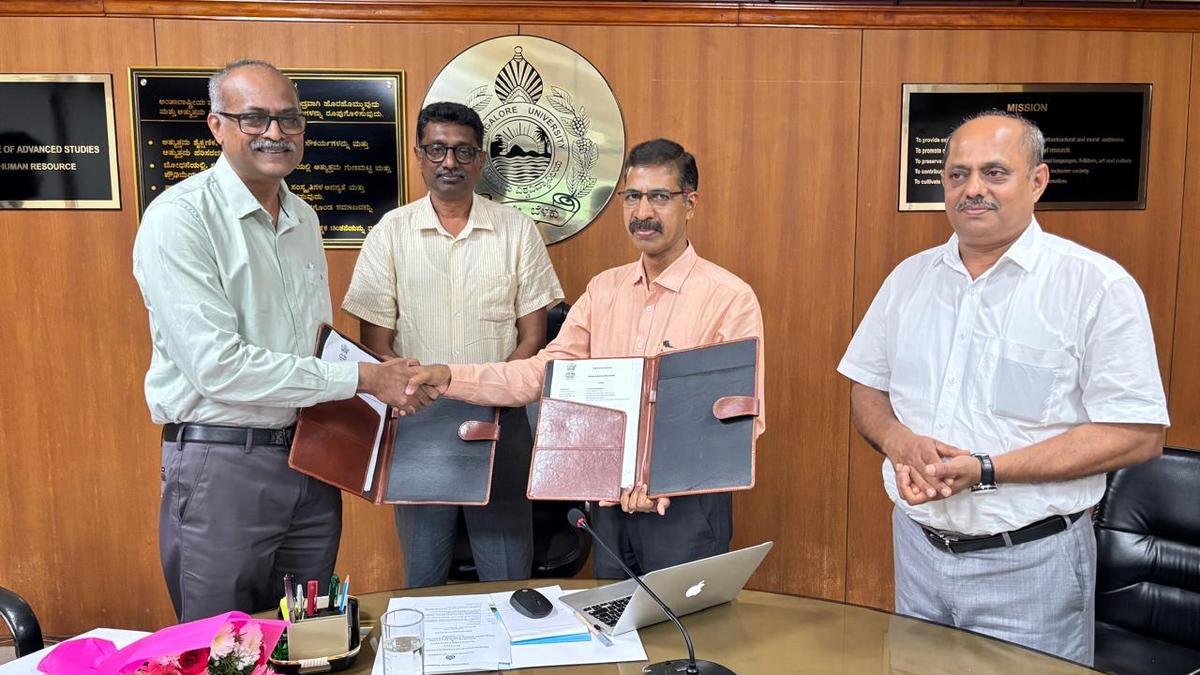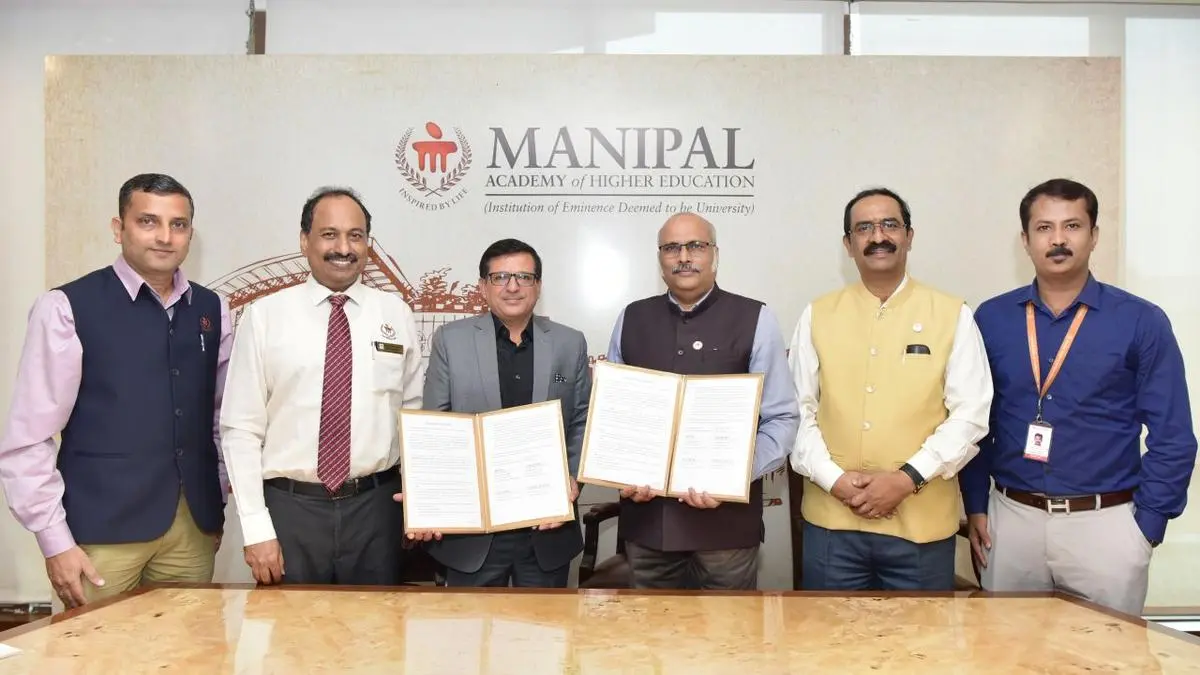
MAHE and GHCL Ltd exchange an MoU to develop a solution for real-time monitoring of the gross calorific value of carbon-based fuels.
Manipal Academy of Higher Education (MAHE) has signed a memorandum of understanding (MoU) with GHCL Ltd, a chemical company, to develop a Laser-Induced Breakdown Spectroscopy (LIBS)-based solution for real-time monitoring of the gross calorific value of carbon-based fuels.The collaboration combines spectroscopy with artificial intelligence and machine learning to deliver a rapid, on-site fuel quality assessment system.A media statement said that the initiative seeks to bridge the gap between laboratory research and industrial applications by replacing conventional, time-intensive fuel-testing methods with a data-driven solution that enables proactive operational decision-making.Through this partnership, GHCL Ltd and MAHE, Manipal Institute of Applied Physics, aim to develop an intelligent monitoring system capable of providing immediate insights into fuel quality at the point of receipt, thereby improving operational efficiency, enhancing quality assurance, and optimising fuel utilisation.Additionally, the collaboration aims to generate intellectual property and develop scalable technology solutions with commercial potential. Upon successful implementation, the LIBS-based monitoring system could serve as a replicable model for industries that rely on carbon-based fuels, thereby strengthening the innovation ecosystem and demonstrating the value of industry-academia partnerships, the statement said.Quoting Mayuresh Hede, Operations Head, Sutrapada Plant, GHCL Ltd, the statement said: “This partnership reflects GHCL’s commitment to adopting advanced technologies that improve operational excellence and sustainability. By integrating real-time analytics into fuel quality management, we aim to strengthen process efficiency while reducing uncertainties associated with conventional testing methods. We believe this initiative has the potential to set new benchmarks for quality assurance in industrial operations.”Sharath K Rao, Vice Chancellor, MAHE, said this project exemplifies how academic research can directly address complex industrial challenges. “By combining LIBS technology with artificial intelligence and machine learning, we are developing an innovative solution with significant scientific and commercial potential. The collaboration also provides an excellent platform for translational research that can benefit multiple energy-intensive sectors,” he said.Published on August 10, 2026