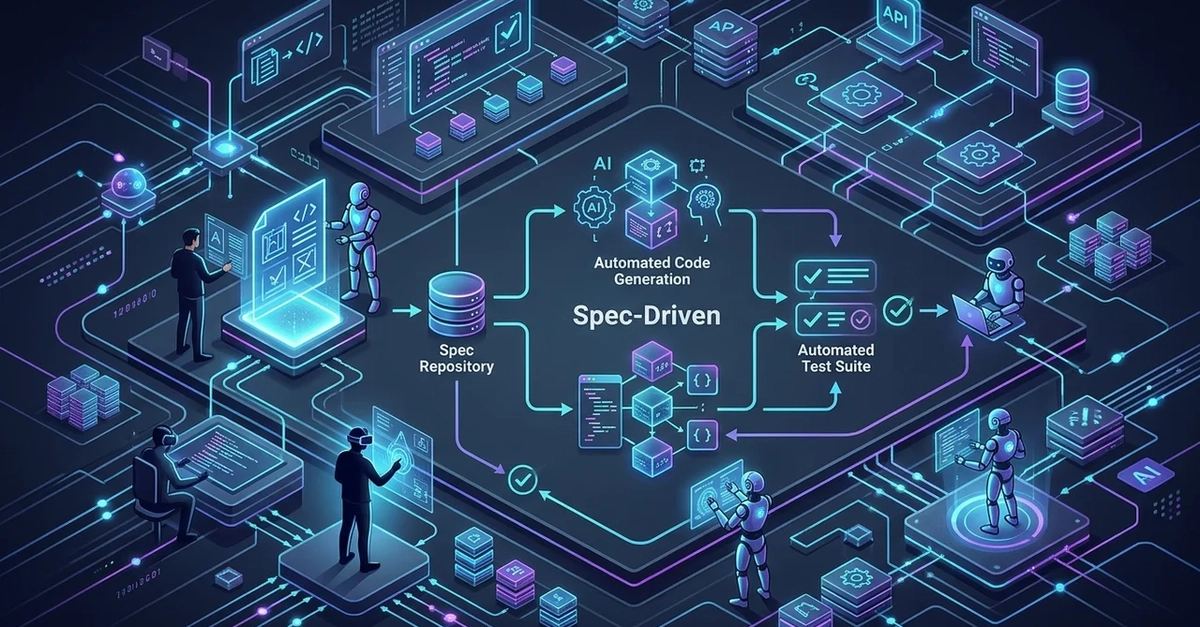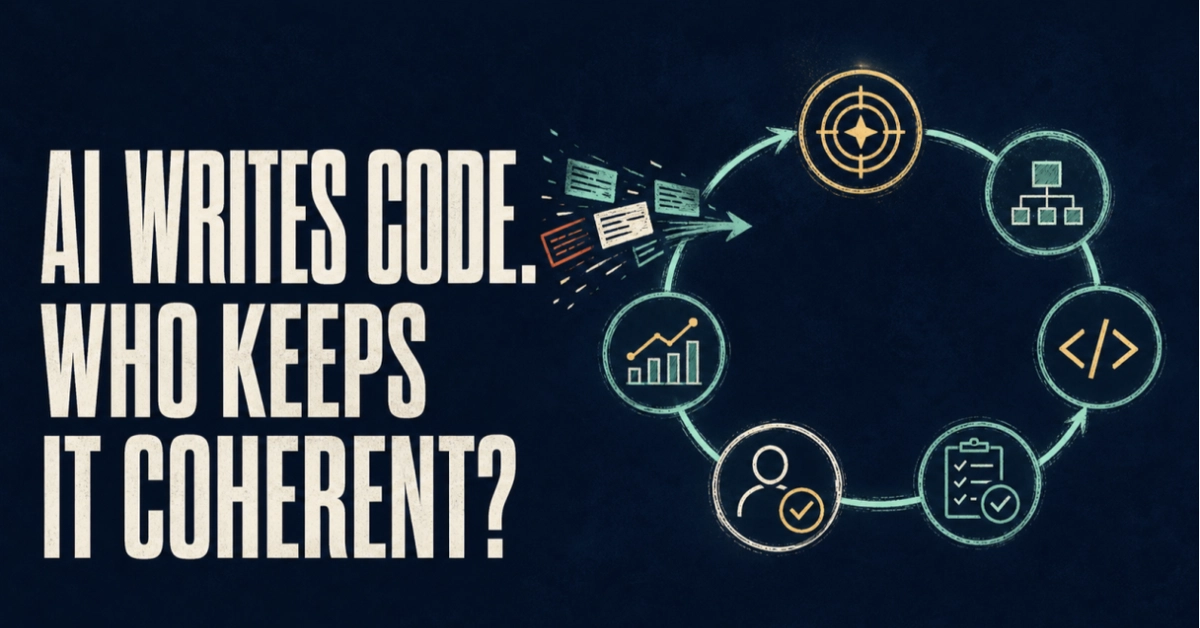
A practical architecture for linking stakeholder intent, specifications, decisions, code, tests, and production evidence.
AI can write code quickly. That is no longer the interesting bottleneck.
The harder problem is keeping a changing product coherent: making sure a new request still respects the product model, architecture decisions, data contracts, operational constraints, and work already being done by other developers or agents.
This is where many AI-assisted projects break down. A feature is specified in one conversation, implemented in another, reviewed against a partial repository view, and deployed without updating the documents that future work will rely on. Each individual output can look convincing while the system as a whole drifts.
I have been developing a different operating model. I call it Graph-Grounded Specification-Driven Development (GG-SDD): a traceability-first implementation pattern within the broader AI-Driven Development Lifecycle, backed by a project-scoped graph, evidence-aware retrieval, explicit approval gates, and a closed loop from stakeholder intent to production verification.