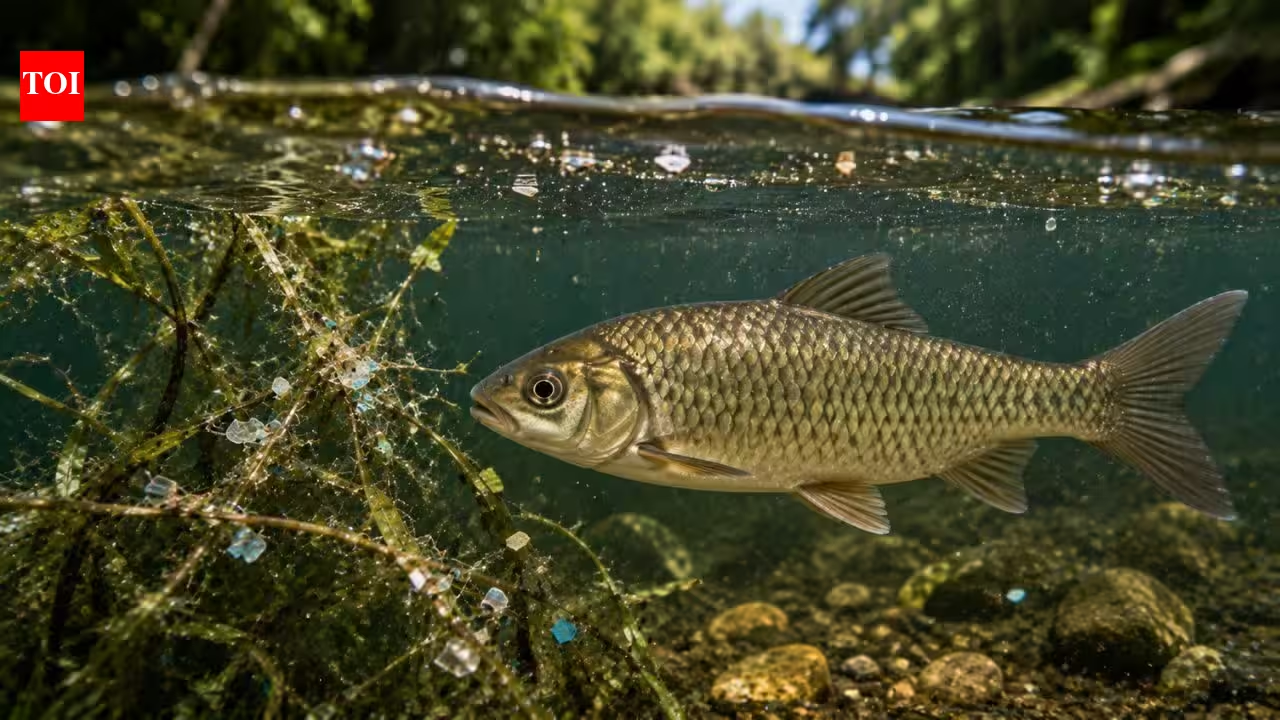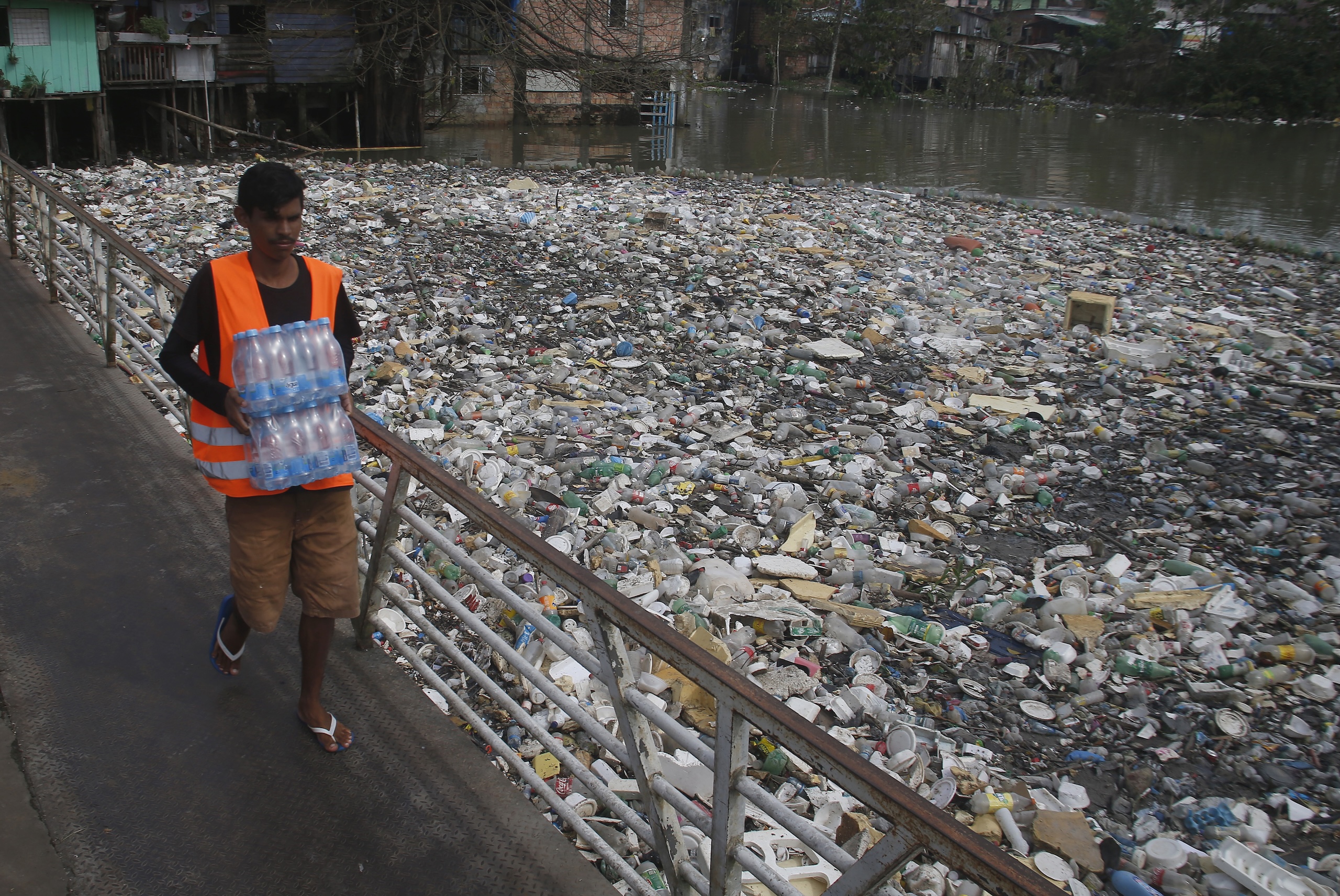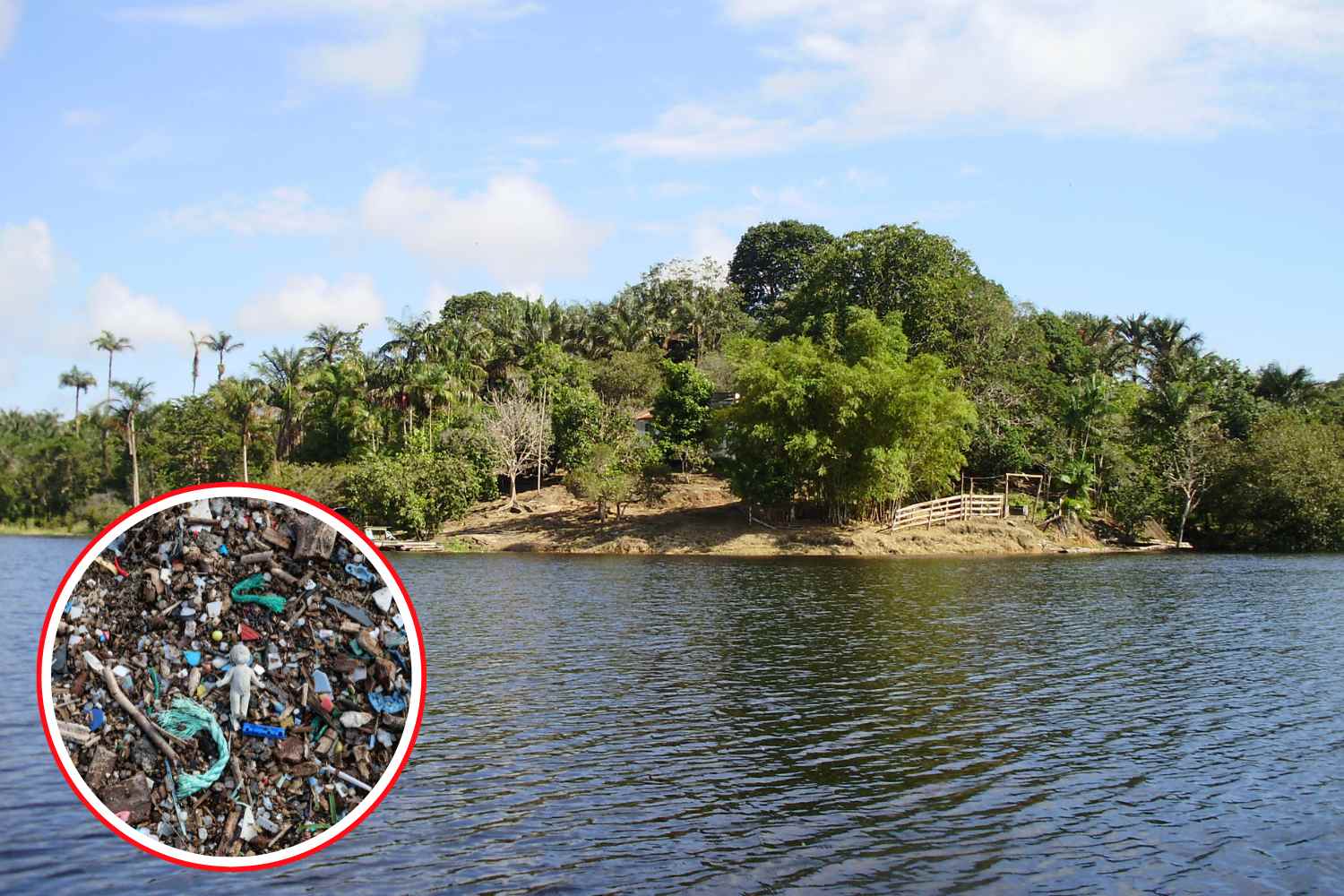
Following proof of the presence of microplastics in Amazonian rivers, streams and lakes, researchers are investigating how these particles affect fish health and physiology.A study highlights the risks associated with microplastics in the air-breathing organs of the pirarucu, a giant fish that must rise to the surface to breathe.Studies conducted with Amazonian fish show microplastics in their gills and digestive tracts, and experiments with the tamoatá point to increased stress and weight loss.Scientists warn of risks to human health in a region where fish is a dietary staple; in Brazil’s Amazonas state, average annual consumption is 14 kilos per person, five times the national average.
This is the second story in a special three-part series on microplastics in the Amazon. Read the first part here.
MANAUS, Brazil — In Amazonian waters, the pirarucu lives between two worlds. In the oxygen-depleted waters typical of floodplain lakes, this giant fish rises to the surface to breathe air. Over an evolutionary history spanning at least 100 million years, it developed a modified swim bladder that functions as a primitive lung. This rare adaptation has allowed it to thrive in environments that are too harsh for other fish species. Today, however, the very adaptation that ensures its survival makes it vulnerable to a new threat: Microplastic pollution.