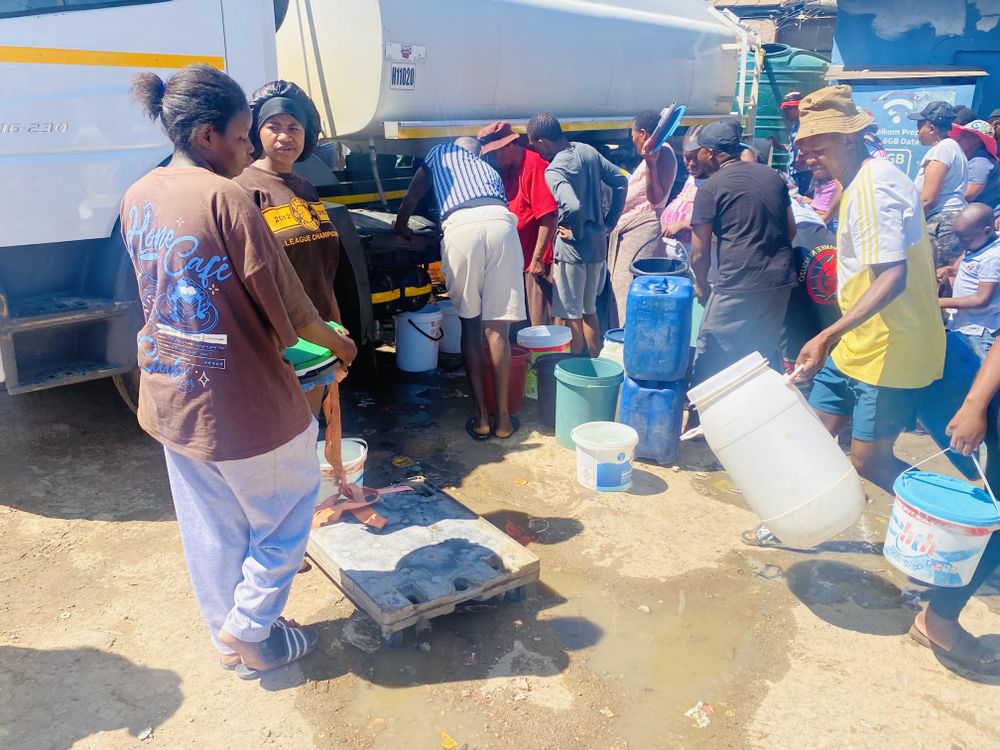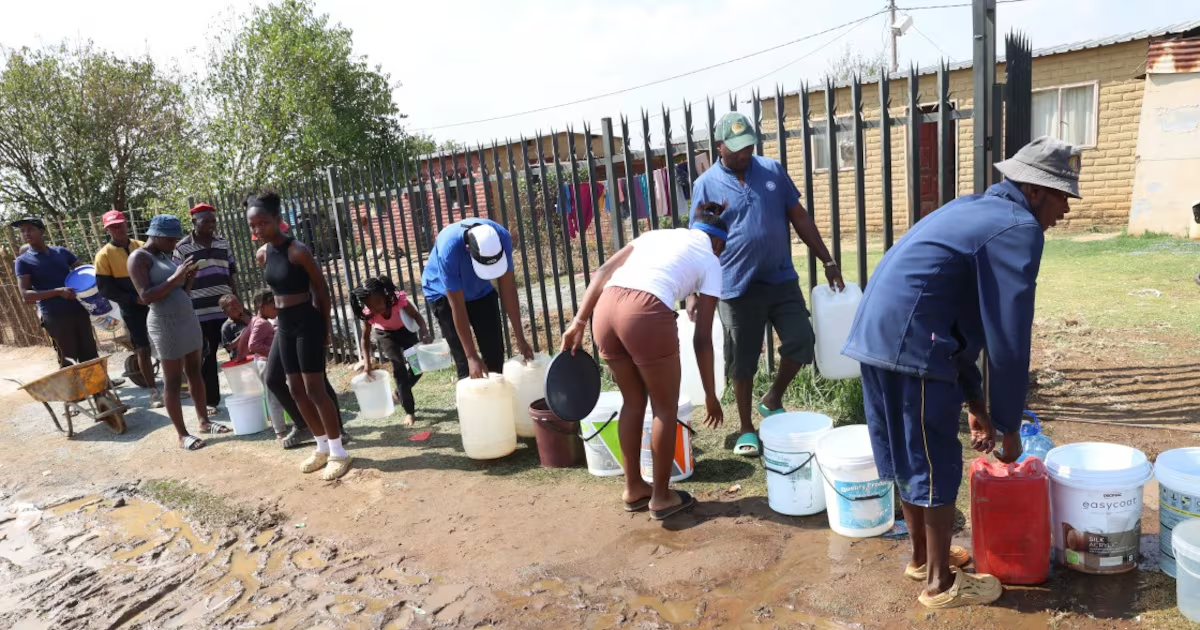
Since the National Water Action Plan was released, I have followed the public conversation closely about its reception. I sense scepticism. It seems to me that many South Africans believe this may become another well-intentioned government initiative that fails to produce meaningful change. After years of ageing infrastructure, recurring water outages, municipal dysfunction and institutional weakness, that scepticism is understandable. But this is precisely why the National Water Action Plan is crucial. As the country moves toward the next local government elections, water will inevitably become one of the defining issues in public debate. As it should. Citizens have every right to demand reliable water services and to hold public representatives accountable. What would be a mistake, however, is to reduce a national crisis to a political contest. However, as the water and sanitation ministry, we are not distracted by the politicking; our responsibility is to ensure water reaches the people who need it most. This is why I believe the National Water Action Plan deserves the support of every South African, regardless of political affiliation. As such, the urgency of the plan is reflected in the evidence. The latest national assessments show that 74% of water services authorities are performing poorly or are in a critical state, while 81% of municipal wastewater infrastructure is in poor or critical condition. Nearly half of municipal water systems recorded poor or unsafe microbiological water quality compliance, and non-revenue water losses average 47% across municipalities.In simple terms, almost half of the water that is pumped through municipal systems is lost through leaks, theft, faulty meters or other failures before it generates revenue or reaches consumers. This means communities without reliable supply, rivers polluted by failing wastewater systems and municipalities trapped in a cycle of declining infrastructure and shrinking revenue. However, the difference between this plan and many previous interventions is that it provides a practical implementation strategy with clear responsibilities, measurable outcomes and a co-ordinated national approach that brings all spheres of government together around a common goal. It focuses on five areas that are essential to rebuilding the sector. The first is stabilising municipalities where water and sanitation services are under severe pressure through targeted technical support, infrastructure delivery and stronger oversight. The second is reforming institutions to improve accountability, ring-fence water revenues and ensure water services are managed with the technical and financial discipline required for long-term sustainability. The third is mobilising substantially greater investment in water infrastructure through partnerships with the private sector, blended finance and investment-ready projects. The fourth is strengthening the legal and regulatory framework so that national government can intervene more effectively where service delivery has collapsed and support municipalities in implementing sustainable turnaround measures. The fifth is confronting corruption, vandalism, infrastructure theft and organised criminal activity that continue to undermine service delivery across the country. Taken together, these interventions represent a co-ordinated national programme that aligns infrastructure investment, institutional reform, regulation and implementation under one national framework. And I must say that an honest conversation requires us to acknowledge why previous efforts have fallen short. Too often, water infrastructure has been neglected, revenues intended for maintenance have been diverted, technical capacity has been eroded, and different institutions have worked in isolation from one another. The National Water Action Plan confronts these failures directly by improving co-ordination, strengthening institutions and linking funding to implementation. The plan is not beginning from scratch, as important reforms are already under way. The establishment of the South African National Water Resource Infrastructure Agency, the acceleration of legislative reforms, the expansion of infrastructure partnerships through the Water Partnerships Office, and targeted interventions in distressed municipalities, are all part of the implementation architecture that supports the plan. What gives me confidence is that we already have practical examples of what works. In Ballito (iLembe district municipality) and Mbombela, concession models have demonstrated that carefully structured partnerships can improve operational efficiency, reduce service disruptions and bring technical expertise into local water systems. These are examples of municipalities using partnership models to improve water and sanitation services while public authorities retain oversight and accountability.We are seeing the same principle at work in our major infrastructure programmes. The Vaal Gamagara Water Supply Scheme in the Northern Cape is one example. This is a long-term collaboration between government and private sector partners, designed to improve water security for municipalities, households, agriculture, industry and mining communities. The project is advancing through strong institutional co-operation, technical preparation and a governance framework focused on sustainable operations and maintenance, with the goal of securing reliable bulk water supply for about 250,000 people while supporting regional economic growth. This partnership model is helping to mobilise finance and build long-term resilience into the infrastructure system. The Olifants Management Model Programme in Limpopo provides another important example. It is a long-term social compact between government and private sector partners designed to accelerate the delivery of bulk water infrastructure, optimise existing water resources and strengthen operations, maintenance and skills development. The programme is expected to provide potable water to roughly 140 communities, improve the lives of about 390,000 people, and generate substantial employment and local economic opportunities. These examples are important because they demonstrate that we are developing implementation models that can be replicated and adapted across the country. More importantly, the National Water Action Plan contains measurable commitments against which government can be judged. We are committed to reducing non-revenue water losses from an average of 47% to 39.5% by 2031, bringing private-sector water infrastructure projects to market, ensuring that metropolitan municipalities ring-fence water revenues for water services, appointing the leadership of the National Water Resource Infrastructure Agency, and advancing priority infrastructure projects across multiple provinces. These are implementation milestones that will be monitored and reported on publicly. Municipalities remain central to this effort because they are the institutions through which most South Africans receive water and sanitation services. The purpose of the plan is not to shift responsibility away from local government, but to strengthen its ability to fulfil its constitutional mandate. The private sector also has a vital role to play. South Africa cannot close decades of infrastructure backlogs through public funding alone. We are fortunate to have world-class engineering firms, financiers, construction companies and infrastructure investors capable of helping expand and modernise our water system. Greater private sector participation through partnerships, blended finance and investment-ready projects is an important and practical way of accelerating delivery. We are also looking beyond our borders. South Africa has benefited enormously from international co-operation in the water sector, from technical expertise and institutional support to financing, research partnerships and knowledge exchange. The next phase of reform will require even deeper collaboration with international development institutions, multilateral partners, research organisations and global technology leaders. We need partnerships that build resilient water institutions, strengthen municipal governance and bring in the technology and skills needed to modernise infrastructure, detect leaks faster, improve water quality, and manage our systems more efficiently. And we are not only positioning ourselves as recipients of international support, but also contributors of practical solutions. Our experience in developing partnership models such as Ballito, Mbombela, Vaal Gamagara and the Olifants Management Model gives us valuable lessons that can enrich global discussions on infrastructure finance, institutional reform and water governance. Communities are key partners. Protecting infrastructure, reporting vandalism and illegal connections, using water responsibly and rejecting criminal syndicates that profit from water shortages are all essential contributions to rebuilding the sector. The work is cut out for us. President Cyril Ramaphosa has set a clear direction, and now the responsibility is ours to turn that vision into action. The National Water Action Plan gives us clear targets, firm deadlines and a practical roadmap. We are ready to turn this plan into real results and help build a water system that every South African can rely on. Mahlobo is deputy water and sanitation minister.Business Day
DAVID MAHLOBO | Turning the president’s plan for water into action
Public-private partnerships seen as key to modernising water infrastructure
1,308 words~6 min read