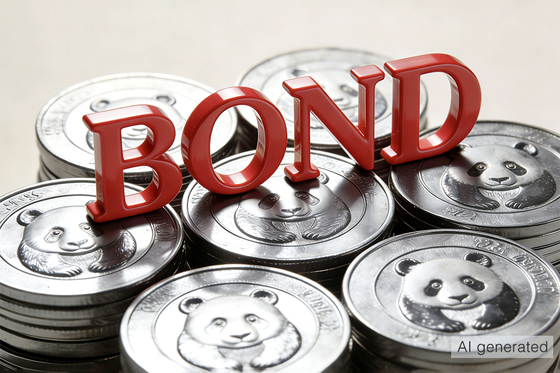
China’s booming panda bond market – yuan-denominated debt issued by foreign entities in the domestic market – offers a historic window for yuan internationalisation, according to a Goldman Sachs analyst, who also warned that lower funding costs alone could not sustain the currency’s global expansion.As the market attracted a broader mix of international issuers, gross panda bond issuance reached 160 billion yuan (US$23.7 billion) in the first half of the year, up more than 60 per cent from a year prior, Chen Xinquan, China economist at Goldman Sachs, wrote in a research note on Sunday.The boom, featuring “longer maturities, lower issuance yields and a broader issuer base” when compared with previous years, has also extended to the dim sum bond market – yuan-denominated notes issued outside mainland China – with issuance reaching 358 billion yuan in the first half, also rising more than 60 per cent, year on year, according to the note.“For the yuan, the current bond-issuance boom is a historic opportunity,” Chen said. He noted that, while yuan appreciation was an important driver of earlier issuance cycles, the latest expansion had been more closely associated with lower yuan funding costs relative to major currencies.Policymakers have placed greater emphasis on the yuan’s role in cross-border investment and financingChen Xinquan, Goldman SachsMeanwhile, the analyst highlighted that international issuers accounted for around half of gross issuance in each market, suggesting “increasing participation by global issuers”.More specifically, panda bond issuance had moved away from offshore Chinese property developers towards utilities, consumer companies, foreign financial institutions and sovereign borrowers, “supported by clearer issuance rules and greater flexibility to use proceeds offshore”, according to the note.
China’s panda bond market surges as Goldman Sachs flags limits to yuan expansion
Issuance of yuan-denominated debt surges, including in dim sum bond market, but sustained global use of yuan seen requiring broader access and stronger finance links.
272 words~1 min read