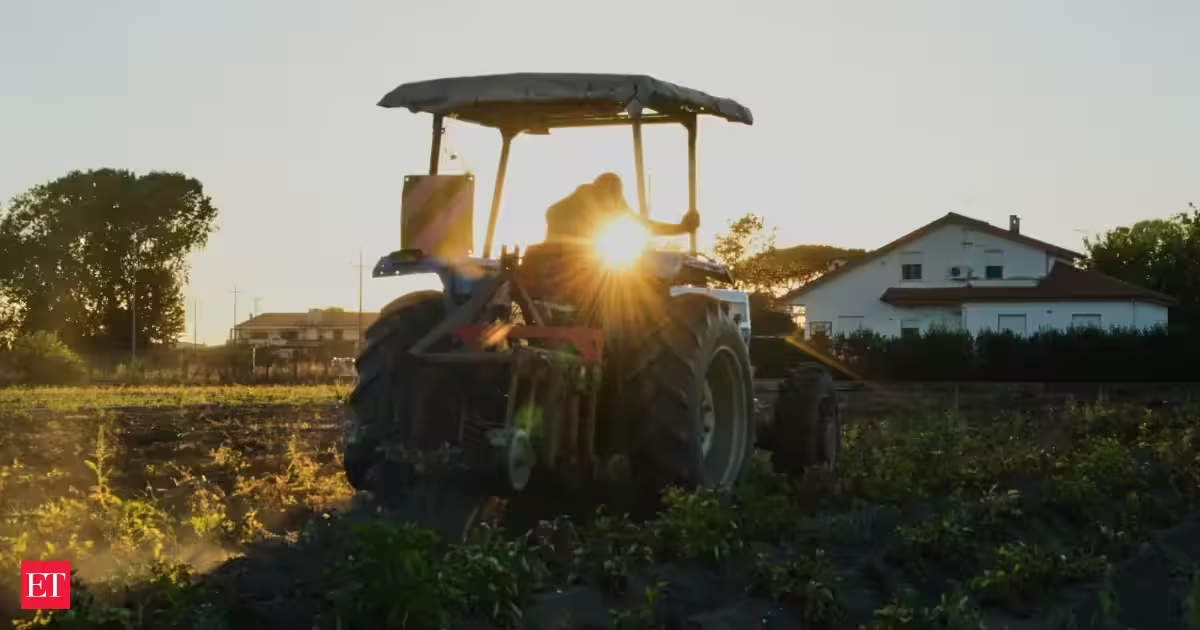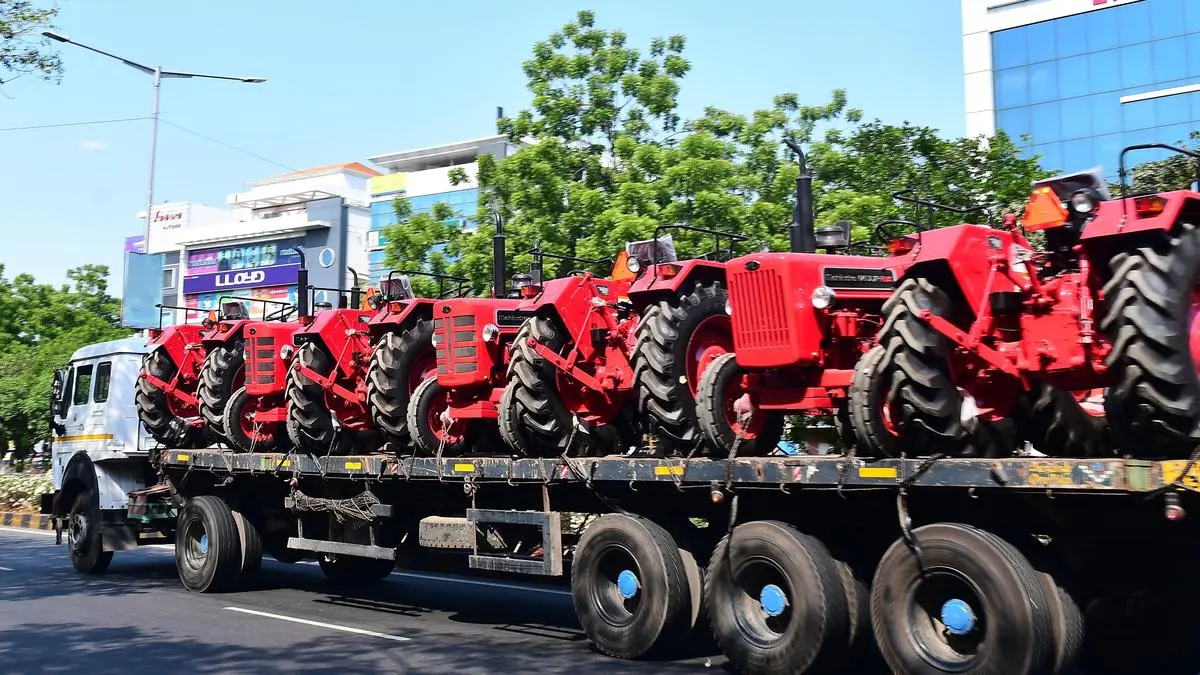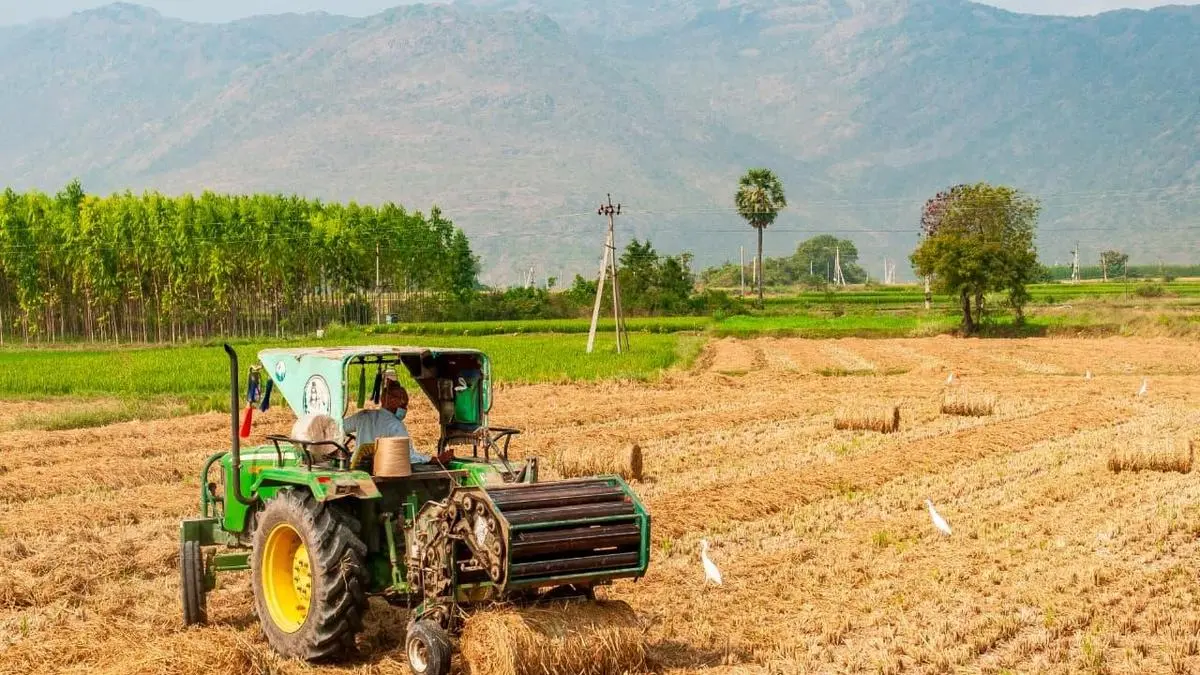
Italian-American agriculture equipment firm CNH's India unit sold 30,248 tractors in the domestic market in the first half of the 2026 calendar year, a 42 per cent jump from a year earlier, posting its highest-ever market share in the country, its India head said on Monday.In an interview to PTI, Narinder Mittal, President and Managing Director of CNH India, said exports rose about 20 per cent to 6,666 units in the same six-month period, outpacing the prior year despite headwinds from US tariffs earlier in 2026.The New Delhi-based subsidiary, which operates the New Holland and Case IH brands in India, said the overall domestic tractor industry grew 25 per cent in the first half, meaning CNH significantly outgrew the market as a whole."We did quite well in H1, achieving our highest-ever market share in India. The industry grew 25 per cent, we grew 42 per cent, selling more than 30,000 tractors domestically," Mittal said."On exports, we sold 6,666 tractors in H1 last year, and growth this year has been close to 20 per cent." Mittal said a cut in the goods and services tax (GST) and favourable monsoon conditions had driven a bumper first quarter, though he flagged softer sentiment that could weigh on sales in the second half."Now with the sentiment getting a little negative, we might see some drop in the industry in H2," he said."But overall put together for the entire calendar year, I believe still the demand should be good." He credited last year's out-performance to the company's technology-driven products and expanding dealer network, as well as support from its financial services arm, CNH Capital.Capacity expansionCNH's expansion plans remain on track, with a fourth manufacturing facility planned near its existing Greater Noida plant, Mittal said."We've been allotted 100 acres by the Yamuna Expressway Authority. The new plant will be very close to the existing plant and will serve both the domestic and export markets," he said.The facility, expected to be commissioned in early 2028, would roughly double CNH's annual tractor production capacity in India to about 1,20,000 units from around 70,000 currently. The existing plant produced 59,000 units in 2025.Separately, CNH plans to launch a new compact tractor in the 25-30 HP range in the second half of 2028 for both domestic and export markets, including the US and Europe.Tariff disruption easesCNH's exports were briefly disrupted by US tariffs, Mittal said, but shipments have since resumed as the situation "eased out".The United States accounts for about 30 per cent of the company's export mix, but Mittal said CNH has no plans to diversify away from its existing markets, adding that overall demand across the US, Europe and other regions "remains the same," with only local shifts in product mix."The overall market pool remains the same across the US, Europe, and other markets worldwide," he said, explaining that CNH manufactures one type of tractor tailored to each market.Market share goalsCNH India's market share remains around 4.5 per cent, well behind sector leader Mahindra & Mahindra. Mittal attributed the company's historically modest scale to its longstanding focus on higher-horsepower tractors, the 45-50 HP segment and above, and said CNH has since moved to broaden its portfolio into lower horsepower categories."We came up with a smart series of tractors and compact tractors that we've been supplying to Indian farmers. Now we have the complete range available in the Indian market, and growing our network will help us grow market share further," he said.About the feasibility of reaching double-digit market share within five to six years, Mittal expressed confidence. "Our product is getting better and better technologically, and we're providing affordable technology to farmers.Mittal described India as central to CNH's global strategy, built on four pillars: the domestic market, exports, the India Technology Centre in Gurgaon, and sourcing components from India's supplier base for plants worldwide.Beyond finished tractors, CNH exports components such as power take-offs (PTOs) and axles from India, he said.Mechanisation potentialMittal said the Indian tractor market is gradually shifting towards the 45 HP-and-above segment, a trend he expects to continue, even as farmers at the lower end increasingly seek technology that delivers clear value.Mittal pointed to low mechanisation levels in several segments as a growth opportunity. Sugarcane mechanisation stands at just 4 per cent, despite India being the world's second-largest sugarcane producer, while biomass and baling mechanisation is around 2 per cent, and cotton-picking mechanisation is almost non-existent."Industry and government should work together to improve mechanisation in these areas," he said, cautioning against focusing solely on tractor penetration given that average Indian landholdings are close to one hectare or smaller.He noted that government focus on biomass for power generation and compressed biogas has created new demand for balers and equipment CNH already manufactures. "We have a full range of equipment for this -- small square balers, round balers, large balers, along with tractors from 160 HP to 300 HP," he said.On why specialised equipment such as sugarcane harvesters and balers have performed relatively well for CNH, Mittal said the company views its business holistically. "We have the largest portfolio in India because we see ourselves as a global technology player," he said.On product gaps, Mittal said, "I can proudly say there's hardly any gap," noting that the range spans compact tractors up to 300 HP alongside harvesters, sugarcane combine harvesters and balers.Published on August 10, 2026
CNH's India unit posts 42% jump in H1 tractor sales, eyes capacity boost as US tariff strain eases
CNH's India unit reports a 42% increase in tractor sales in H1 2026, driven by market growth and capacity expansion plans.
TL;DRAI
CNH India sales jumped 42% in H1 2026 (30,248 tractors) to record market share; exports rose 20% as US tariffs eased. Capacity doubling by 2028 and compact-tractor launches reflect confidence in farm mechanisation growth in India's emerging segments.
888 words~4 min read