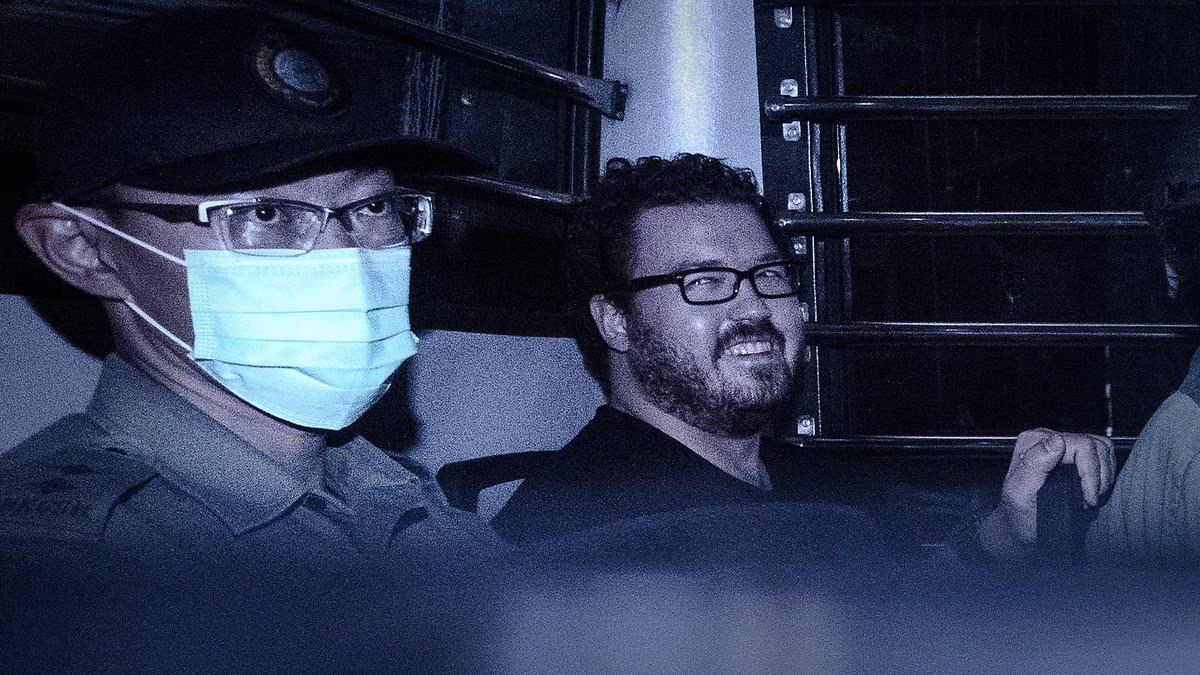
In November 2019, in London, among the most surveilled cities in the world, a security camera captured a young man in a luxury high-rise on the banks of the Thames. It watched as he stepped out into the balcony in the middle of the night, walked from end to end before returning to the centre, and then pitched himself over, into nothingness, into the river. It was a matter of minutes, possibly seconds. But what led to those seconds? And what followed after?Beyond the headlinesIn the hands of seven different novelists, the story could move in seven different directions. None of them would be wrong, but none would be correct either. The willing suspension of disbelief — that unstated, ever-present compact between the reader and the novelist — would possibly ensure satisfaction, even closure: the kind achieved after a particularly good crime thriller.In the hands of Patrick Radden Keefe, staff writer at The New Yorker and master of the art of narrative nonfiction, however, the narrative produces a range of takeaways: horror, fear, and caution, but also awe and wonder, respect, and understanding. If fiction takes one into places unventured and lives never lived, great narrative non-fiction, such as Keefe’s, takes the reader deeper into the familiar, beyond the headlines. It connects dots and builds sequences riding on the fundamentals of good journalism: relentless reportage, endless time for the principals — for these are real people, not figments of the imagination — and the ability to sift through both and cohere the material into a gripping read reflective of reality.
Review of Patrick Radden Keefe’s London Falling
Explore Patrick Radden Keefe’s "London Falling," a gripping narrative uncovering ambition, deception, and the tragic fate of a young man.
828 words~4 min read