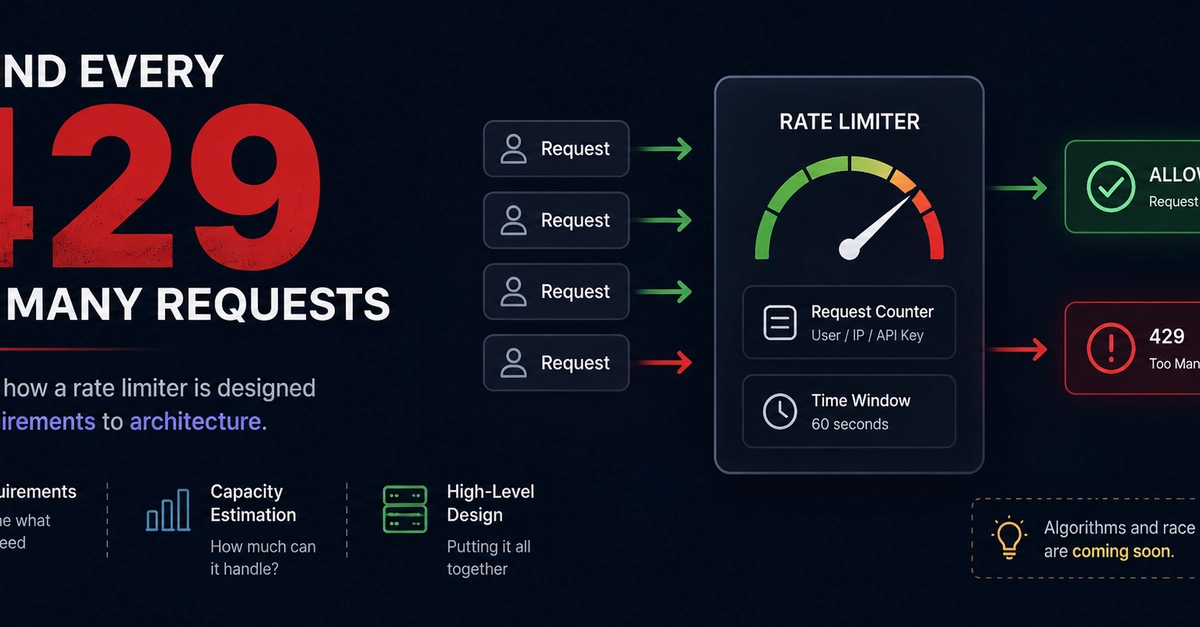
Rate limiting is a defensive mechanism used in software development to control the rate of incoming traffic to a network or application. It sets a strict cap on how many times a user, IP address (the unique digital address of a device on the internet), or device can make a request to a server (the central computer that runs a website) within a defined window of time. By enforcing these boundaries, rate limiting keeps applications stable, secure, and accessible to everyone.
The Nightclub Bouncer Analogy
Imagine a highly popular nightclub with a strict capacity limit and a professional bouncer standing at the entrance. If hundreds of people try to rush through the doors all at once, the club would become dangerously overcrowded, and the staff wouldn't be able to serve anyone safely. To prevent this, the bouncer only allows a specific number of patrons inside every few minutes. If you arrive when the club is full, you are forced to wait in line until someone else leaves or until the next entry window opens. This ensures everyone inside has a great experience, the bartenders aren't overwhelmed, and the venue stays safe.
Why It Matters in Tech
In the daily life of software engineers, rate limiting is a fundamental tool for preserving system reliability and security. Without it, malicious actors can launch Distributed Denial of Service (DDoS) attacks, which overwhelm servers by flooding them with millions of fake visits to crash the website. Engineers also use rate limiting to block brute-force attacks, where hackers program bots (automated software programs) to guess thousands of user passwords every second. Beyond security, it protects businesses from expensive infrastructure bills caused by runaway software bugs—such as an app loop that accidentally requests data from a database (a digital storage system) thousands of times a minute. By filtering out this excess traffic, rate limiting keeps operational costs predictable and prevents unexpected downtime.