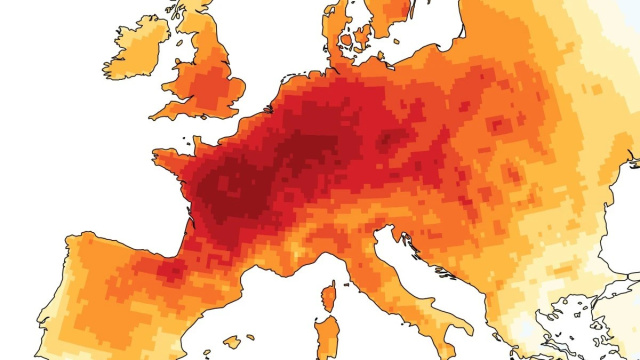
The European Climate Office Copernicus reports that the average temperature record for the June–July period set in 2022 was overturned by the hot waves plaguing Western Europe this summer.
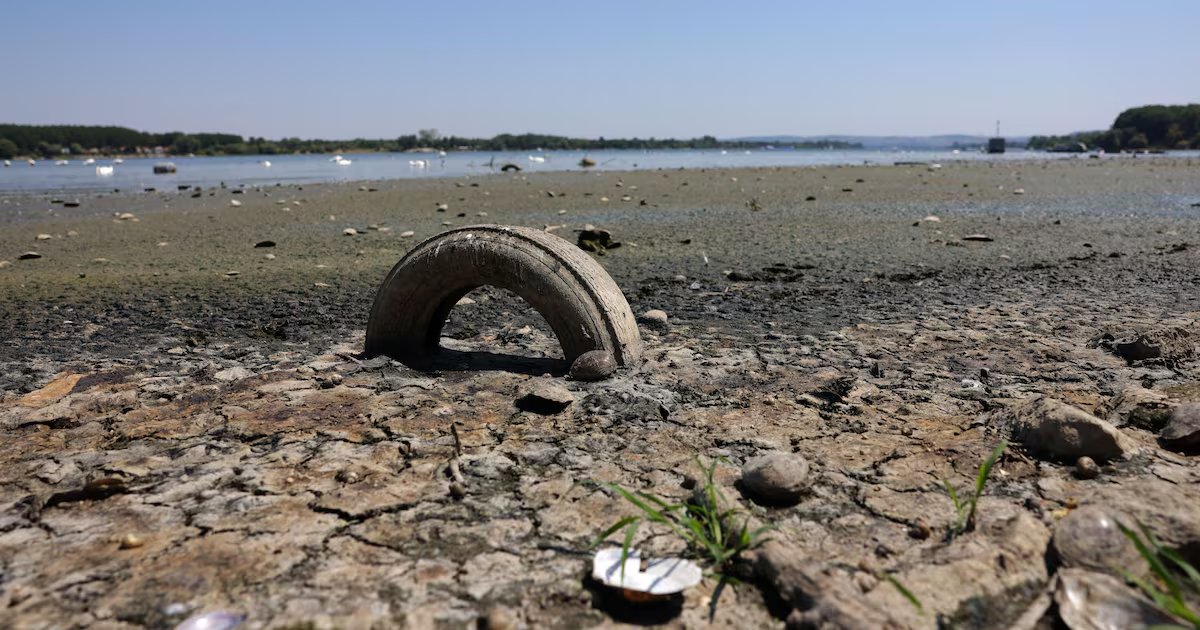
Since it started in May, the intense heat has caused many wildfires, a protracted drought, new national temperature records throughout the region, and thousands of anticipated heat-related deaths.
Globally, so far this is the third-hottest year, behind 2024 and 2025, climate statistics show. But 2026 still has time to catch up.
There is a growing possibility that by year's end, 2026 will surpass 2024 as the hottest year on record, or at least come close, due to the combined effects of accelerated human-caused global warming and a supersized El Niño, a periodic warming of parts of the Pacific that causes temperature variations worldwide, according to scientists.
Last month saw the highest average sea surface temperature ever recorded for July across the extra-polar oceans, or the oceans free of seasonal sea ice, Copernicus said.