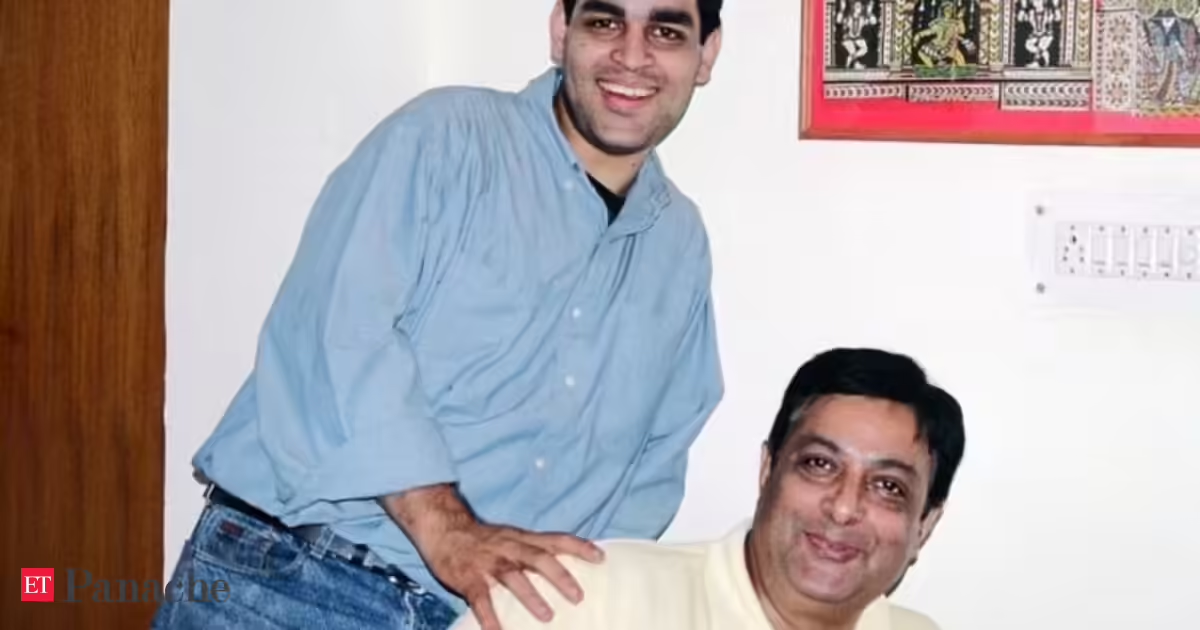
A simple plastic folder filled with old warranty cards became a reminder for Ankur Warikoo of how differently two generations can view money, possessions and security. His father kept the warranty card of almost everything he bought, from mixers and fans to the family’s first music system in 1996 and their colour TV. Warikoo once found the habit amusing. Years later, however, he understood that it was rooted in something much deeper: a life where replacing things was never easy.Ankur Warikoo recalls his father's unusual habitAnkur Warikoo took to X and shared how his father carefully preserved the warranty cards of almost every appliance he purchased. The collection included warranty cards for mixers, fans, the family’s first music system in 1996 and their colour TV.His father kept them all together in a plastic folder. Warikoo noted that the folder eventually “outlived most of the appliances” it was meant to document. As a child or young adult, Warikoo did not necessarily understand why his father was so meticulous about keeping these papers. He admitted, “I used to find it funny.” It was only much later that the habit began to make sense to him.— warikoo (@warikoo) ‘A man who grew up with nothing learns to protect everything’Warikoo's reflection centres on the difference between growing up with scarcity and growing up with greater abundance. He wrote that “a man who grew up with nothing learns to protect everything” because replacing something was never simply an option. For his father, an appliance was not something that could easily be discarded and replaced with a newer model. It had to last.“The thing had to survive,” Warikoo wrote, adding that it had to survive “an entire life, if need be.” That mindset explains why a warranty card could hold such importance. It represented the possibility of repairing or protecting something that had been bought carefully and was expected to remain useful for years.You Might Also Like:The generational gap Warikoo noticedWarikoo's post also highlights how attitudes toward possessions can change when circumstances change. He compared his own behaviour with his father's. Today, he said, he can throw away a box just five minutes after opening it. That small everyday action suddenly makes him aware of the distance between their lives. While his father came from a time when possessions had to be protected because replacing them was difficult, Warikoo belongs to a generation that can often replace things more easily.The difference is not simply about being careful or careless. It reflects two very different experiences of money, scarcity and security.‘They spent their life surviving’The most emotional part of Warikoo's reflection comes when he connects his father's habits with the sacrifices of an entire generation. “They spent their life surviving,” he wrote, before adding, “So that we could spend our life buying.”The contrast captures the way parents who grew up with limited resources often develop habits that can seem overly cautious to their children.Saving documents, repairing appliances, reusing things and holding on to possessions may appear unnecessary when replacements are readily available. But for someone who grew up without that security, protecting what they owned could be a necessity rather than a quirk.You Might Also Like:Why the warranty cards matteredThe old warranty cards were more than pieces of paper. In Warikoo's telling, they represented his father's relationship with the things he worked to afford. Keeping them meant being prepared if something broke. It meant making sure an expensive purchase lasted as long as possible.Warikoo's later understanding also shows how easily children can overlook the circumstances that shaped their parents' habits. What once seemed funny to him eventually became evidence of a life shaped by scarcity and the need to make everything count.You Might Also Like:His father's plastic folder therefore became more than a collection of warranty cards. It became a quiet reminder of the sacrifices that allowed the next generation to live with a very different relationship with possessions.
‘I used to find it funny’: Ankur Warikoo recalls his father’s habit of saving warranty cards and what he understood years later
Ankur Warikoo recalled how his father carefully saved every warranty card, from mixers and fans to their first music system and colour TV. He once found the habit funny but later understood it reflected a life of scarcity, where replacing things was never easy. His emotional reflection highlights a generational shift: “They spent their life surviving. So that we could spend our life buying.”
652 words~3 min read