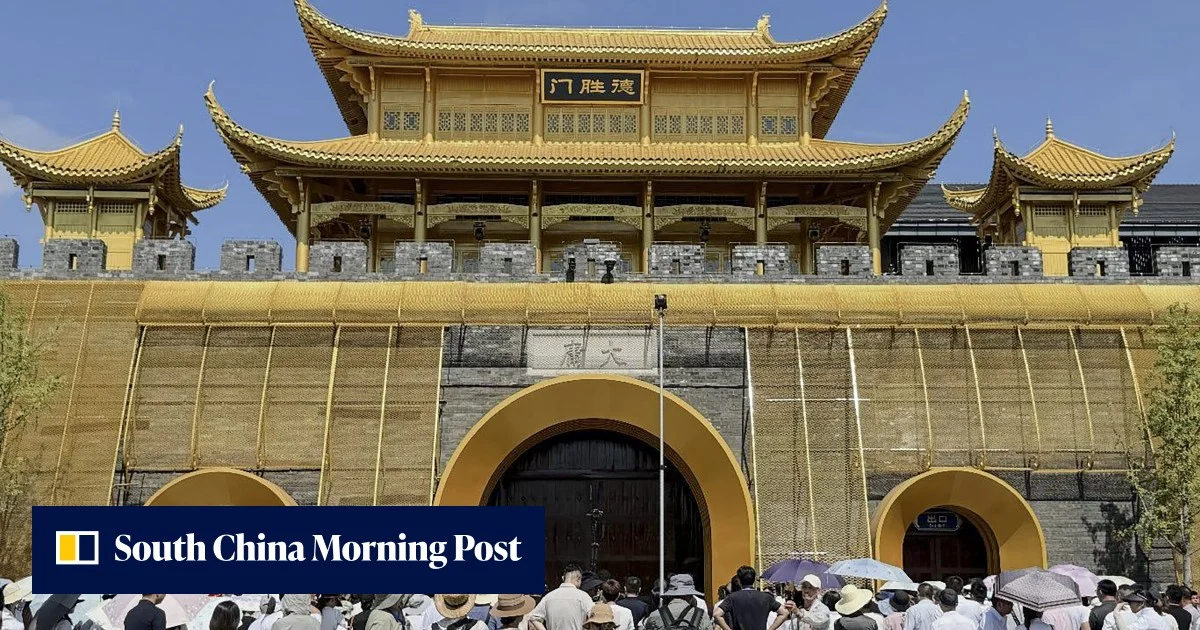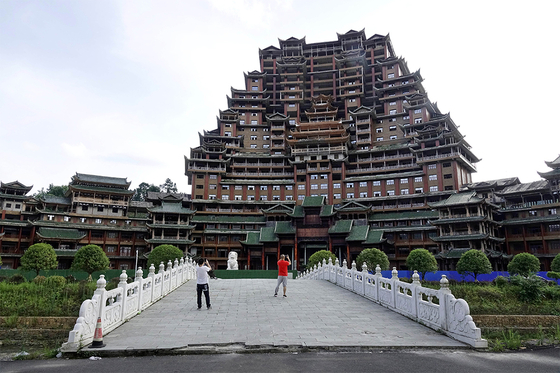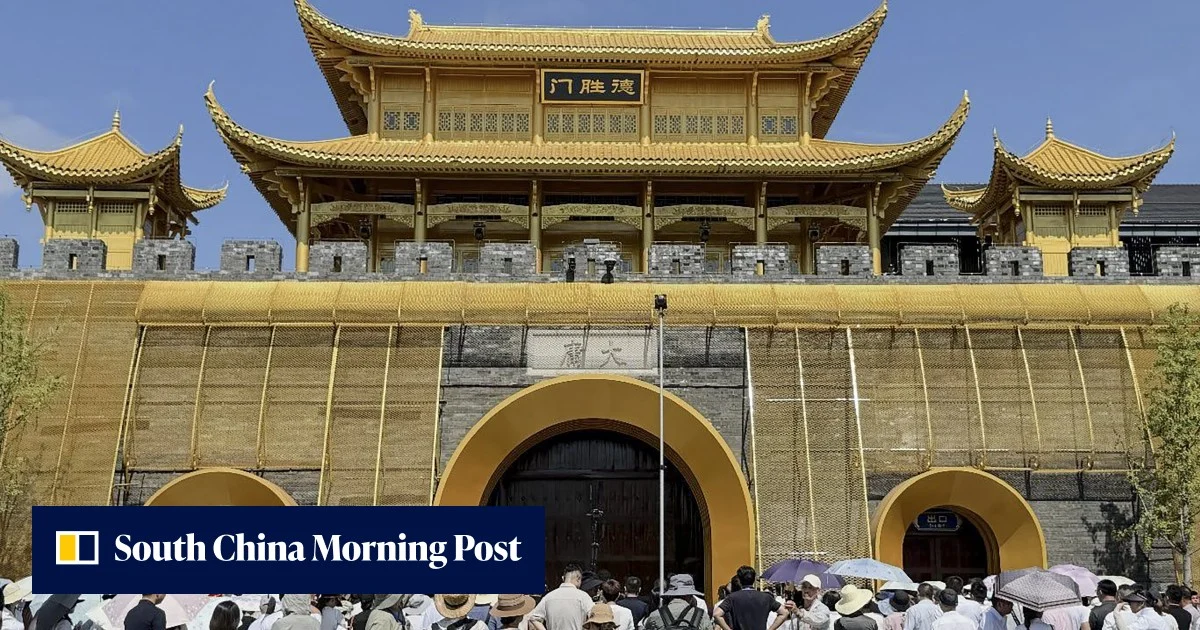
In mid-July, Dayong Ancient City – a state-backed replica town in China’s mountain tourist hub of Zhangjiajie – reopened its gates after a major overhaul, drawing more than 150,000 visitors in its first three days, according to official figures.That marked a stark contrast to the site’s recent past. Built to showcase architectural styles from the Ming and Qing dynasties, the site in the central Chinese province of Hunan was, until recently, little more than a ghost town, struggling amid years of crushing losses.Dayong Ancient City is emblematic of thousands of underperforming developments nationwide – a by-product of China’s past construction boom that favoured scale over sustainability. Beijing has increasingly pushed to reactivate stagnant assets as local governments face severe fiscal pressure from plunging land-sale revenues amid a prolonged property slump.Conceived during China’s era of debt-fuelled urban expansion, the project, at a cost of more than 2 billion yuan (US$296 million), was built to give the region a modern urban landmark. Instead, it has struggled since trial operations began in 2021, accumulating net losses exceeding 1.6 billion yuan over five years, according to annual reports from its owner, the Zhangjiajie Tourism Group.“Leaving assets idle incurs continuous depreciation, interest, maintenance and image costs,” said Leo Liu, founder and chairman of tourism service provider Beijing Tripvivid Cultural Tourism Media. “A restart isn’t about proving past decisions were right – the main task is to stop the bleeding and get these idle assets back into the economy.”The reopening featured live shows and immersive set-ups based on hit entertainment intellectual property (IP) franchises, including the variety show Hello, Saturday and the female celebrity reality competition Sisters Who Make Waves. Both IPs belong to a listed unit of the state-owned Hunan Broadcasting System: Mango Excellent Media.“Mango’s popular IPs solve the initial cold-start problem and draw younger crowds,” Liu said. “However, initial visitor numbers must be turned into long-term offerings. Dayong Ancient City must ultimately showcase local culture – it cannot become a generic, detached entertainment strip.”
How China’s Zhangjiajie aims to revive a US$296 million loss-making tourist site
A 150,000-visitor opening offers an early signal, but analysts warn that lasting cash flow will require stronger products, local culture and tighter operations.
330 words~2 min read