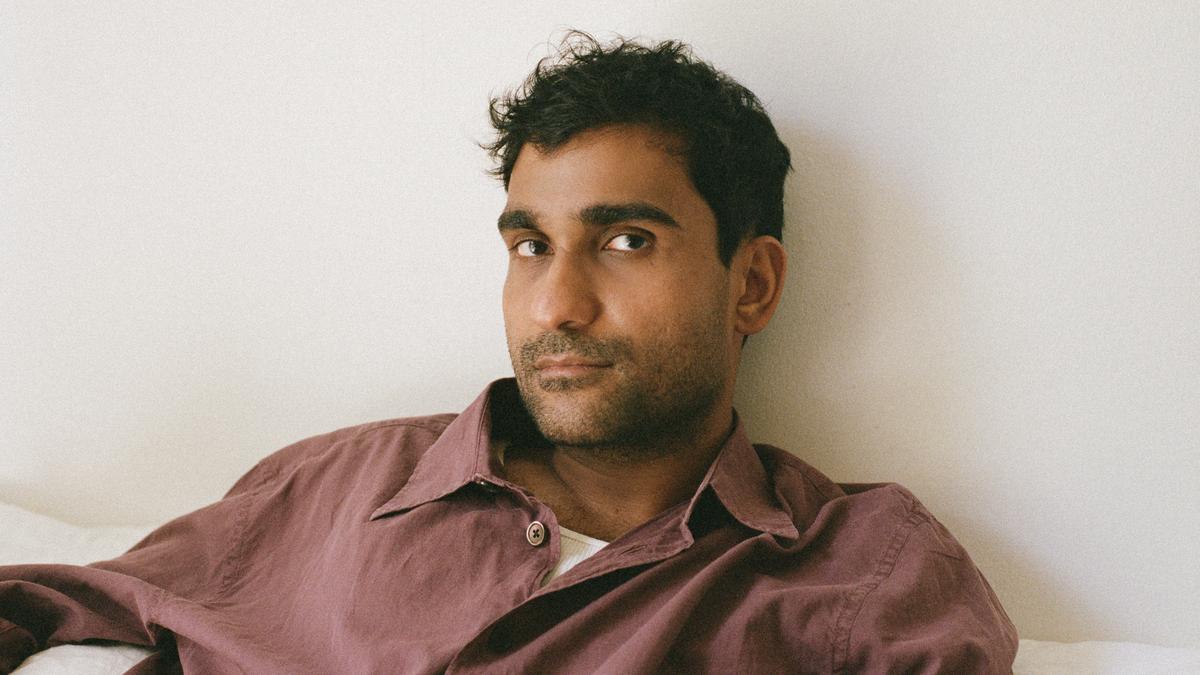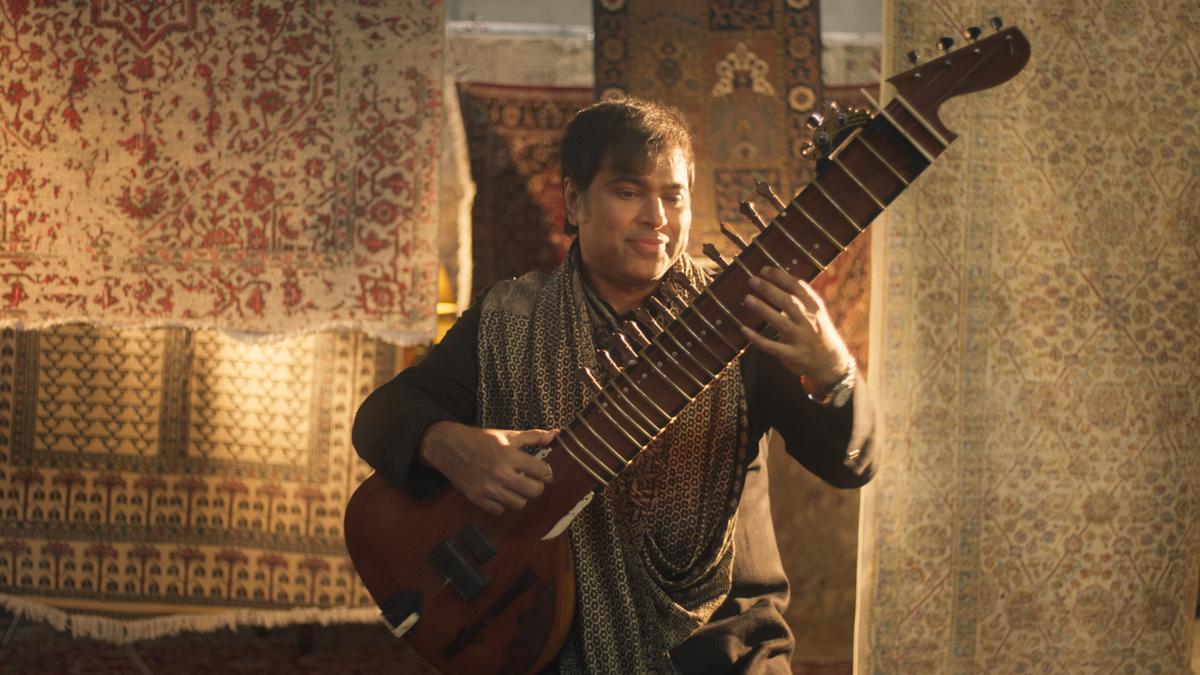
In an exclusive chat with Hindustan Times, Bharat Chauhan discusses Uns, his mother, Urdu poetry, Seedhe Maut and why he refuses to make music for audiences. Singer-songwriter Bharat Chauhan has never been interested in making music that tells people what they want to hear. His songs have always come from a more personal place, shaped by love, loss, memory and an enduring connection with Urdu poetry and ghazals. From Shayar and Tu Hoti Toh to Vasl, Ghar and his 2022 album Qurbat, Bharat has built a musical world that feels intimate without trying too hard to be understood. His latest album, Uns, released on July 21, 2026, takes that honesty further. The 12-track album moves through affection, longing and relationships before gradually descending into grief, ending with Meri Maaye, a deeply personal conversation with his mother. Sonically, it also marks a shift for Bharat.Bharat Chauhan talks about new album Uns, working with rapper duo Seedhe Maut and why he chooses authenticity over audience expectations,Unlike his earlier, largely acoustic work, Uns is fuller, heavier and more band-driven.The album is also the second chapter of a larger seven-album journey Bharat has imagined for himself, with each record documenting a different phase of his life. In an exclusive conversation with Hindustan Times, he opens up about finding the sound of Uns, writing about his mother, his relationship with Urdu, collaborating with Seedhe Maut, hip hop duo from Delhi, and why making music for an audience can come at the cost of authenticity.Turning life into musicBharat did not begin Uns with a fixed sonic blueprint. The sound evolved as he worked on the album, although he knew he wanted to move away from the acoustic-heavy arrangements of his previous work. “No, I discovered it while making it. I also wanted these albums to be more band-heavy and not just have acoustic song. My earlier songs were quite acoustic and deep, but in this album, there is only one acoustic song. That was a conscious decision. After the first album, I decided that the second one should be slightly heavier in terms of instrumentation and arrangements,” he says.The bigger idea behind the album, however, was always personal. Rather than creating a fictional narrative, Bharat is documenting what happened to him between Qurbat and Uns. He adds, “The era is actually my own. I want to talk about the life I lived between the albums. Whatever I felt between the first and second album, I wrote about in this album. It is just documenting my own life through songs.” That also explains why the album feels like an emotional progression rather than simply a collection of individual tracks.From happiness to griefBharat personally handled the sequencing of Uns, deliberately shaping it like a journey. The album begins on a lighter note before gradually becoming more emotional and eventually deeply sad. He explains, “I do the sequencing myself. With the previous album, I decided on the production aspect and the pace of the songs. I didn't want it to be that there were very fast songs followed suddenly by very slow songs. But with this album, I decided that it should be a journey. The beginning has songs that are quite happy. Then, in the middle, it becomes emotional and, by the end, it becomes slightly sad. By the last song, it is very sad. It is a journey from happiness to sadness.”That journey eventually leads back to his mother. The singer says, “Ultimately, it is about sleeping in your mother's lap. When there is so much grief, you become sad and, eventually, you remember your mother. That's why the 12th song is Meri Maaye, where I am having a conversation with my mother.”The song is about something as simple as growing older together: “I am telling her, ‘You are ageing, I am ageing’. That is the conversation I am having with my mother in the last song.”For Bharat, writing about grief is not necessarily difficult. Writing about his mother was. “For me, writing about grief and pain is actually easy. I get this part of my music quite easily.” he adds.But Meri Maaye took him somewhere he had never expected to go. “That was the most difficult song to write. I never thought I could write Meri Maaye. I always thought that as long as my mother was alive, I wouldn't be able to write a song for her. But eventually, one day I was alone and I wrote it.”The Urdu connectionBharat's love for Urdu poetry began long before he started making music. He studied Urdu as a third language in school between fifth and eighth standard, where his teacher Roshan Lal sir introduced him to the language.“I studied Urdu in school. From fifth to eighth standard, we had Urdu as a third language. There was a teacher, Roshan Lal sir, who used to come and teach us Urdu. It was basic Urdu, but he taught us pronunciation, words and their meanings. I guess it somehow developed from there,” he reveals.His musical influences grew alongside that connection. He grew up listening to songs from the 1950s and 1960s, along with ghazals by Jagjit Singh, and Ghulam Ali. For Bharat, good writing remains the heart of a song. “I have always felt that writing is the soul of a song. If the writing doesn't hit you in the right spot, the song becomes very flat. The production may sound good, but I feel the writing needs to be good for a song to become beautiful,” he explains.That is also why he refuses to reshape his music around what might be more commercially appealing. He says, “Some people do, but very few. I tell them that if I start making music from the audience's perspective, I will lose my own perspective as well. Because I have to say what I want to say. If I start thinking, ‘People will like this,’ then I will lose the genuineness that comes naturally to me. I have to tell my story—what happened in my life, how I see life and how I see people.”He has never approached songwriting with the audience in mind: “If I make a song from the audience's perspective, then I will lose my perspective as well. I will lose my genuineness. I want to tell my own story.”Why Seedhe Maut clickedUns also features Bazaar, Bharat's collaboration with Seedhe Maut. While their musical styles are different, he believes the connection worked because of what they share emotionally. He says, “I think it happens because, as people, Seedhe Maut—Encore ABJ (Abhijay Negi) and Calm (Siddhant Sharma) and I are emotionally similar. They make that kind of music and I make this kind of music, but as people, the three of us share a similar kind of energy. That is why the collaboration happened very naturally for us.”There was no elaborate plan behind the song. The singer adds, “It is also not like we were sitting down saying, ‘We are working on something.’ We just make songs for fun. We made it in the same way—just for fun.”What Bharat admires most about Seedhe Maut is their refusal to filter themselves for an audience. “Their genuineness towards their art. Whatever they feel in their hearts, they say. There is no filter around it. They don't think, ‘People need to hear this, so we will write this.’ They write from the heart,” he asserts.He believes that honesty is ultimately what makes music connect. “Something written from the heart attracts people because human emotions are the same. Whatever I am feeling, almost everyone has felt it at some point—whether I am sad or happy. If you write what your heart is telling you, it will resonate with people,” he says.What comes after Uns?Bharat has already started writing his third album, although recording is yet to begin. “Actually, I decided on the third album last year. I started writing songs for it because whatever I felt after that, I started writing about it. I haven't started recording yet, but I have started writing songs,” he says.He wants the next album to sound different, even if that presents a new challenge: “Sonically, though, I want to try something different next time. That will be a little bit of a challenge.”The seven-album plan, meanwhile, is still intact, although Bharat admits the idea now feels more demanding than it did initially. The singer-songwriter says, “I thought about doing seven albums about a year ago because I don't want to do too much work. I want to do good work and do less of it. But now I think even seven is a lot because writing songs is personal. When you put so much of yourself out there, it takes something from you. But I have said seven, so we will do seven albums.”And he does not plan to save stories for future records. If something needs to be said, he says it when he feels ready. He adds, “Whatever I feel today that I should say, I say it. There are some things that are very personal and cannot be said, so I won't say those things. But I don't think, 'I'll keep this for the future and tell it later.'Ultimately, he does not want listeners to walk away from Uns with a prescribed message. He simply wants them to find something of themselves in it. “There isn't anything specific. I want people to experience it and find themselves somewhere in it, if they can. I guess they will find themselves in it,” he concludes.And perhaps that is the simplest way to understand Uns: it is Bharat's story, but he leaves enough space for it to become someone else's too.Monica Yadav is a senior entertainment journalist with Hindustan Times Entertainment, based in Mumbai, with nearly 11 years of experience covering Bollywood, Hollywood and Asian entertainment, including Korean, Chinese and Thai cinema, television and music. She is among the few Indian journalists in India with a dedicated focus on Korean entertainment, including K-pop and K-dramas, and has interviewed some of the industry's biggest stars while closely tracking the rise of global pop culture. Her reporting has also taken her beyond India, where she has covered travel, culture and entertainment. Alongside her work at Hindustan Times, her bylines have appeared in several international publications. Known for her in-depth interviews, feature stories and engaging storytelling, Monica enjoys exploring the human side of entertainment. From breaking news and long-form features to music coverage, explainers and on-camera conversations with artists, she is passionate about telling stories that connect with audiences across the world.Read More
Bharat Chauhan on collaborating with Seedhe Maut and his seven-album plan: ‘Writing is the soul of a song’ | Interview
In an exclusive chat with Hindustan Times, Bharat Chauhan discusses Uns, his mother, Urdu poetry, Seedhe Maut and why he refuses to make music for audiences.
1,761 words~8 min read