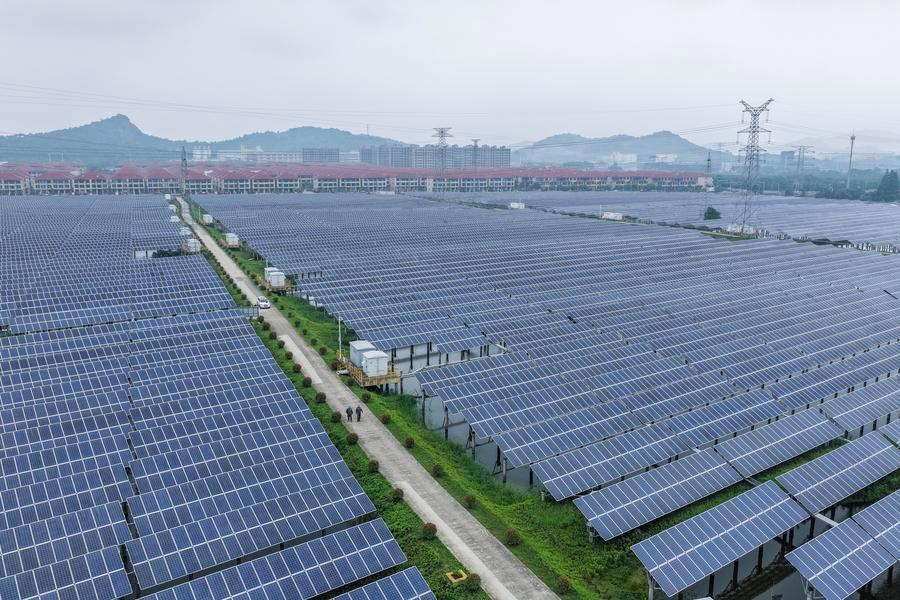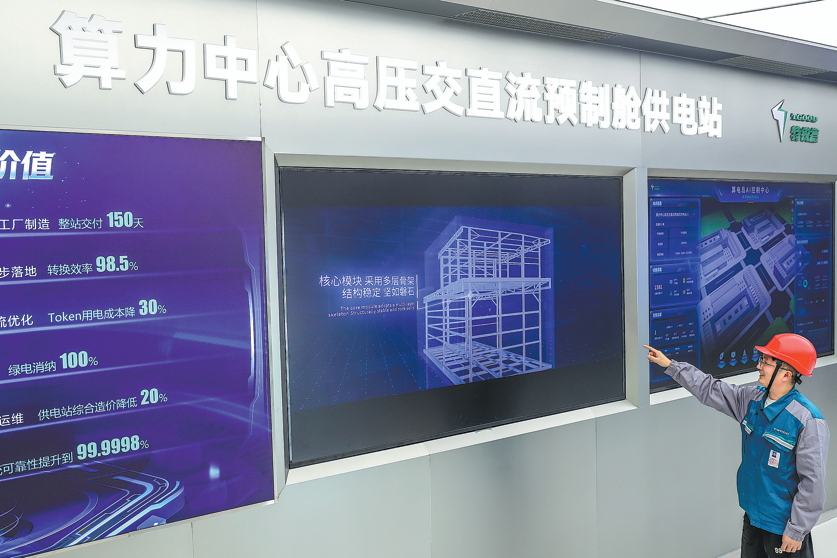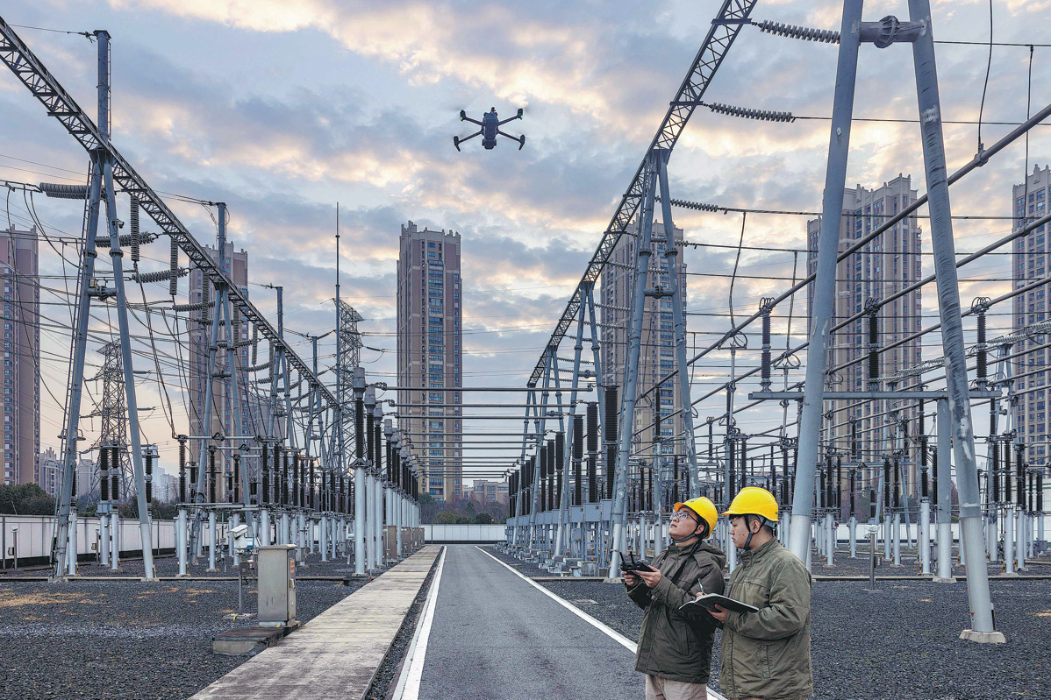
Workers use a drone to inspect power equipment at a 220-kilovolt substation in Taizhou, Jiangsu province, on Feb 17. TANG DEHONG/FOR CHINA DAILY
BEIJING — Through real-time analysis of rainfall, wind, solar conditions and other data, an artificial intelligence "commander" is making renewable energy generation in China more stable and reliably dispatchable.
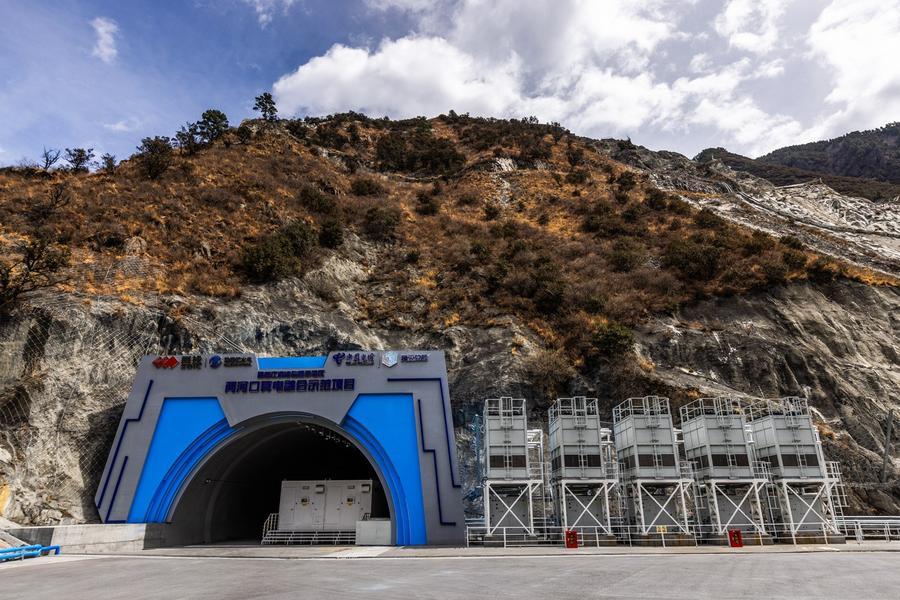
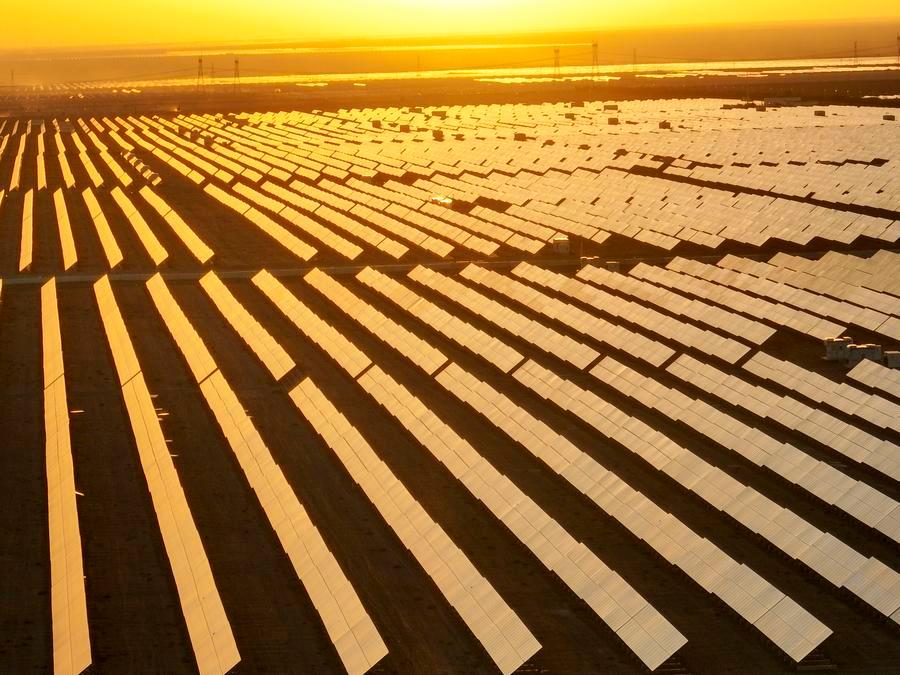
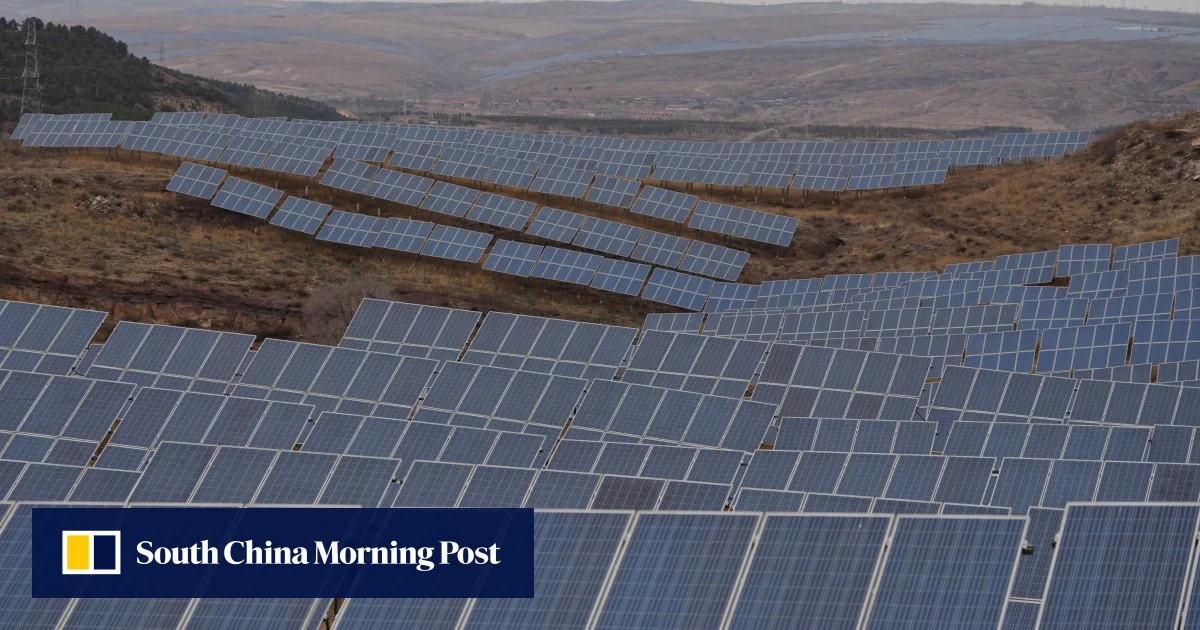
An AI operation model was rolled out in July at a 10-million-kilowatt-class integrated hydropower, wind and solar energy base along the Yalong River in Southwest China's Sichuan province. The model aims to help tackle challenges such as intermittency and instability facing green power output.
"It is not simply predicting the weather, but calculating how an entire river basin will generate electricity in the next few dozen days," said Zhou Yu, the model's technical director.
The model, according to Zhou, is able to not only forecast rainfall probability but also estimate rainwater inflow time and the corresponding hydropower potential. By integrating data on wind, solar resources and grid load, it generates multiple operation scenarios for decision-makers.