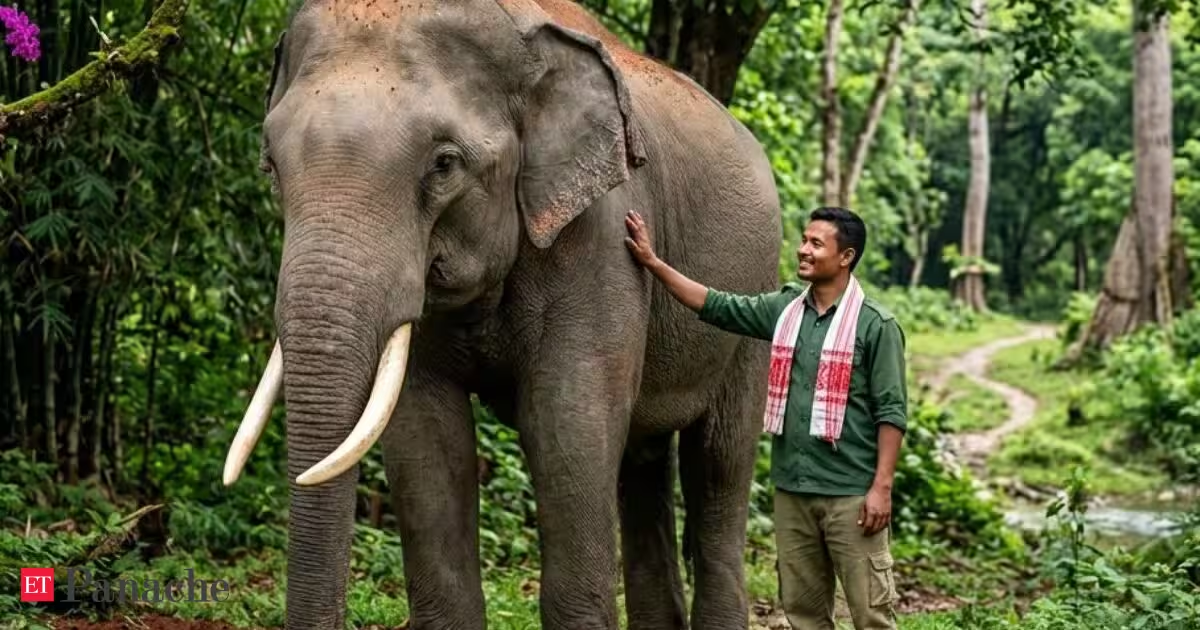
When recommending a potential suitor for a girl to her reluctant father, Wodehousian characters often mention ‘kind to animals’ as one of the notable virtues. At a time when animals are overworked for economic gains, often with brute force, a study proves what many knew intuitively — rewards work better than punishment.Conducted at the 862 sq km Pakke Tiger Reserve in Arunachal Pradesh, the study focused on captive elephants used in patrolling and conservation activities. The report, posted on bioRxiv, describes how the elephants gradually became more willing to participate in husbandry activities, including presenting their feet for toenail trimming, allowing body inspections and responding to commands. At the same time, they displayed fewer stress-related behaviours such as avoidance, stereotypic movements and displacement behaviours.The authors argue that positive reinforcement can strengthen the bond between elephants and their handlers while improving animal welfare. Such training methods are already widely used for large mammals in zoos around the world, to enable voluntary participation in health checks and medical procedures.Working elephants in India have traditionally been trained and managed through dominance, such as prodding in sensitive parts with a hooked metal (ankus). If validated, the study could help bring about a positive transformation in the handling of working elephants in forest departments, temples and rescue centres.Published on August 10, 2026
How to train your dragon... with empathy
Discover how positive reinforcement enhances the bond between elephants and handlers, promoting better welfare and cooperation.
217 words~1 min read