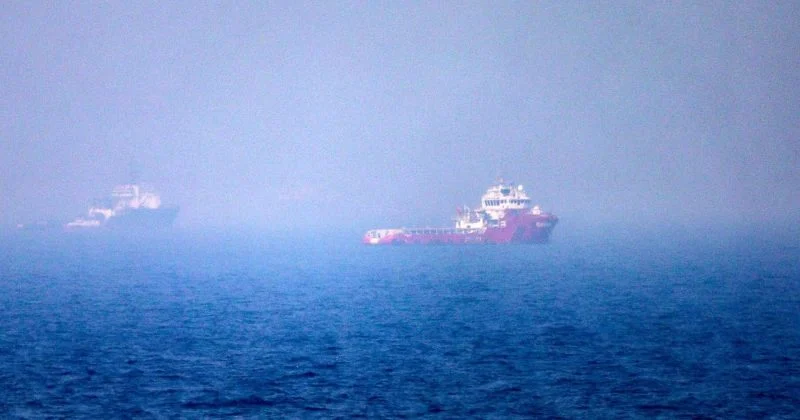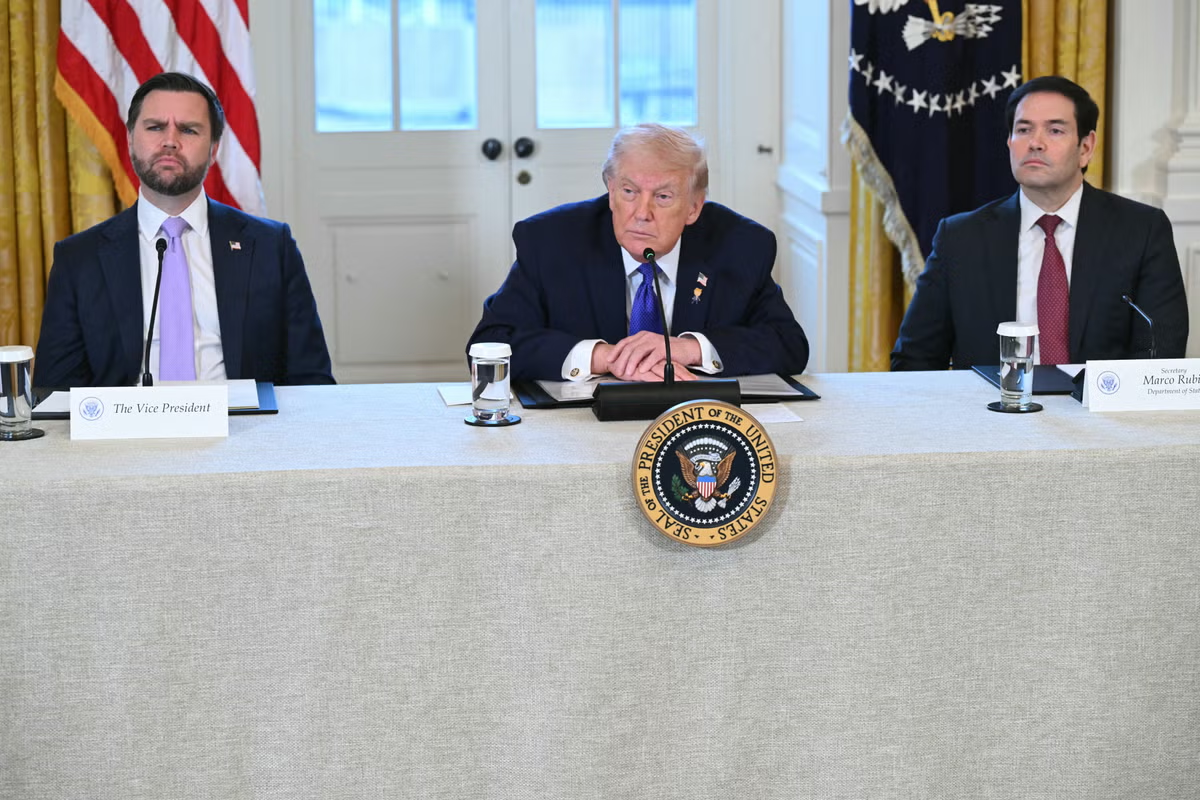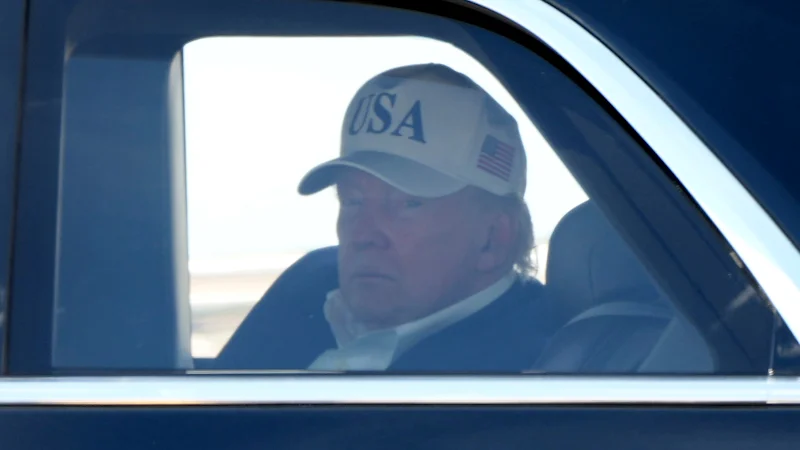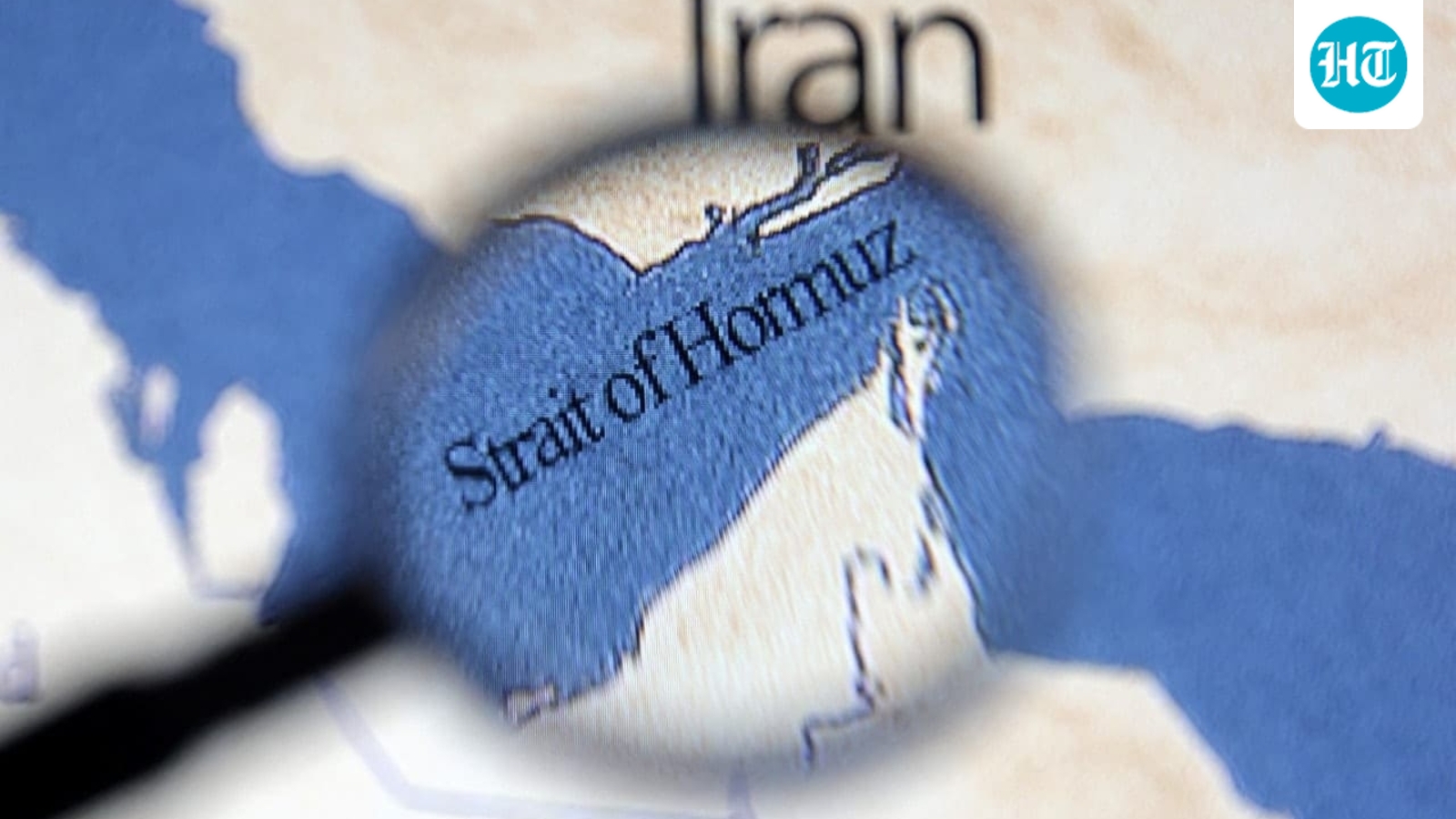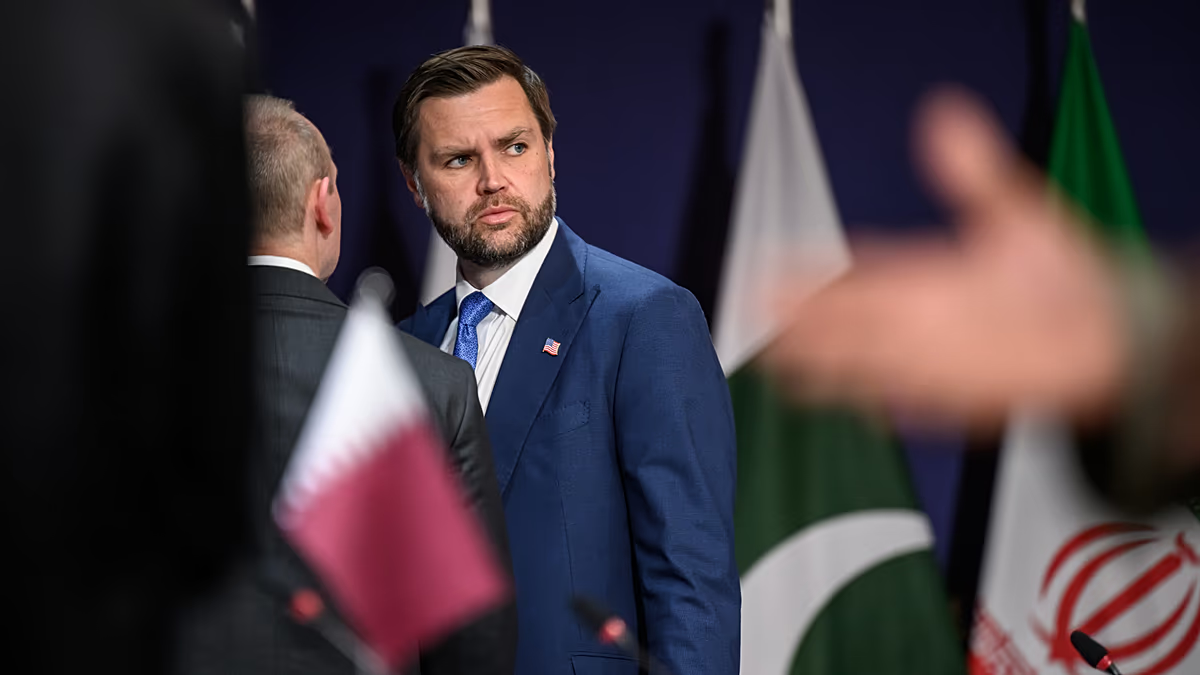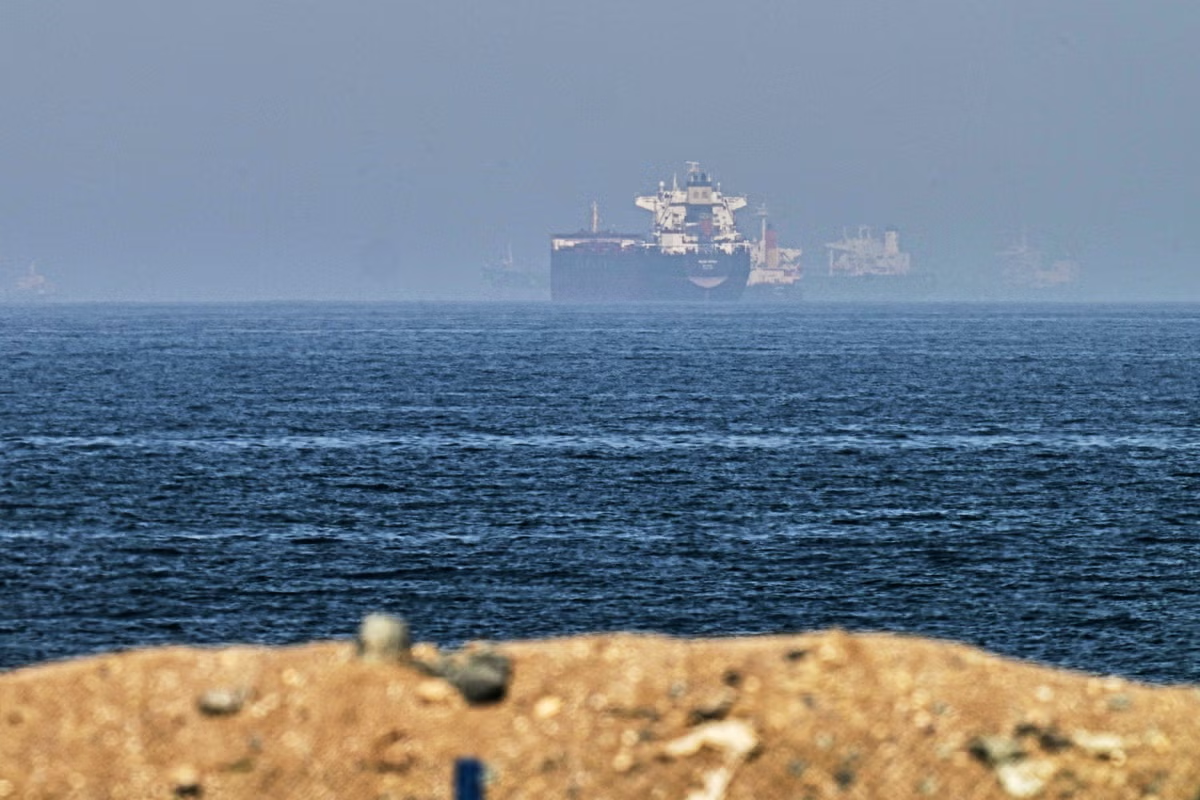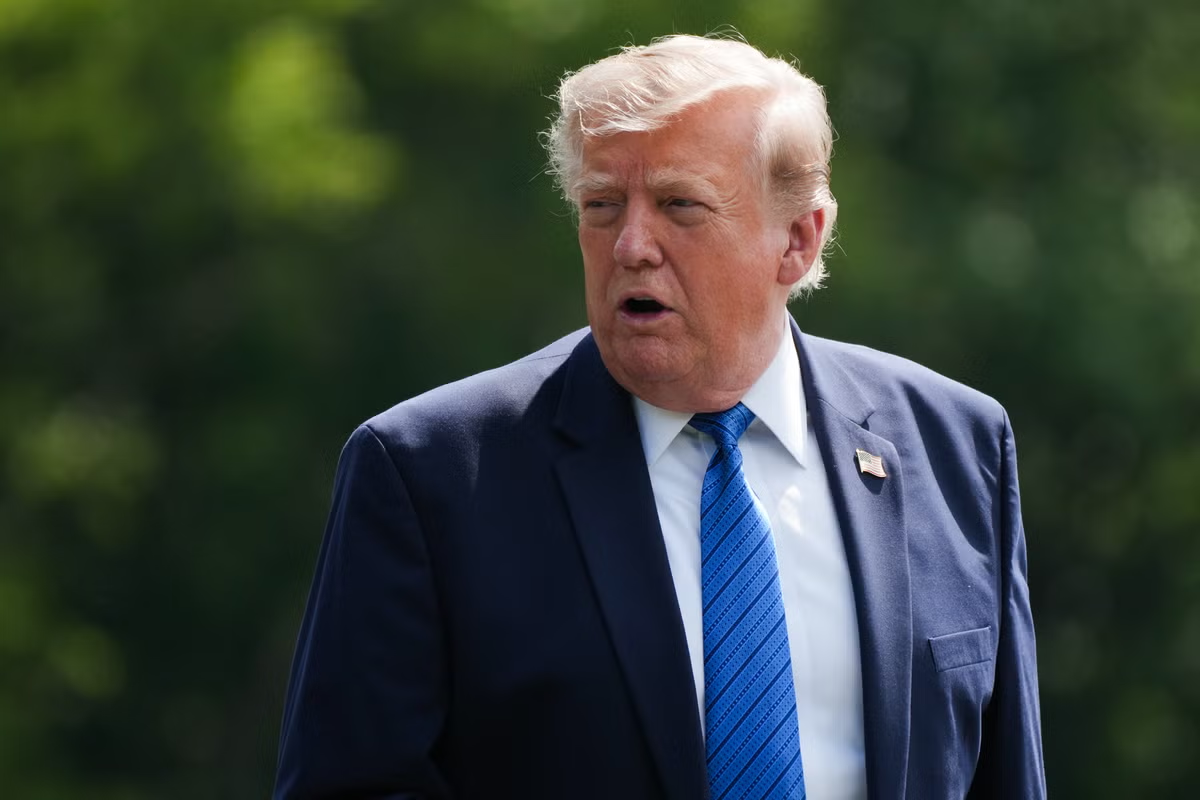
ByIDAN KWELLERAUGUST 10, 2026 03:18The United States and Iran are approaching a decisive point in negotiations over the Strait of Hormuz, with Tehran saying that a framework for an agreement with Oman has already been formulated and that the final text and details will be released soon.US Vice President JD Vance has also confirmed that progress has been made in the negotiations in recent days.At the same time, the possibility of renewed US strikes remains on the table, along with the possibility of an independent Israeli strike.Discussions are also continuing in the United States over how the underground nuclear site at Pickaxe Mountain could be targeted if US President Donald Trump concludes that the negotiations have failed."I'm trying to remind people that we really are in the middle of the game here. This thing is not over," Vance said to Fox News on Saturday morningVance said the United States was using "a whole range of diplomatic, economic and military tools" simultaneously in an effort to secure the best possible outcome for Americans.A satellite image shows an overview of the Pickaxe Mountain tunnel complex in Natanz, Iran, March 7, 2026. (credit: VANTOR/HANDOUT VIA REUTERS)Oman has expressed optimism over a dealAddressing Iran's position after months of fighting and US pressure, Vance said, "They are suffering very badly. They want this thing to end. The question is whether they are capable, whether their system is capable, of giving the things that are necessary for us to be satisfied, for us to feel like we got what we need out of this particular conflict.""That is still undecided, but I do think that we've made some progress over the last couple of days."Vance added, "There are active talks taking place, which also involve additional countries in the Gulf."The current negotiations are focused in part on creating conditions that would maximize the flow of oil and gas through the Strait of Hormuz, with the aim of lowering fuel and energy prices in the United States, according to the vice president.Vance also rejected claims that Iran was preparing to tighten its control over the strait, saying that talks involving other Gulf countries were underway in an effort to ensure the safe passage of vessels.Oman also expressed cautious optimism on Saturday, saying that negotiations with Iran were taking place in a "positive and constructive atmosphere." Muscat called on the parties to avoid actions that could damage the talks or undermine the progress already made.The comments came after the United Arab Emirates accused Iran of attacking a vessel associated with Abu Dhabi's national oil company in the Strait of Hormuz.Despite the diplomatic efforts, however, a significant gap remains between the negotiations and developments in the strait.The Islamic Revolutionary Guard Corps has continued to take a harder line. IRGC spokesman Gen. Hossein Mohebbi said reopening the Strait of Hormuz was "completely separate" from negotiations between Iran and Oman, and that the timing and manner of reopening the strait depended on the acceptance of conditions set by Tehran.Mohebbi also demanded that the United States refrain from interfering in negotiations between Iran, Oman, and other countries in the region, which he said were already in their final stages.Military strike against location not ruled outAgainst the backdrop of the diplomatic talks, Trump continues to keep the military option open.US President Donald Trump speaks to the media aboard Air Force One en route to Joint Base Andrews, in Maryland, US, August 2, 2026. (credit: REUTERS/Daniel Heuer)One of the sites still at the center of attention is Pickaxe Mountain, an underground complex near Natanz where, according to reports, Israel has intelligence indicating that Iran transferred centrifuges.Trump repeatedly referred to the site last month and threatened to strike it if an agreement was not reached.Any such operation would present major challenges. The site is protected by a layer of rock whose depth could reach approximately 450 feet.Satellite images indicate that some of the tunnels have been blocked and reinforced with soil and rocks, while other entrances remain open. Trucks and construction equipment have also been observed operating around the site.According to experts, bunker busting bombs could struggle to penetrate hundreds of meters of granite. A ground operation that would allow forces to reach deep inside the facility and plant explosives would also be particularly dangerous.Another option would be to carry out precision strikes on the tunnel entrances themselves. Such an operation might not destroy everything located deep inside the mountain, but could block access to the facility while allowing the United States to continue monitoring it from the air.Trump has already publicly signaled that Pickaxe Mountain could become a target if the negotiations fail.In an interview last month, Trump said the United States was "watching very closely" what was happening at the mountain. He later issued a stronger warning, saying, "We're going to eliminate Pickaxe Mountain. Tell the Iranians to be ready."On July 28, Trump said that if an agreement was not reached, "we'll have to eliminate the Pickaxe."The exact status of the facility, however, remains unclear.An analysis by the Institute for Science and International Security concluded last month that satellite imagery alone cannot determine when the site could become operational. It also remains unclear whether Iran still intends to establish a large centrifuge assembly facility there following the severe damage suffered by its centrifuge program.Despite reports that a framework for an agreement has been formulated and cautious optimism from Washington and Muscat, a key question remains unresolved: whether the conditions Iran is prepared to accept will be enough for Trump to halt the campaign, or whether the president will decide to carry out the threats he has made in recent weeks."That is still undecided," Vance said in summary of the situation.Follow us on Google
Donald Trump keeps military option open amid US, Iran talks on Hormuz | The Jerusalem Post
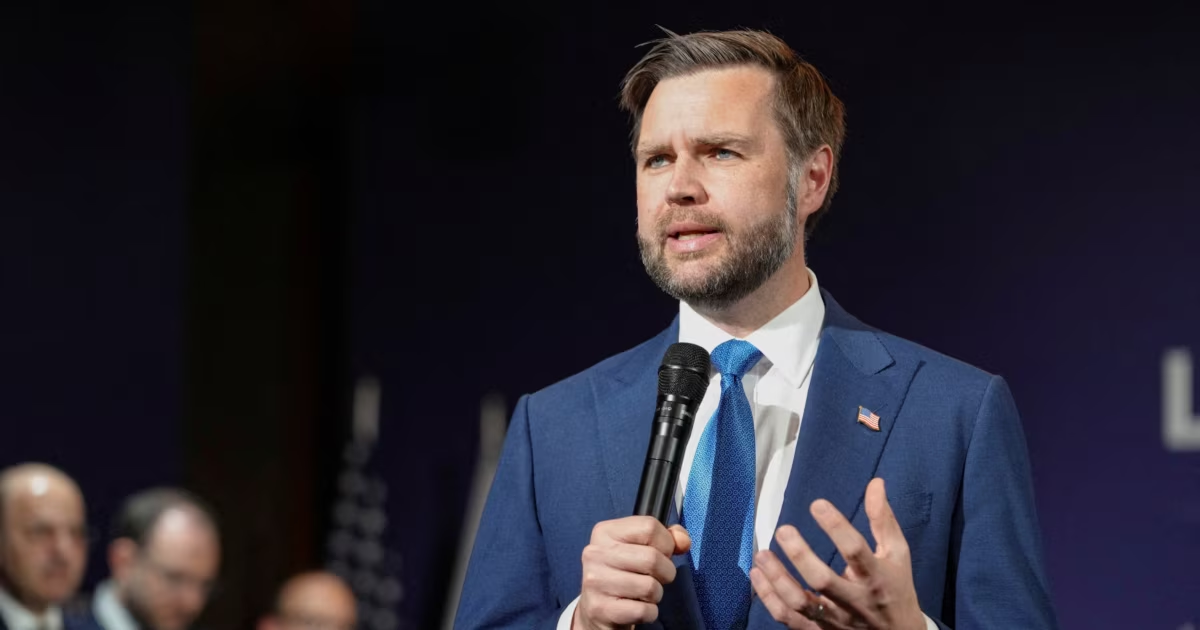
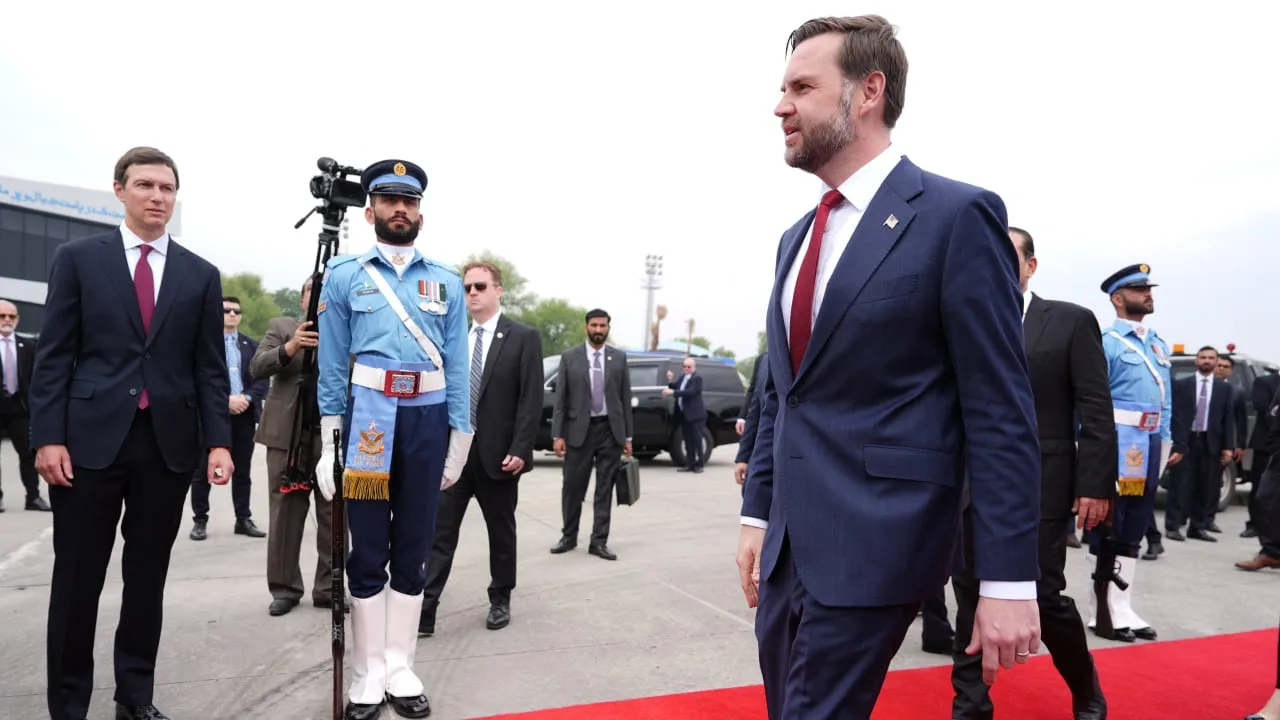
Vance said the United States was using "a whole range of diplomatic, economic and military tools" simultaneously in an effort to secure the best possible outcome for Americans.
949 words~4 min read