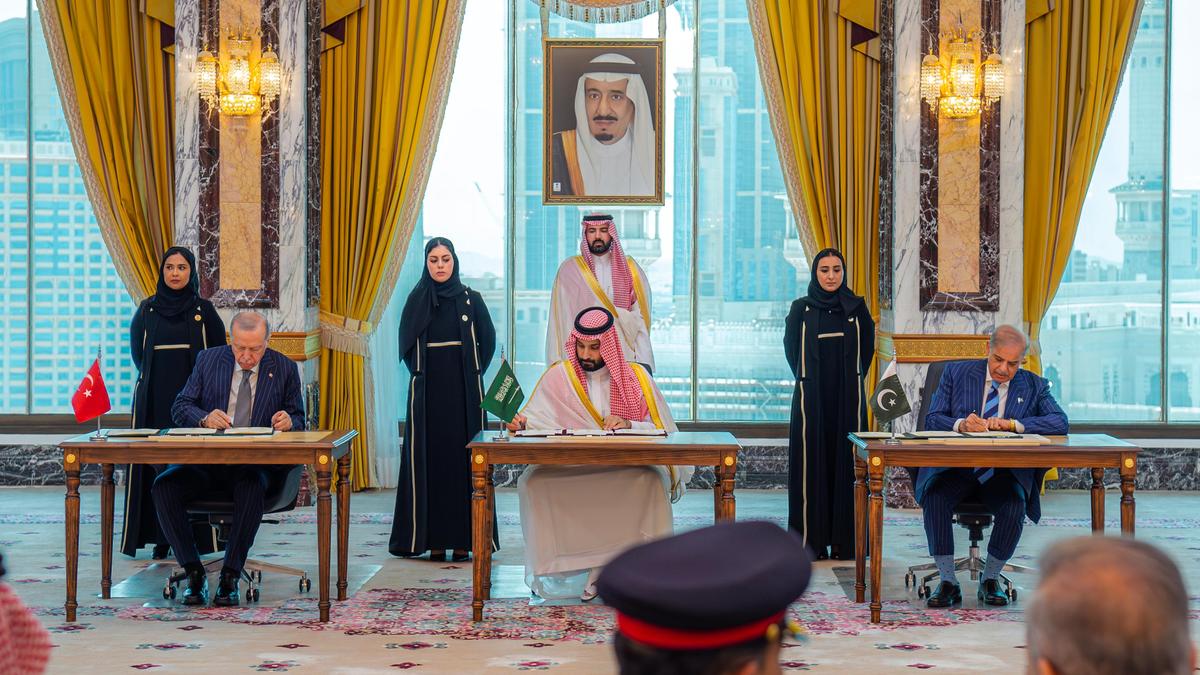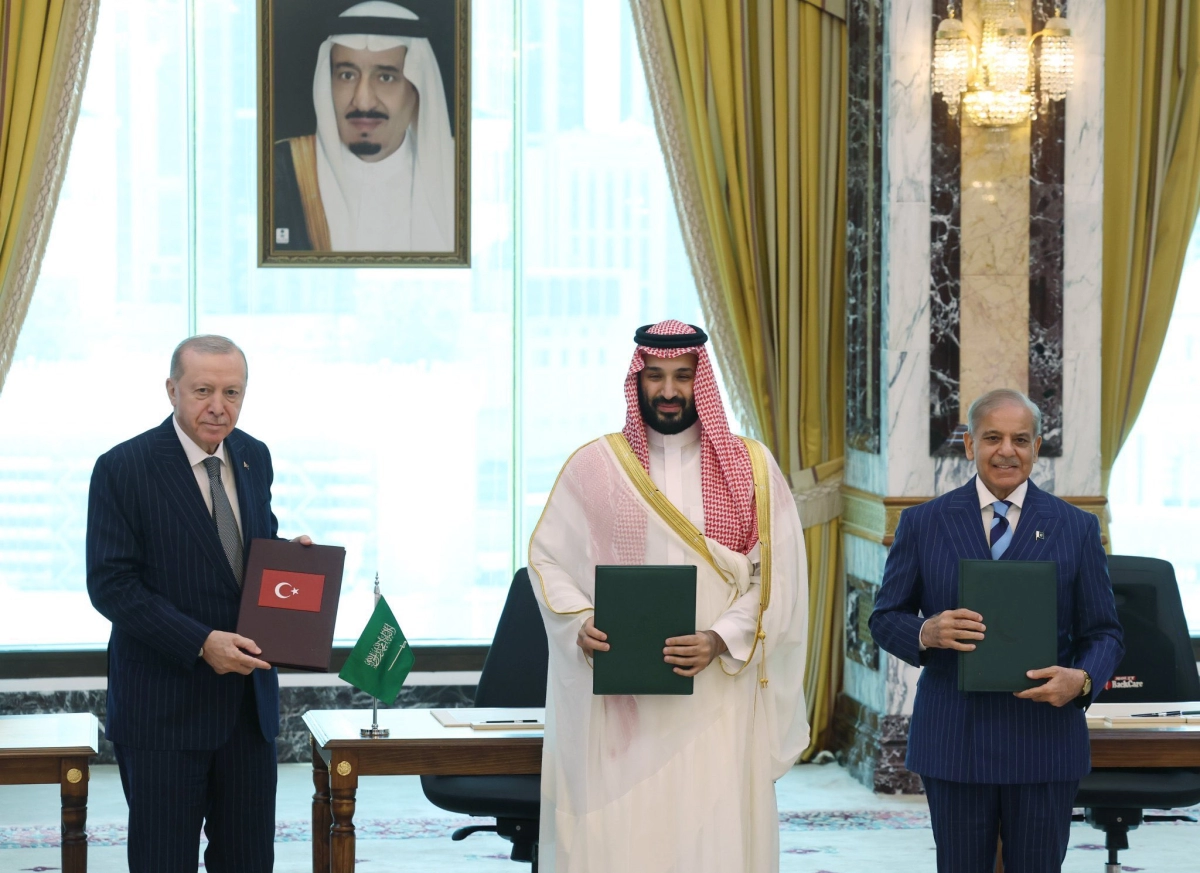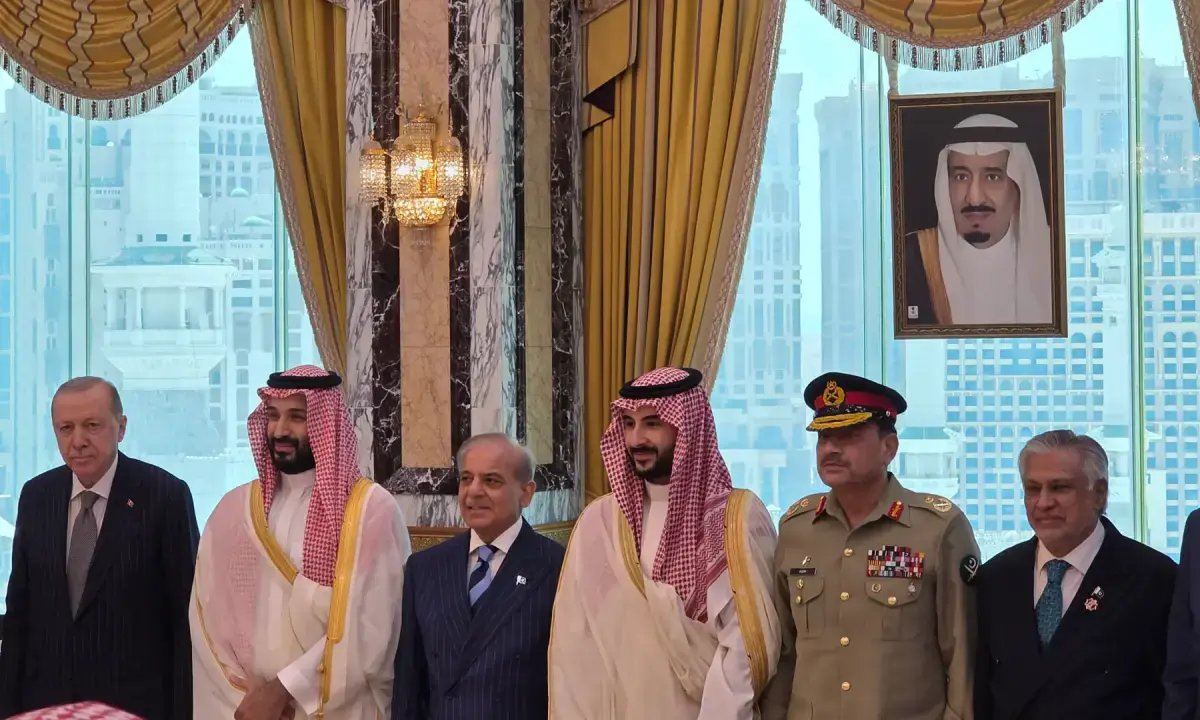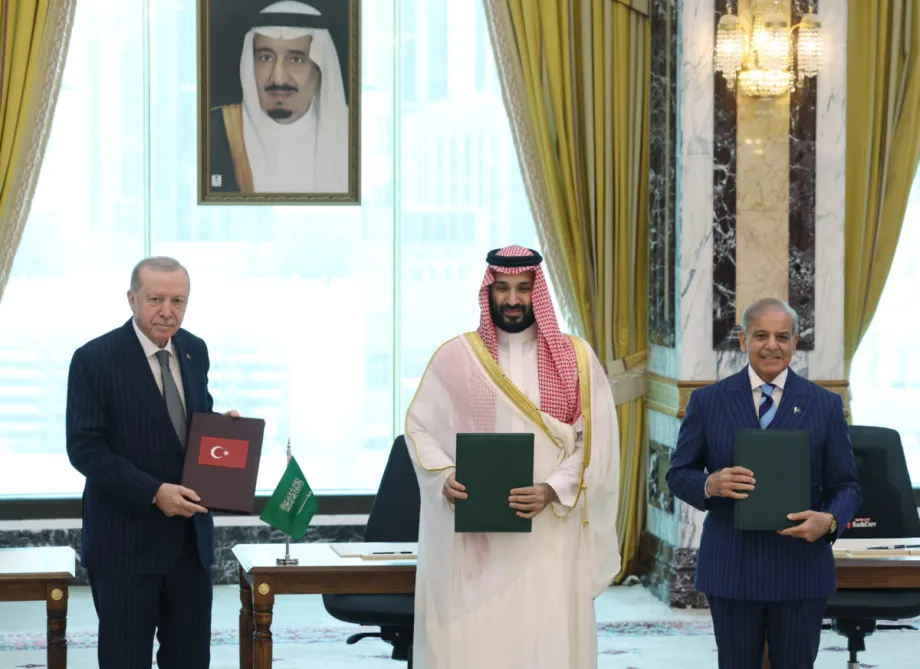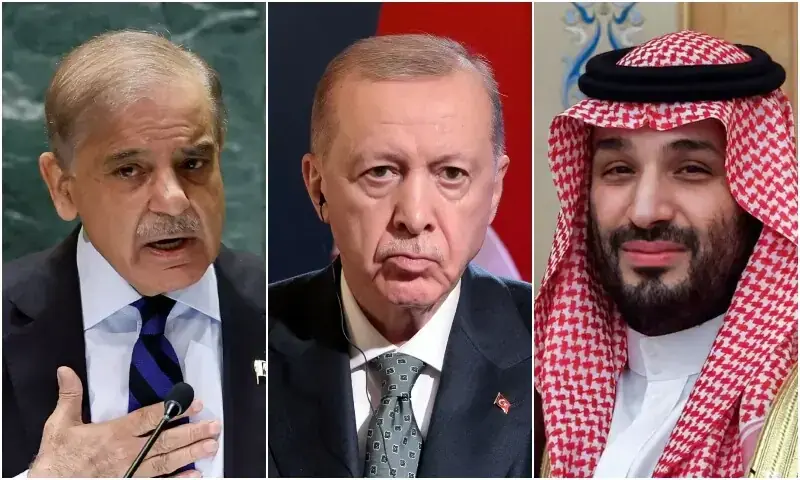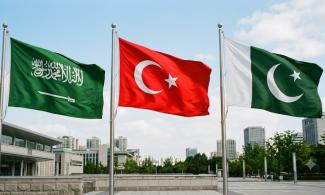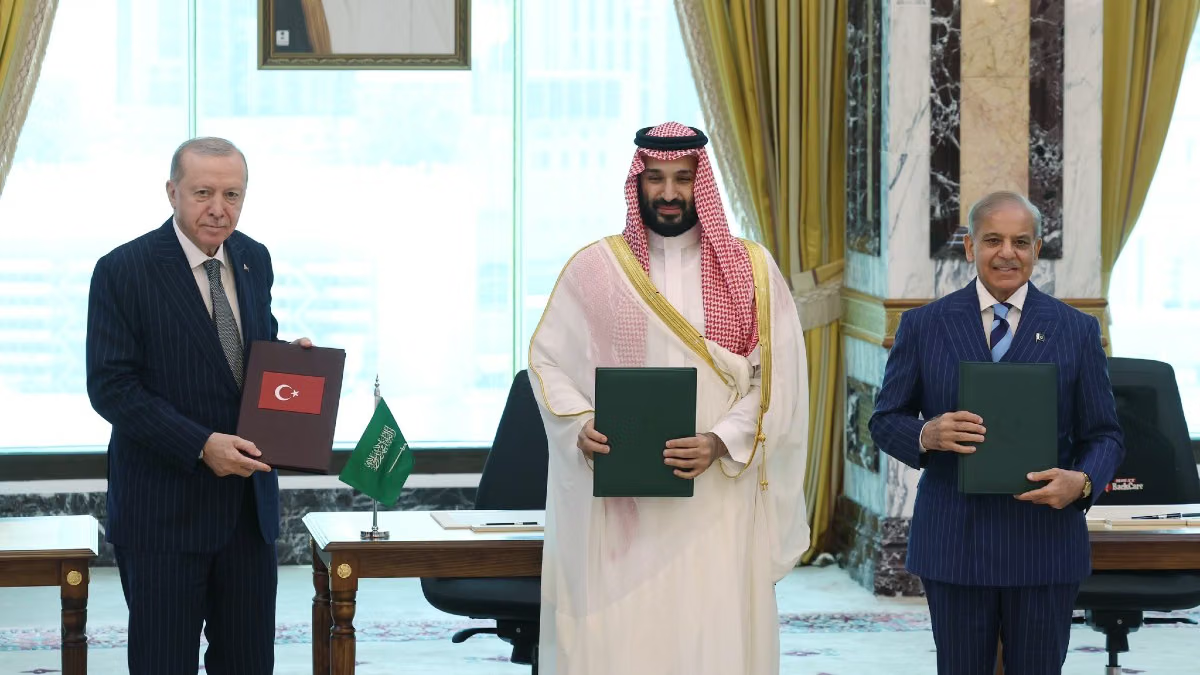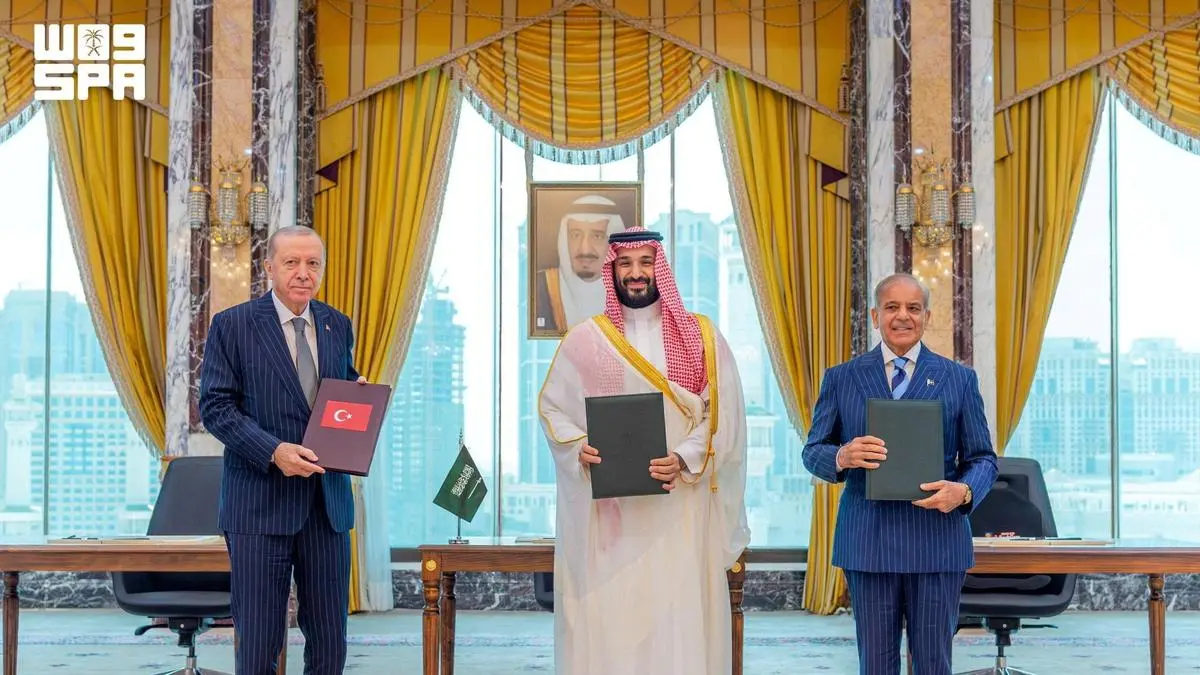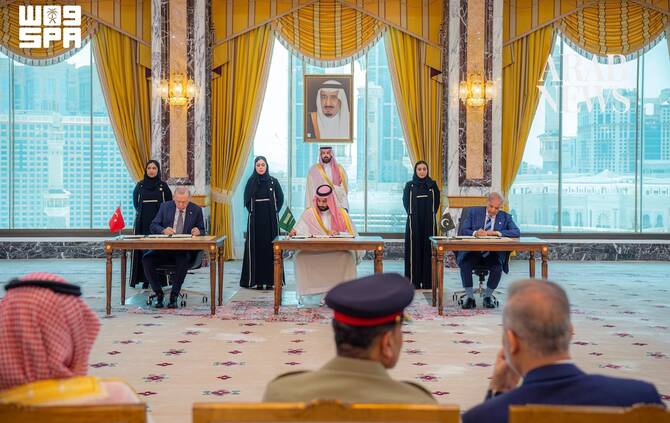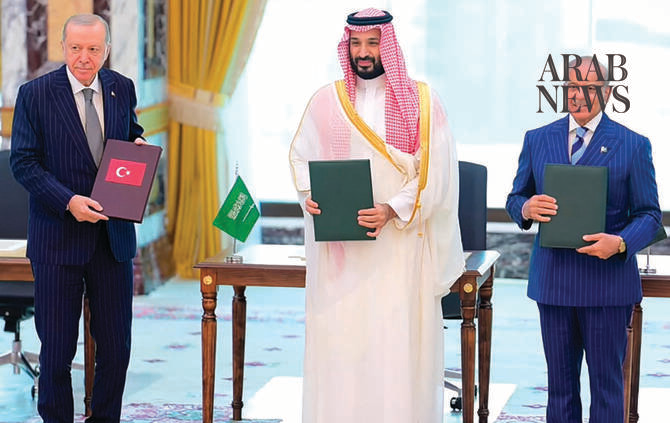
LONDON: When Saudi Arabia, Pakistan and Turkiye signed the Makkah Joint Defense Agreement on Aug. 7, they went significantly further than pledging closer military cooperation.
The agreement contains a collective-defense commitment: An external armed attack against any one of the three states will be regarded as an attack against them all.
That provision immediately elevated the pact from another defense partnership to a potentially significant new component of the Middle East’s evolving security architecture.
Turkish Foreign Minister Hakan Fidan subsequently compared the principle behind the agreement to NATO’s Article 5.
The three states would decide through consultations what form and degree of assistance was required, while a ministerial committee and a permanent secretariat based in Saudi Arabia are expected to develop the alliance’s institutional and operational framework.