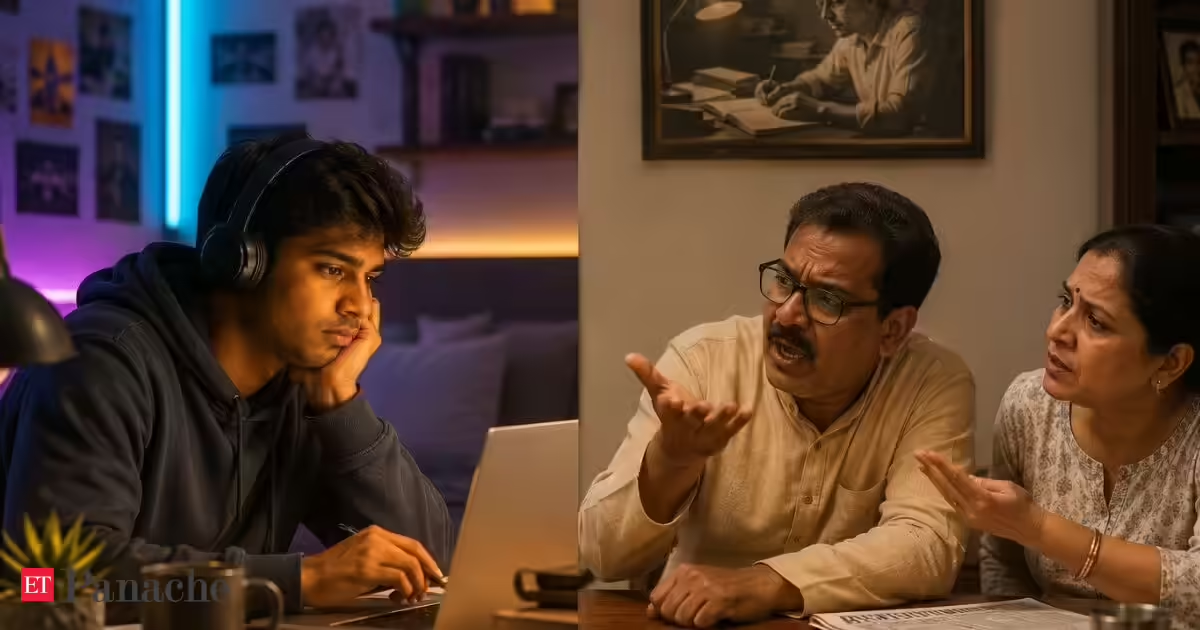
SynopsisRaj Kundra's advice to Gen Z Indians highlights cultural and linguistic divides. The Sanskrit alphabet lacks a 'z' sound, impacting comprehension of modern terms. Hindustani, with its 'z' sounds, resonates more easily with younger generations. This phonological difference creates a barrier between elders and youth. India's generational gap is thus both cultural and linguistic in nature.We can’t blame British Raj — not Raz — Kundra for sharing a thoughtful social media message for Gen Z Indians, advising young people to respect their culture, avoid trying to become ‘overly modern’, and reject excessive ‘Western influence’, influence from wannabe influencers from places like London included.You see, there is no ‘z’ in the Sanskrit alphabet. Instead, there’s ‘Ji’, a dot (nuqta) under the ‘ja’ having to do the job of making it a ‘za’.So, while Urdu-ised Hindi — Hindustani — and other non-Sanskrit-based languages like English have the bujj-ing ‘z’ sound, Sanskrit-based language-users are left bewildered, hearing only echoes of ‘ji’, as if every generation must give a deferential salutation.To the Sanskritised ear, ‘Gen Zee’ sounds like a typo, a foreign import, a misplaced consonant. So, it can’t comprehend why young people shouldn’t revere their elders, no matter what the elders may be up to.Meanwhile, Hindustani, with its zesty ‘z’ sounds, gets Gen Z instantly. Words like ‘jazba’, ‘zindagi’, ‘zamana’ and ‘zulm’ already carry the rhythm of youth culture, as do ‘zoomers’ and ‘zany’.But for Sanskritised speakers, the alphabet itself conspires against comprehension. Their linguistic DNA resists the ‘z’, preferring the dignity of ‘ji’.So, yes, India’s generational divide is not merely cultural, but phonological, zaaneman. ...moreElevate your knowledge and leadership skills at a cost cheaper than your daily tea.Subscribe Now
Gen ji, and the great phonological divide - The Economic Times
Raj Kundra's advice to Gen Z Indians highlights cultural and linguistic divides. The Sanskrit alphabet lacks a 'z' sound, impacting comprehension of modern terms. Hindustani, with its 'z' sounds, resonates more easily with younger generations. This phonological difference creates a barrier between elders and youth. India's generational gap is thus both cultural and linguistic in nature.
277 words~1 min read