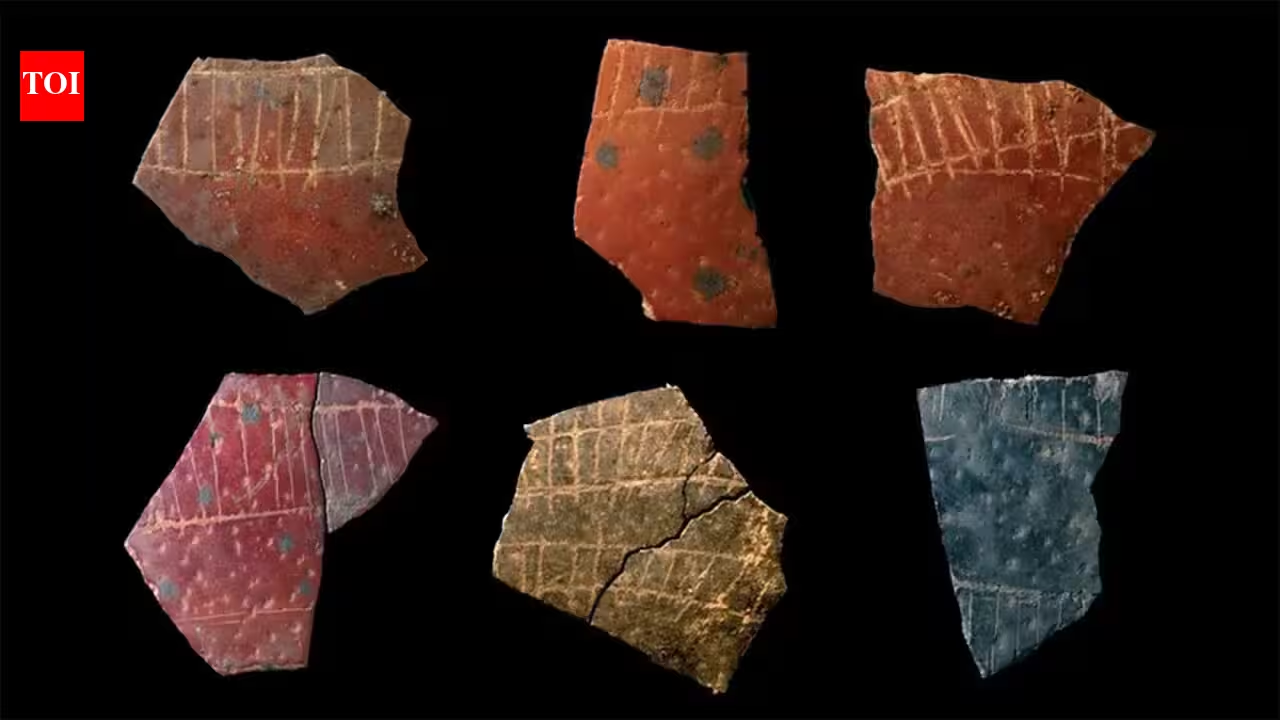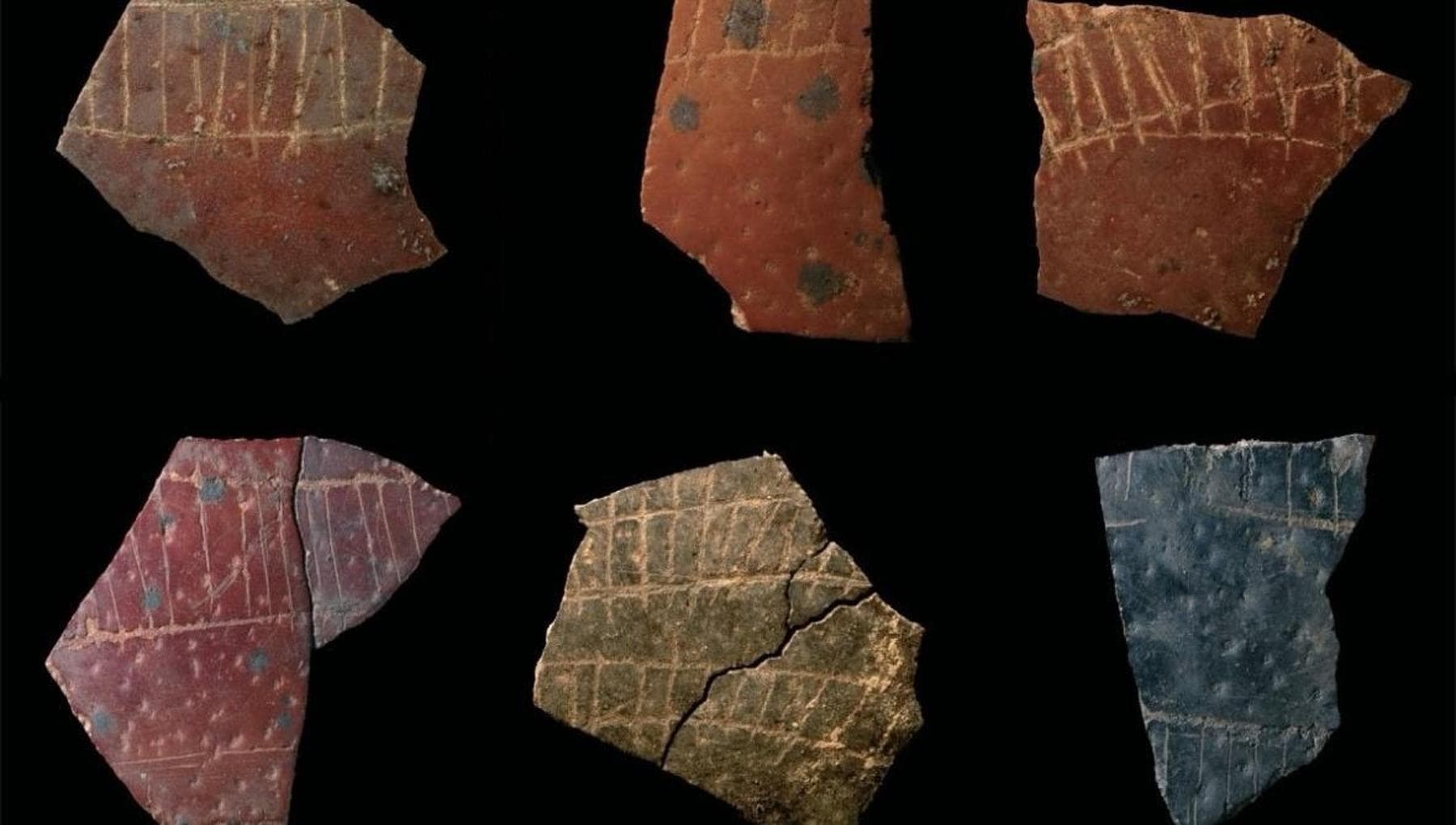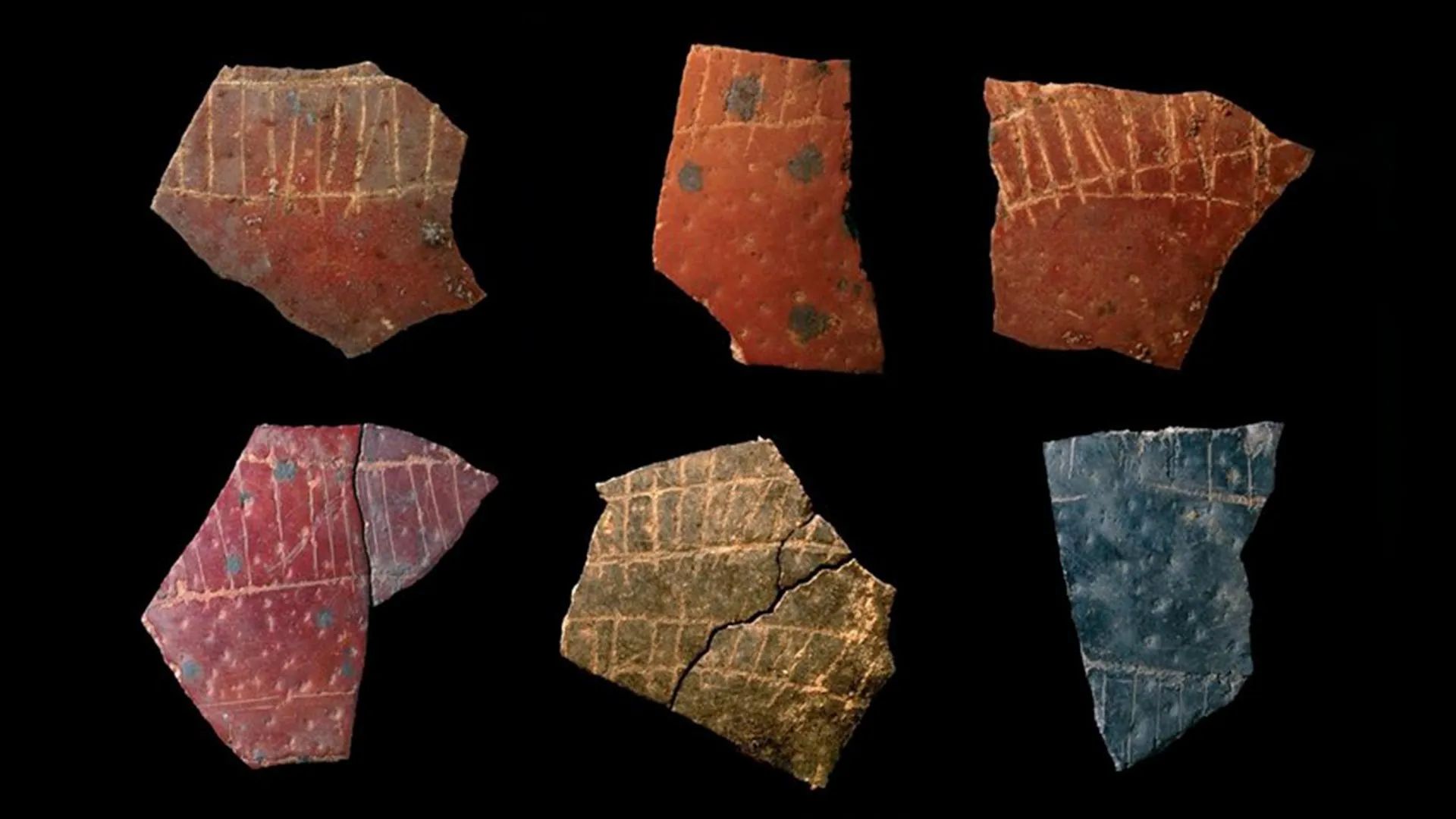
Archaeologists working at several sites in southern Africa have uncovered hundreds of unusual pieces of engraved ostrich eggshell. More than 60,000 years old, these fragments were created by groups of Homo sapiens living in the region.
A new study led by researchers at the University of Bologna suggests that the markings were far more organized than simple scratches or improvised decorations. Published in PLOS One, the research finds that the engravings followed recurring geometric principles involving parallel lines, right-angle relationships, and repeated regular patterns.
"These signs reveal a surprisingly structured, geometric way of thinking," says Silvia Ferrara, Professor at the University of Bologna's Department of Classical Philology and Italian Studies, who coordinated the study. "We are talking about people who did not simply draw lines, but organized them according to recurring principles -- parallelisms, grids, rotations and systematic repetitions: a visual grammar in embryo."
Ancient Eggshells Reveal Geometric Order
The ostrich eggshells were probably used as containers for carrying or storing water. To examine the engravings in detail, the researchers conducted a systematic quantitative analysis of 112 fragments recovered from two archaeological sites in South Africa (Diepkloof and Klipdrift) and one in Namibia (Apollo 11).