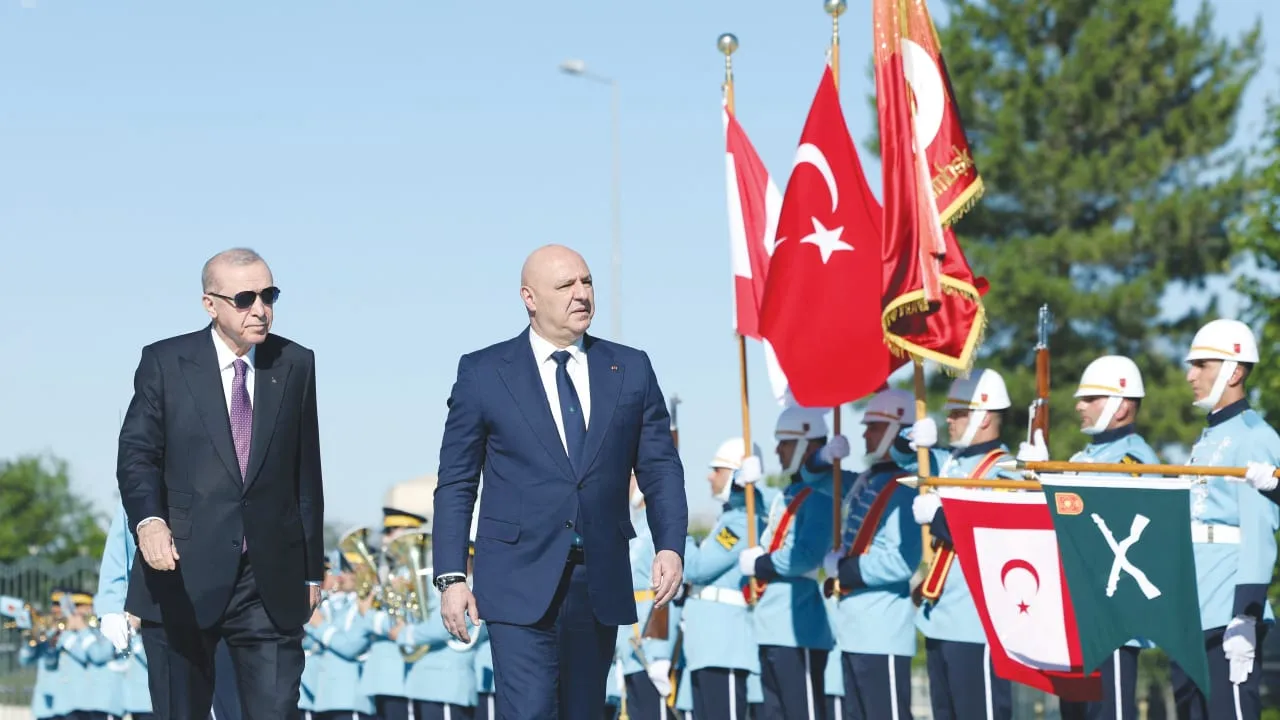
ByTHE MEDIA LINEAUGUST 9, 2026 13:51August 1990: A memory that must not grow oldAsharq al-Awsat, UK, August 2For more stories from The Media Line go to themedialine.orgAt dawn on August 2, 1990, our generation witnessed a calamity: Kuwaitis awoke to a treacherous invasion. Thirty-six years have passed, yet those who lived through that period still remember frightening details that may never appear in books, while the generation born afterward knows the story through families who experienced it. I return to it today because the region remains filled with expansionist ambitions, military adventurism, and the threat of war. The desire to dominate beyond one’s borders still poses an existential challenge to the Gulf states.Before the invasion, a measure of optimism had spread through the region. The brutal Iran-Iraq War had ended after eight years, leaving deep wounds across the Gulf and inflicting direct economic and political harm on Kuwait more than once. We hoped the storm would be followed by calm, yet many were already asking how the two combatant states, with their armies, weapons, and ambitions intact, would handle their expansionist impulses.Years earlier, Kuwait had been among the states pressing for greater Gulf unity, and in Abu Dhabi in 1981 the Gulf Cooperation Council was born. The six states welcomed the idea, and their leaders made a historic decision. Few could have imagined that less than a decade later the council would face a test like that of August 1990. Iraq’s leadership was carried by arrogance into calculations that quickly proved catastrophic. As later memoirs revealed, no one in government was able to challenge Saddam Hussein’s decisions; such is the nature of dictatorship. He invaded a peaceful neighboring country whose people had never failed to support Arab causes, believing the occupation could gradually become an accepted political fact.Kuwaitis protest Iraq's annexation of their country, carrying pictures of Kuwaiti emir Sheikh Jaber al-Ahmad al-Sabah and Syrian president Hafez Assad in Damascus, Syria, Aug. 17, 1990. (credit: REUTERS/ALI JAREKJI)It was accompanied by a vicious and unjust media war against Kuwait and the Gulf states. The seven months of occupation were black in every sense, but they also revealed the strength of Kuwaiti national cohesion. The Gulf states treated the aggression as an attack on themselves. They received Kuwaitis forced from their homes and mobilized to end the occupation, with Riyadh at the forefront alongside every Gulf capital. The central truth is that the Gulf regarded the invasion as a matter of collective security.Amid these events, Kuwait’s leadership managed domestic and foreign affairs under extraordinary conditions. On September 27, 1990, the late Emir Sheikh Jaber Al-Ahmad Al-Sabah addressed the United Nations General Assembly in New York. I still remember the scene: after his speech, the assembly rose and applauded for several minutes. He said he had come carrying the message of a people who loved peace, worked for it, extended help to those who deserved it, sought reconciliation among the disputing, and then saw their security and stability violated.What mattered most to me was that he spoke of the future, declaring that the invaders would inevitably leave and that Kuwaitis would return to their country as they had known it, a home of safety and security. And we did return. Yet before retreating, the occupier committed an act that remains impossible to forget: Iraqi forces set Kuwait’s oil wells ablaze.I returned soon after liberation with an international team, and the image of that homecoming remains with me. As the plane approached Kuwait at midday, I looked through the window and saw daylight transformed almost into night. Smoke covered the sky, and the smell of fire announced the scale of the destruction the invaders had left behind. The aggressor fled, and Kuwait remained.That outcome was achieved only through sacrifice: a people who rejected occupation, a leadership that upheld the state’s legitimacy, Gulf solidarity, and Arab and international support from those who understood that permitting one independent state to swallow another would have catastrophic consequences.Thirty-six years later, the purpose is not to revive hatred but to remember the lesson: sovereignty and Gulf solidarity must be strengthened through sustained effort because the dangers have changed in appearance but not in essence.The region has not become safer. The faces have changed, yet the impulse to expand remains. What we see around us confirms that the nation-state is still threatened whenever one party believes force gives it the right to determine the fate of others.Today the Houthis send drones toward Saudi Arabia and threaten to close Bab al-Mandab, while other forces of evil launch their own attacks. We live in a perilous neighborhood where sectarian arrogance still thrives.My final thought is this: 36 years later, I still see Kuwait from that airplane window, daylight buried beneath the smoke of burning wells – and some still seek to bring back the darkness. – Mohammed al-RumaihiAnkara: A new gateway for LebanonNida Al-Watan, Lebanon, August 1At a moment when the balance of power in the Middle East is being recast, President Joseph Aoun’s visit to Ankara went beyond the framework of conventional bilateral relations and affirmed Lebanon’s effort to broaden its network of regional and international partners in order to restore sovereignty, strengthen security, and revive the economy.His meeting with Turkish President Recep Tayyip Erdogan carried political, security, and economic messages extending far beyond the two countries and laid the foundations for a new phase in Lebanese-Turkish relations amid accelerating regional change.The visit’s importance begins with its timing. Lebanon is entering a delicate period as international efforts continue to stabilize the south, implement security understandings, and consider arrangements following the eventual end of the United Nations Interim Force in Lebanon’s mission.Erdogan announced Turkey’s readiness to participate in any new international security framework intended to support Lebanon’s security and protect its sovereignty, alongside continued Turkish assistance to the Lebanese Army. This reflects Ankara’s desire to play a larger role in stabilizing the Eastern Mediterranean and gives Lebanon greater room to diversify its security partnerships beyond the logic of rival blocs.Politically, the visit allowed Aoun to seek Turkish support for Lebanon’s position demanding the completion of Israel’s withdrawal, the restoration of state authority over all Lebanese territory, and the strengthening of the army as the only legitimate institution entrusted with protecting the borders and maintaining security.It also enabled closer coordination with a country that maintains influential ties with regional powers, including Syria, potentially opening the door to a Turkish contribution on border issues, displaced populations, and wider regional cooperation.The economic dimension is no less important. Turkey is one of the region’s largest economies and possesses substantial expertise in infrastructure, energy, ports, transport, industry, and tourism. Revitalized economic relations could attract new Turkish investment, expand trade, and encourage private companies to participate in reconstruction, creating jobs and stimulating a Lebanese economy in urgent need of long-term partners. Cooperation in ports and logistics could also improve Lebanon’s position within the Eastern Mediterranean trade network.Diplomatically, the visit confirms the approach Aoun has followed since his election: diversifying Lebanon’s foreign partnerships rather than confining them to a single axis. After opening to the United States, Arab states, and France, while maintaining contact with other international actors, Ankara adds another dimension to Lebanese foreign policy and strengthens Beirut’s ability to rally support for its core priorities: stability, renewed confidence in the economy, and stronger state institutions.Strategically, the visit reflects Lebanon’s understanding of the region’s geopolitical transformation. Turkey has become a central actor in security, energy, transportation, and reconstruction, and maintains extensive relations with Europe, NATO, and the Middle East. A stronger relationship therefore gives Lebanon another channel to regional and international decision-making centers and enhances its chances of benefiting from major economic projects expected in the years ahead.The joint press conference revealed a clear desire by both leaderships to elevate relations toward a more ambitious partnership based on trust and practical cooperation, including continued support for the army, assistance with economic recovery, and broader sectoral ties. Aoun stressed that the next phase requires effective partnerships capable of helping Lebanon regain its natural regional role, consistent with his vision of a strong state with full sovereignty and functioning institutions.In the end, the Ankara visit was not merely ceremonial but a calculated step within a wider diplomatic strategy to reposition Lebanon in the region, expand its international support network, and secure political, security, and economic backing for the reconstruction of the state.Should the understandings reached be translated into practical programs and binding agreements, the visit may become one of the most important moments in Lebanese foreign policy in 2026, confirming that the country’s recovery begins with active diplomacy, balanced partnerships, protection of sovereignty, support for the army, and a serious commitment to stability and development. – Joe RahalThe war has become regionalAl-Masry Al-Youm, Egypt, August 2The Middle East war has become regional in character, encompassing every issue and mixing all the region’s conflicts into a single vessel. It will take time to count the dead, wounded, and displaced and to document the homes and institutions destroyed. The image is the same everywhere: roofs collapsing at once, breaking apart as they fall, or dissolving under extreme heat.The latest phase has carried the war in different forms to the southwestern Arabian Peninsula, where the Houthis have launched missiles toward Saudi targets in retaliation for the bombing of Sanaa airport, intended to prevent the arrival of an Iranian delegation carrying weapons, ammunition, and trainers.This is not entirely new. The Houthis have previously struck Aramco facilities and attacked the Emirati port of Fujairah overlooking the Gulf of Oman, the Arabian Sea, and the Indian Ocean.What is new is the position and capability of Yemen’s internationally recognized government, which responded to the attacks and thereby reflected the Arab coalition’s entry into the war that began on Oct. 7, 2023, and continues to spread its poison nearly three years later.More significant still, the legitimate government and the coalition have, at least as of this writing, prevented the Houthis from closing Bab al-Mandab, through the efforts of a determined naval force. Iran has failed to realize its dream of controlling two straits simultaneously: Hormuz, through which about 20% of oil exports pass, and Bab al-Mandab, which handles around 15% of global trade.Iraq’s Popular Mobilization Forces added further drone and missile attacks against Saudi Arabia while presenting Iraq with the false choice between refusing to surrender their weapons and descending into civil war. The disarmament of other factions has not ended the brinkmanship favored by militias. Hezbollah in Lebanon and Hamas in Gaza likewise threaten civil conflict and, along the way, intimidate the governments under which they operate.Armed groups have thus pulled the region into a wider war by attacking established authorities and warning them either to permit militia freedom of action or submit to the madness of war among their own citizens. Civil wars drag violence to the bottom of the regional order while destroying every element of national identity necessary for an independent state.No militia escapes this disease. Hamas, which ignited the regional war, began its armed history by separating Gaza from the West Bank, leaving the dream of an independent Palestinian state free of Israeli occupation prey to the nightmares of genocide and ethnic cleansing.The war became regional when it drew together the region’s geographic and historical characteristics within one battlefield. Oil has now entered a conflict that began under the slogan of ending the Israeli occupation, while the so-called support fronts help ignite a global crisis of inflation, higher prices, and disruption to development plans across Arab states.– Abdel Moneim SaeedFormer IDF Chief of General Staff Moshe Ya'alon (L) with fellow former IDF chief Dan Halutz. (credit: FLASH90)When Israelis speak of settler terrorismAl-Bayan, UAE, August 2What does it mean when 600 senior former Israeli security and diplomatic officials sign a petition urging US President Donald Trump to pressure the Israeli government to stop settler violence and terrorism in the West Bank?They are not acting out of sympathy for Palestinians or concern for their welfare, but because they believe settler violence threatens Israel’s security and American interests. The signatories belong to an organization called Commanders for Israel’s Security, which includes about 600 retired officials, among them former senior figures from the army, Mossad, Shin Bet (Israel Security Agency), police, diplomatic corps, and political establishment. They have begun sounding the alarm, particularly after the events in the village of Tell two Fridays ago.Palestinians regard the territory as their homeland of thousands of years, while settlers consider the entire West Bank – or Judea and Samaria, in biblical terminology – the heart of Israel. The United Nations, international law, and most governments regard it as occupied territory, part of a future Palestinian state, and view settlement activity as illegal.When 600 of Israel’s most experienced security officials conclude that settler behavior endangers both Israel and the United States, we should expect a major catastrophe, because it means Israeli extremism has reached a degree almost beyond imagination. Officials with deep knowledge of the conflict and the region fear what settler radicalism may do to their own country. Their organization therefore called on Trump to prevent what it described as a disaster by sending Prime Minister Benjamin Netanyahu a firm message to stop these practices.What is unfolding is not merely an attempt by the Right to win the October 27 election, but the implementation of biblical visions at the expense of Palestinian land and blood.Rather than describing the situation through Palestinian or Arab eyes, or even citing international law and United Nations resolutions, let us consider how senior former Israeli officials themselves characterize settler violence.One of the most prominent is Moshe Ya’alon, a former IDF chief of staff and defense minister, who calls what settlers are doing “Jewish terrorism.” He argues that these are not isolated incidents but an expanding phenomenon, and that “settler gangs,” as he describes them, operate under the protection of right-wing ministers who provide official and political cover.Ya’alon’s words matter because he is not a figure of the Israeli Left. He historically belongs to the security Right and has held the country’s highest offices. He now warns that extremist messianic elements are leading the government and describes Netanyahu’s conduct in Gaza as taking Israel toward occupation, annexation, and ethnic cleansing.It is difficult to portray what is happening in the West Bank as the excesses of a handful of settlers, because settlement has stood at the heart of Israeli strategy since 1948. Even under Labor governments regarded as left-wing and moderate, Yigal Allon argued that Israel’s security border must lie in the Jordan Valley, while former prime minister Levi Eshkol spoke of the need for defensible borders. When prime minister Menachem Begin’s first Likud government came to power in 1977, settlement became a national and religious mission, not merely a security policy.The Oslo Accords of 1993 did not stop it. After the Second Intifada in 2000, Israel promoted the idea of retaining major settlement blocs and constructed the separation wall, insisting that the largest settlements must remain under Israeli control in any future peace agreement. Under Netanyahu, the slogan evolved from “we will not evacuate any settlement” to “the West Bank is the heart of Israel,” and ultimately to demands for Israeli sovereignty over it. Semiofficial estimates now count 141 recognized settlements in the West Bank, rising to 163 when those in east Jerusalem are included, alongside roughly 360 outposts, including agricultural and pastoral sites, with a settler population of about 790,000.Netanyahu’s government, especially ministers Itamar Ben-Gvir and Bezalel Smotrich, is now pursuing the displacement of Palestinians and the implementation of Smotrich’s long-standing “decisive plan.” It offers Palestinians three choices: live in disconnected enclaves within Greater Israel without political rights, leave the country, or be killed if they reject the first two.This is the reality on the ground, and the worst nightmares have not yet been realized.– Emad El-Din HusseinTranslated by Asaf Zilberfarb. All assertions, opinions, facts, and information presented in these articles are the sole responsibility of their respective authors and are not necessarily those of The Media Line, which assumes no responsibility for their content.Follow us on Google
Voices from the Arab press: A new pathway for Lebanon | The Jerusalem Post
A weekly selection of opinions and analyses from the Arab media around the world.
2,673 words~12 min read