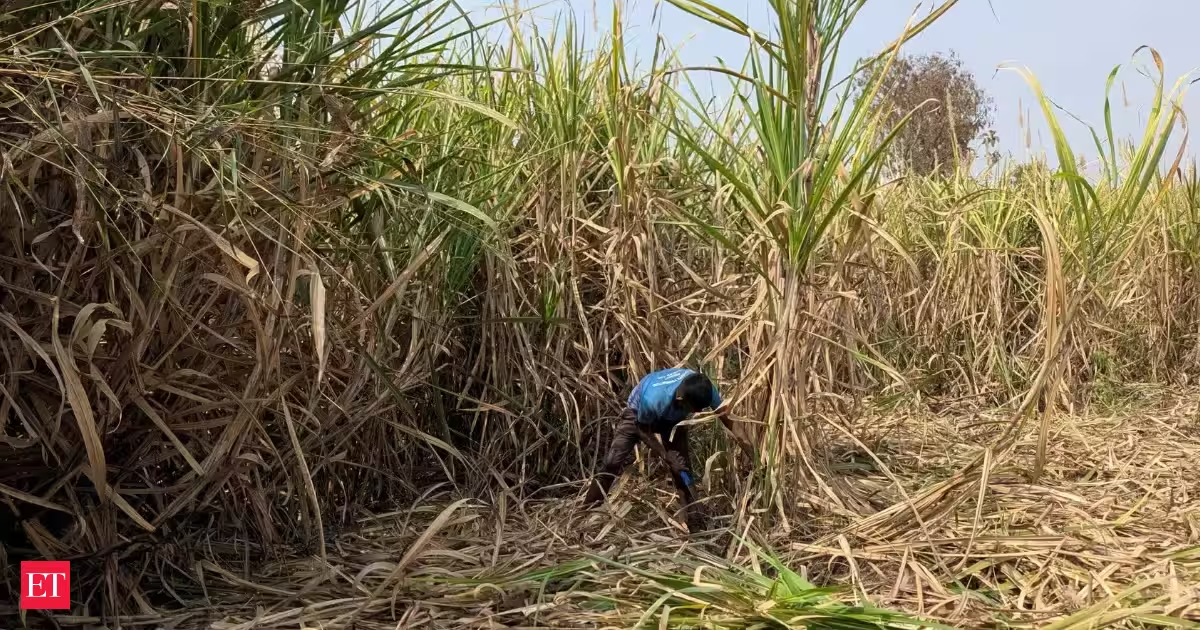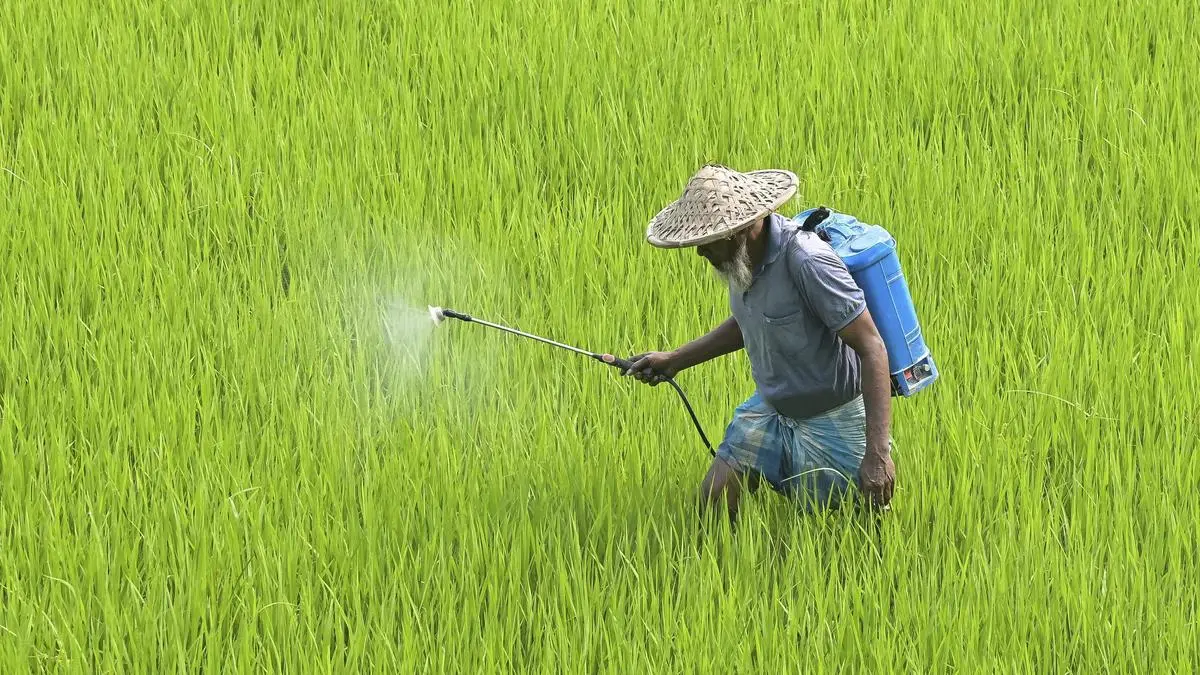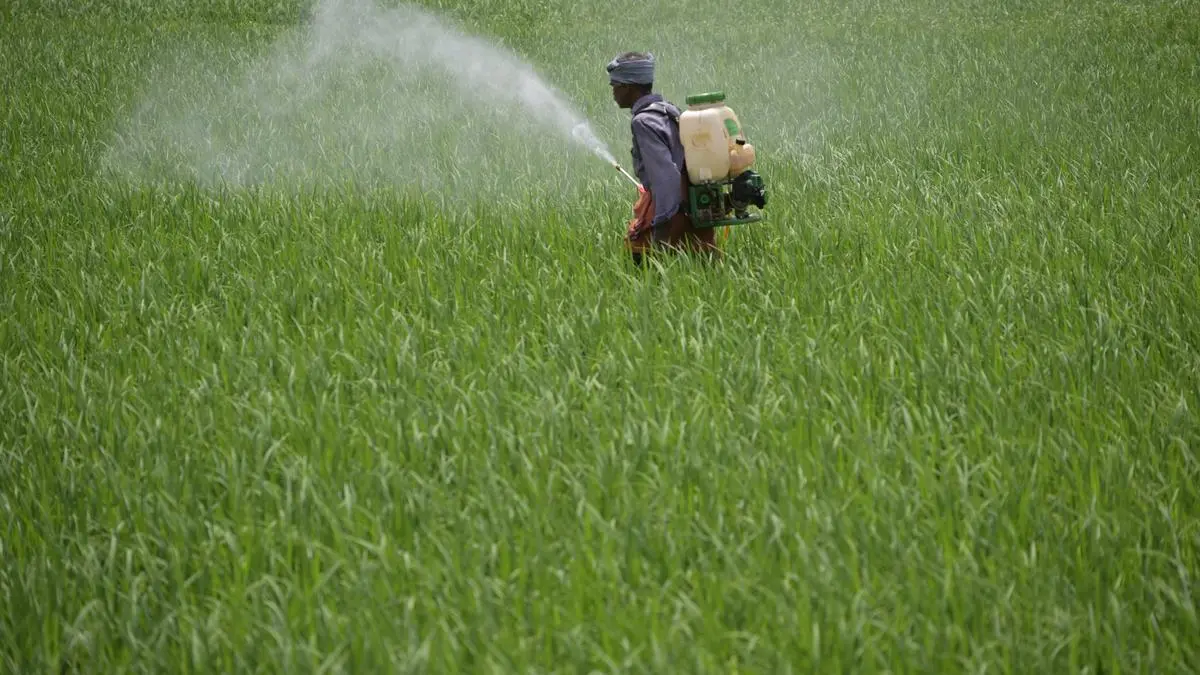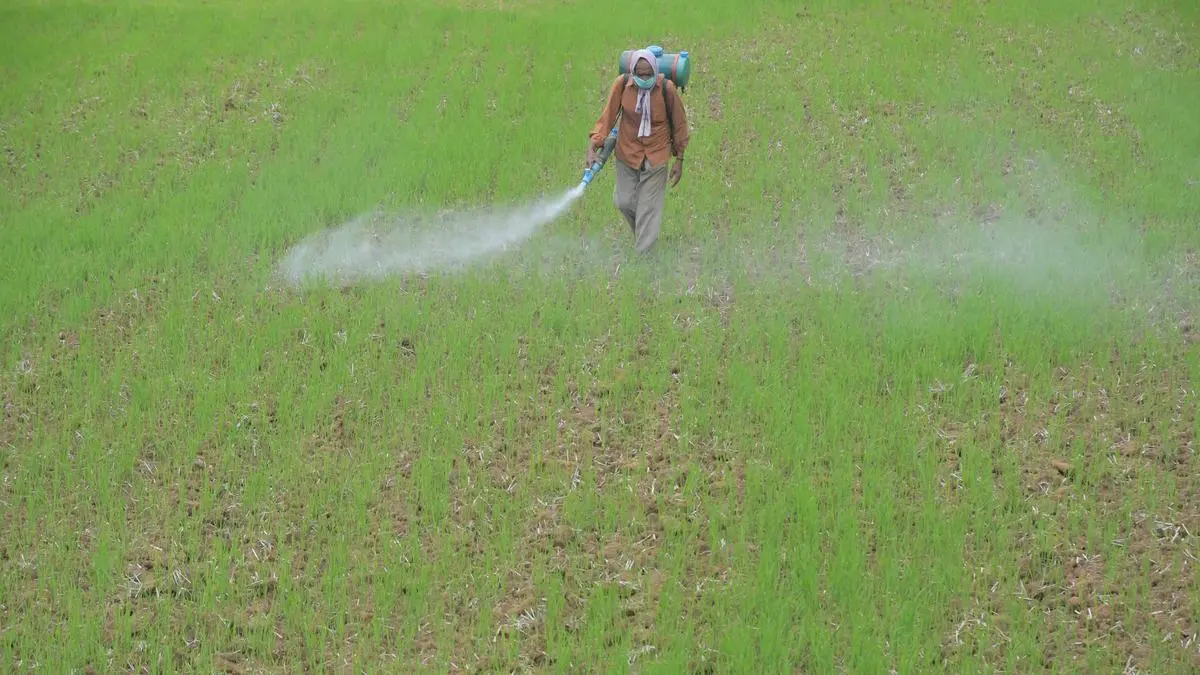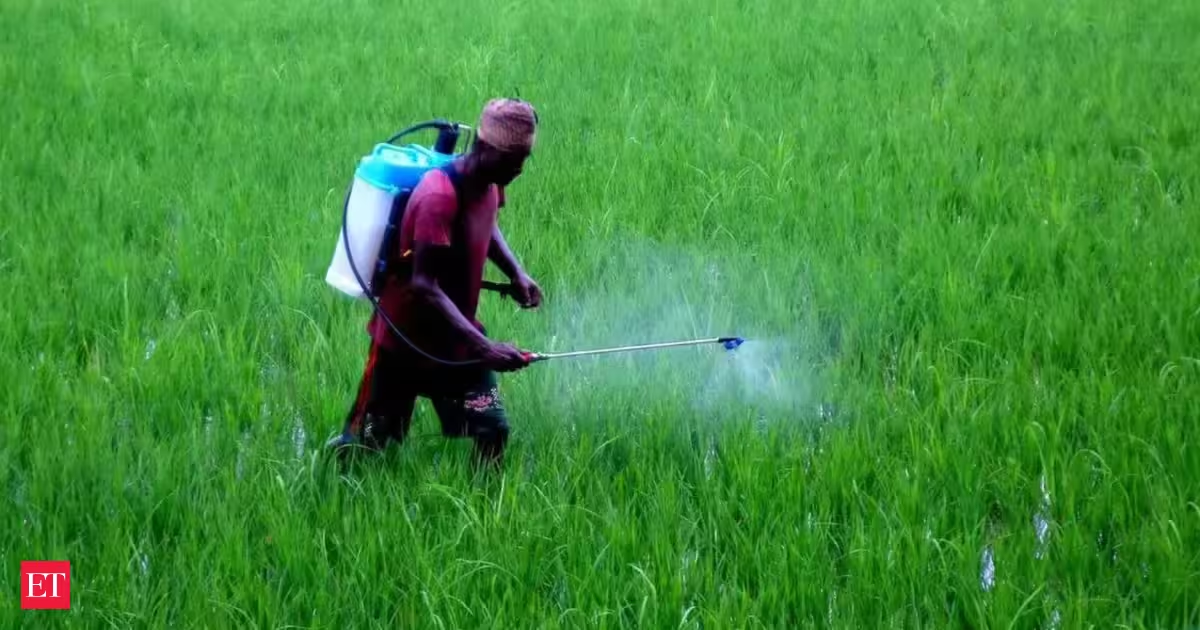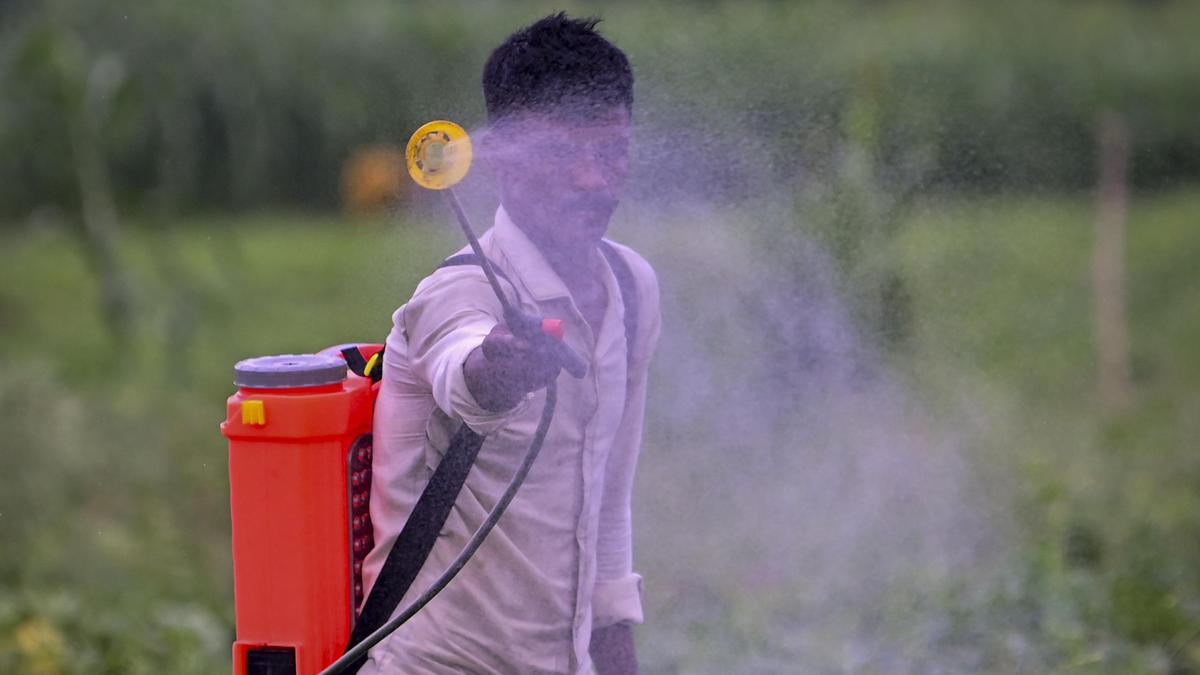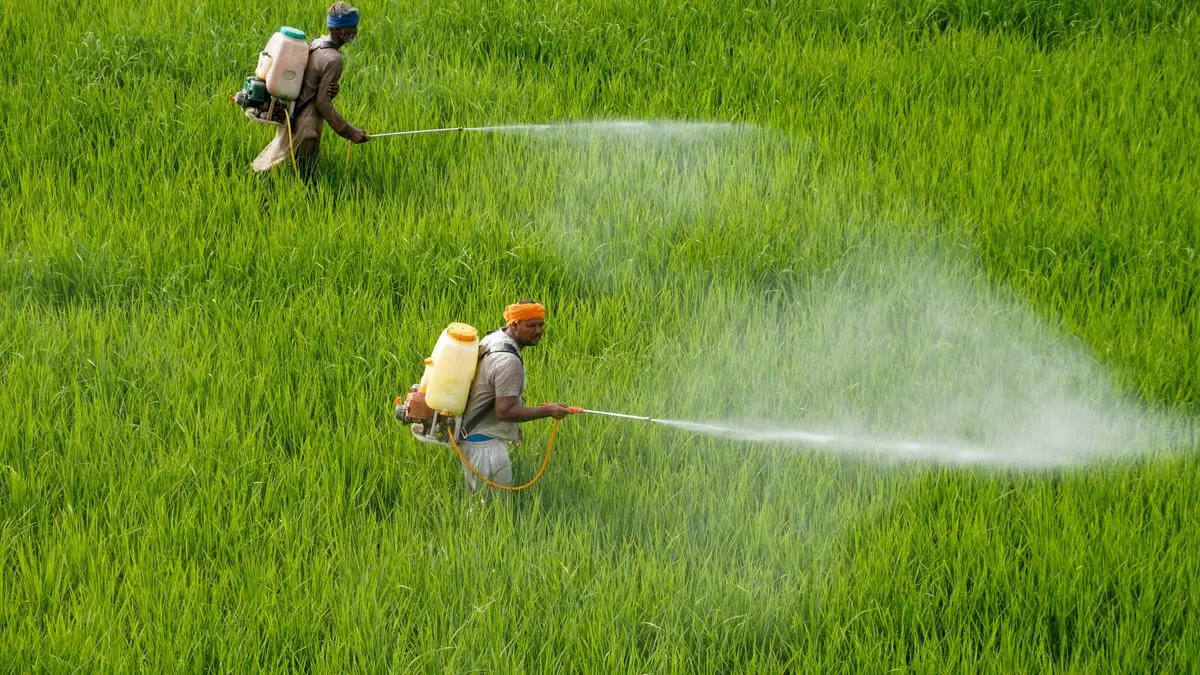
Sources said that the Agriculture Ministry, which has categorised Carbosulfan under “highly toxic”, started acting on the proposal to put it under restricted category only after it received the recommendation of Central Insecticides Board and Registration Committee (CIB&RC).
| Photo Credit:
The government is considering restricting the use of Carbosulfan, a popular insecticide used on paddy, cotton, and horticulture crops, with a final decision expected by the end of this month. Coming on the heels of July’s proposed ban on the herbicide Paraquat, this move reflects growing official efforts to improve food safety and promote healthier agricultural practices.Currently, FMC India under its ‘Marshal’ brand sells the insecticide, which contains 25 per cent (Emulsifiable Concentrate) Carbosulfan. The company says it is a broad spectrum insecticide that gives effective control over chewing and sucking pests in various crops through its dual contact and stomach poison action on the pests.“Marshal insecticide, a trusted brand among farmers from decades and is known for its broad spectrum control on various chewing and sucking pests in Cotton, Paddy and Vegetables. A different mode of action makes Marshal insecticide a good rotational partner especially in vegetable spray programs and manages issues around pest resistance,” FMC India said on its website.FMC Corporation in May signed a definitive agreement to sell its India commercial business to Crystal Crop Protection for $252 million under which Crystal will acquire FMC India’s commercial operations in the crop protection segment, including licences for FMC brands sold in India. Crystal will also receive a preferred supply agreement for certain FMC active ingredients and formulated products, along with preferred access to FMC’s pipeline of crop protection products in India.Sources said that the Agriculture Ministry, which has categorised Carbosulfan under “highly toxic”, started acting on the proposal to put it under restricted category only after it received the recommendation of Central Insecticides Board and Registration Committee (CIB&RC). The RC in its meeting held on June 29, perused the report of the expert review committee on Paraquat Dichloride and Carbosulfan, and deliberated it extensively under section 27(2) of the Insecticides Act, 1968.“RC decided to communicate its recommendations separately to the Government of India for its consideration and taking a final appropriate view in the matter. The final decision taken by the Government of India shall be implemented by the RC accordingly,” according to the minutes of the meeting.Paraquat banThe government on July 14 issued a draft order proposing a blanket ban on Paraquat Dichloride, citing its severe toxicity to humans and animals. The draft notification seeks to halt the manufacture, import, sale, and distribution of the widely used herbicide, giving stakeholders 30 days (by August 12) to submit feedback before a final ban is gazetted.Industry sources said that once Carbosulfan is put under restrictive category, there can be various types of restrictions to regulate its use by farmers, who currently buy it and freely use it as they are advised. Though its patent has expired, Carbosulfan is still manufactured by FMC or its licensee in India.Industry sources also said that unlike ‘Paraquat’, there is not much concern about Carbosulfan with regard to toxicity or other health risks. However, sources said, the issue was referred to the expert panel by RC as Carbosulfan got added to Rotterdam Convention under which all signatories (countries) when importing the formulation has to notify it.But experts working with farmers in crops like cumin, where Marshal is sprayed, said that Carbosulfan is an issue for export to the EU where maximum crop residue level (MRL) is 0.01 mg/kg. India’s food regulator FSSAI has different MRL for Carbosulfan in three different crops — 0.2 in rice, 2 in chilli and 20 in dried chilli while no specifications for other crops.Published on August 9, 2026