We used to have multi-generational households where older adults would take care of the little tots as the younger adults went out to work. In the Middle Ages all the way through the immigrant diaspora era of the 1920s, this was the role of the so-called “village” where the young would go to work and the old would take care of the next generation. In 2026, the idea of a village is all but nonexistent, and that’s because we’re choosing to avoid conversations with our neighbors.
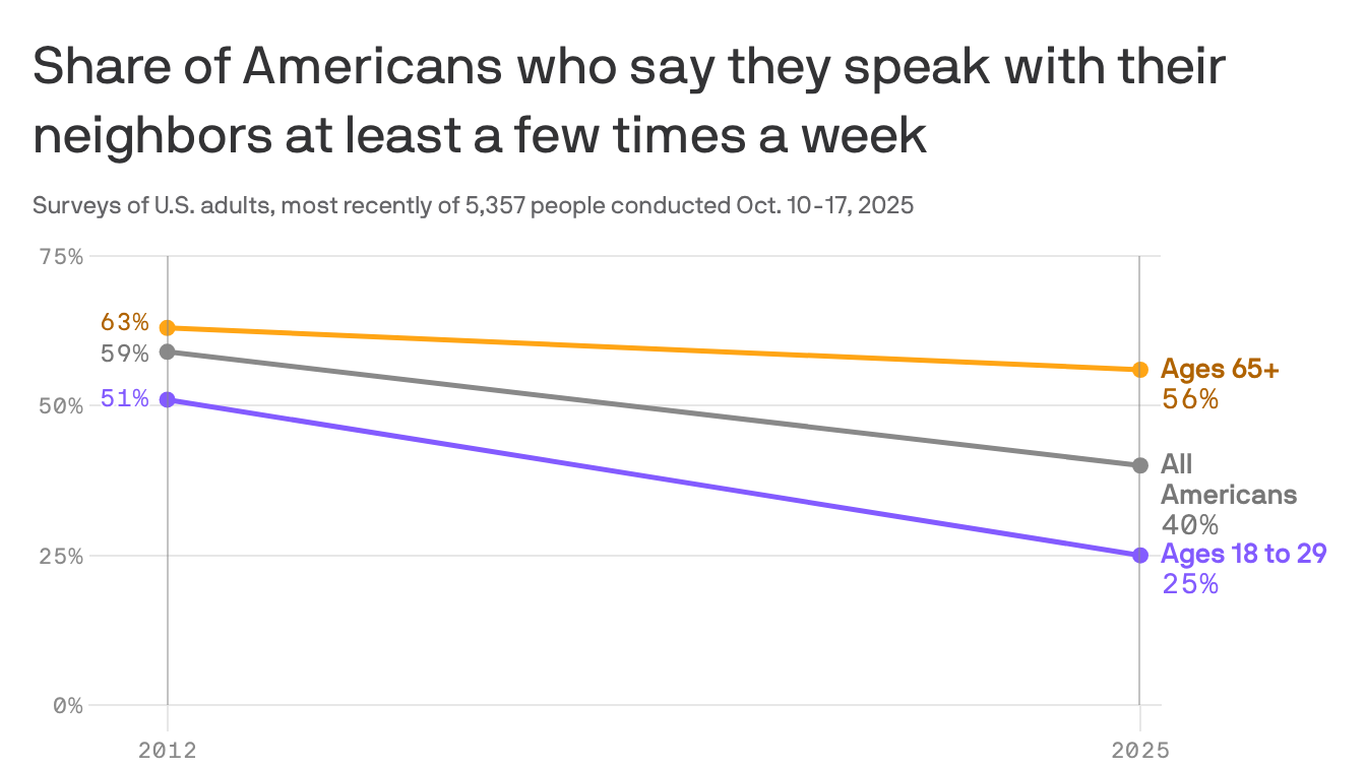
In fact, only 40% of Americans say they talk to their neighbors regularly today. In 2012, nearly six in 10 did. And that lack of socializing leads to fewer personal interactions, which in turn, is making our society very home-bound and reclusive, all because we don’t want to exit our comfort zone.
“People don’t dance as much anymore at clubs because they’re worried they may do something stupid, they may fall, they may look silly, and they know that everyone has a recording and broadcasting device in their pocket,” said Daniel Cox, director of the Survey Center on American Life at the American Enterprise Institute and lead author of a new report on the decline titled “Strangers Next Door.”
Among young adults, regular contact with neighbors has fallen from 51% to about one in four in a little over a decade, the sharpest decline of any age group. Among older Americans, 56% still talk to neighbors weekly, down just seven points.