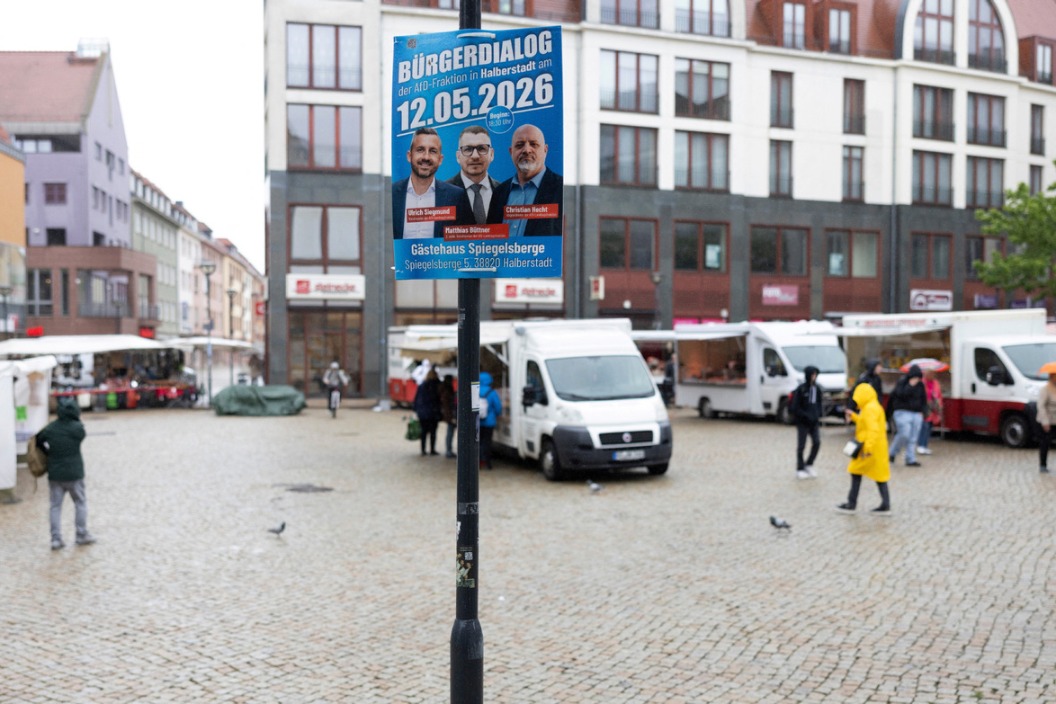
Opinion polls suggest that the far-right Alternative for Germany (AfD) are on course to win the next German election with around 27 to 29 percent of the vote. Its lead over the second-placed Christian Democratic Union (CDU/CSU), led by current chancellor Friedrich Merz, is growing significantly.
German MEP Damian Boeselager, who founded the Volt party in response to the rise of populism and extremism in Europe, explained that the AfD’s success in Germany is driven by several factors, particularly the inability of political parties to carry out decisive reforms.
He regularly criticises the AfD and joined an initiative by MEPs that called on the Authority for European Political Parties to verify whether the Europe of Sovereign Nations (ESN) group, of which AfD is a member, meets the conditions for continuing to operate.
The independent authority was asked to examine whether the ESN complies with the EU’s fundamental values, such as democracy, the rule of law and respect for human rights. In addition to the AfD, this political family also includes Slovakia’s Republika party.
In this interview, he discusses: