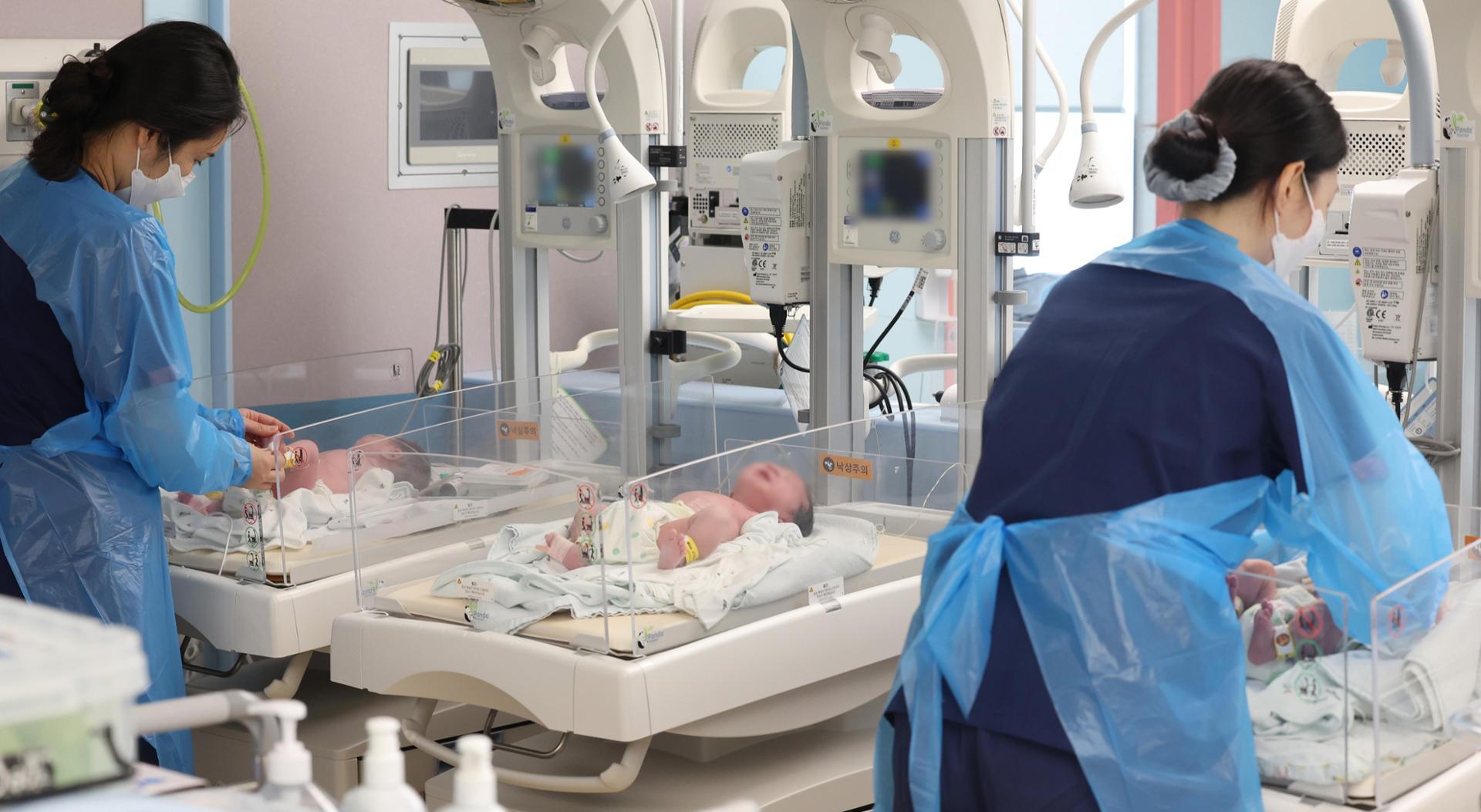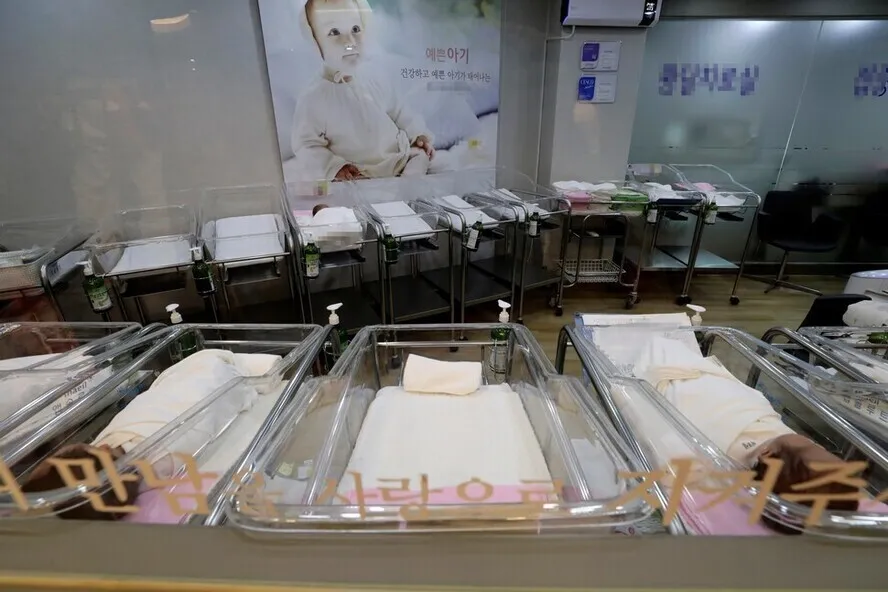
Average ideal number of children recorded nears two, but families have or expect to have just one on average Nurses look after newborn babies at a hospital in Goyang, Gyeonggi Province, on July 29. (Yonhap) Over 70 percent of South Koreans believe having multiple children is ideal, but nearly half think having just one child is more realistic, a survey showed Sunday.Of the surveyed individuals, 58.9 percent think having two children is ideal, followed by 20.8 percent who picked one child, 12.1 percent who said three or more, and 8.2 percent who do not want children. The survey by the Presidential Committee on Ageing Society and Population Policy from Nov. 3 to 14 inquired into public attitudes toward childbirth and child rearing.Some 71.2 percent of respondents said they needed children in their lives, with 82.2 percent of such respondents citing happiness and meaning in the household.But many respondents felt they would not be able to have as many children as they wanted. When asked how many children they had or realistically expect to have, 44.9 percent said one, while 27.1 percent answered two. Only 2.7 percent said three or more.About a quarter (25.3 percent) said they did not expect to have any kids — more than triple the percentage of those who thought having no children was ideal.When compiling answers of all respondents, the ideal number of children was 1.76. But the number of children they actually had or expect to have was 1.07.Korea's total fertility rate — the number of children a woman is expected to have during her lifetime — was 0.8 in 2025, an improvement from the all-time low of 0.72 recorded in 2023.The survey showed that financial issues were the biggest reason for having fewer children than they wanted.All respondents cited child-rearing and education costs as the reason they expected to have fewer children than they wanted; 36.6 percent cited living expenses and living environment. Some 40.4 percent cited difficulty balancing work and childcare.The report also revealed that those who had more children than they thought ideal had help at home and at work. Some 37.5 percent of such people said it was due to the family's cooperation and expectations, while 22.5 percent said their work environment allowed them to balance work and family.Another 20 percent said they had a flexible work environment and had a low risk of career interruption due to childbirth.
Most Koreans would like more children, but feel restricted by finances, careers
Over 70 percent of South Koreans believe having multiple children is ideal, but nearly half think having just one child is more realistic, a survey showed Sunda
399 words~2 min read