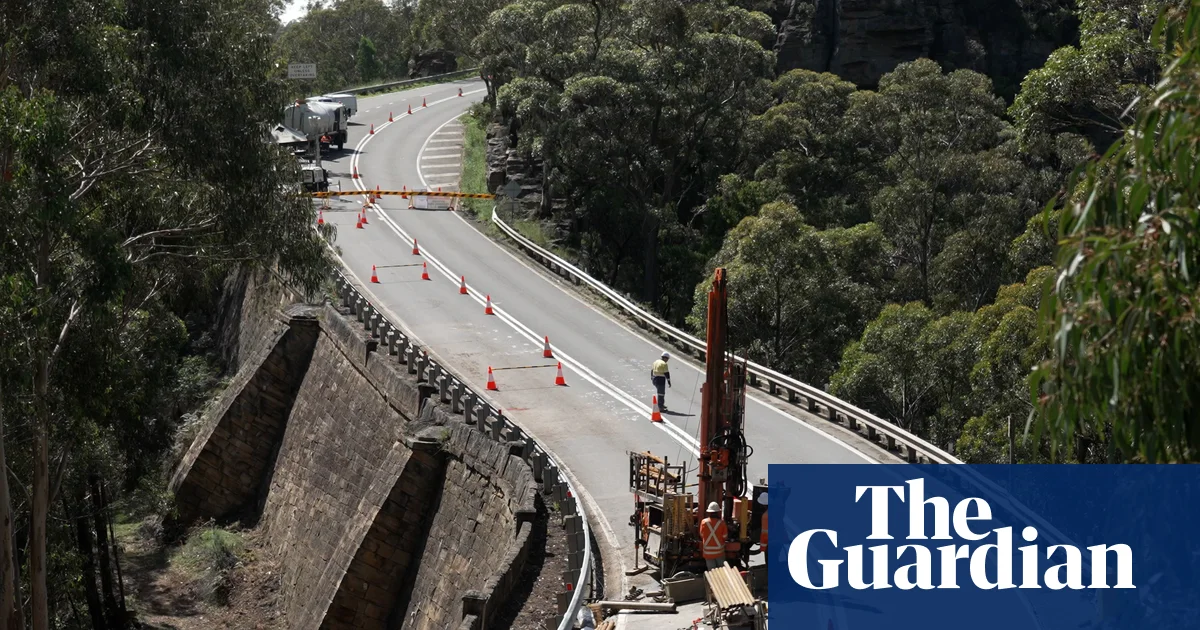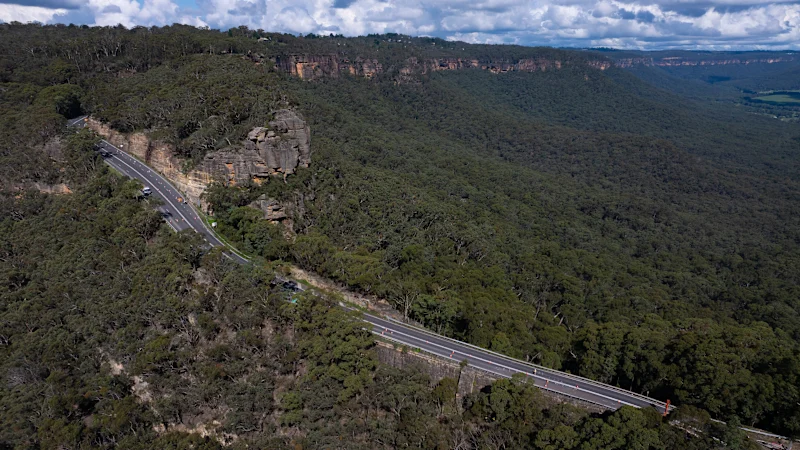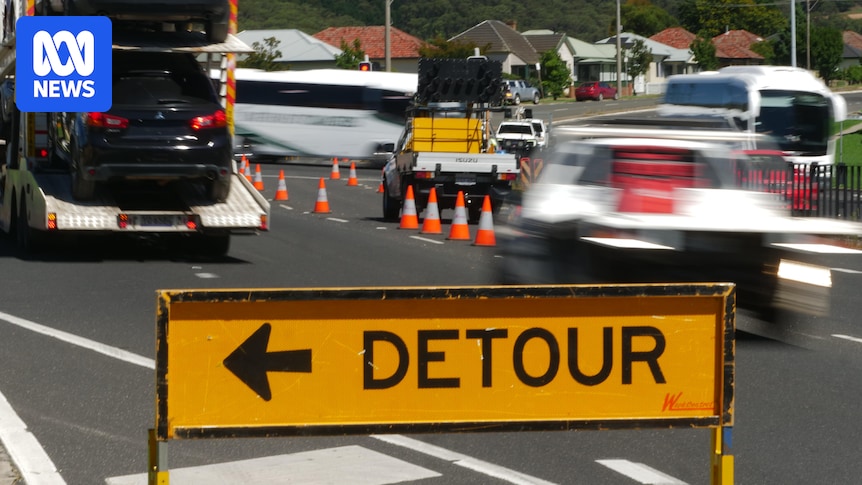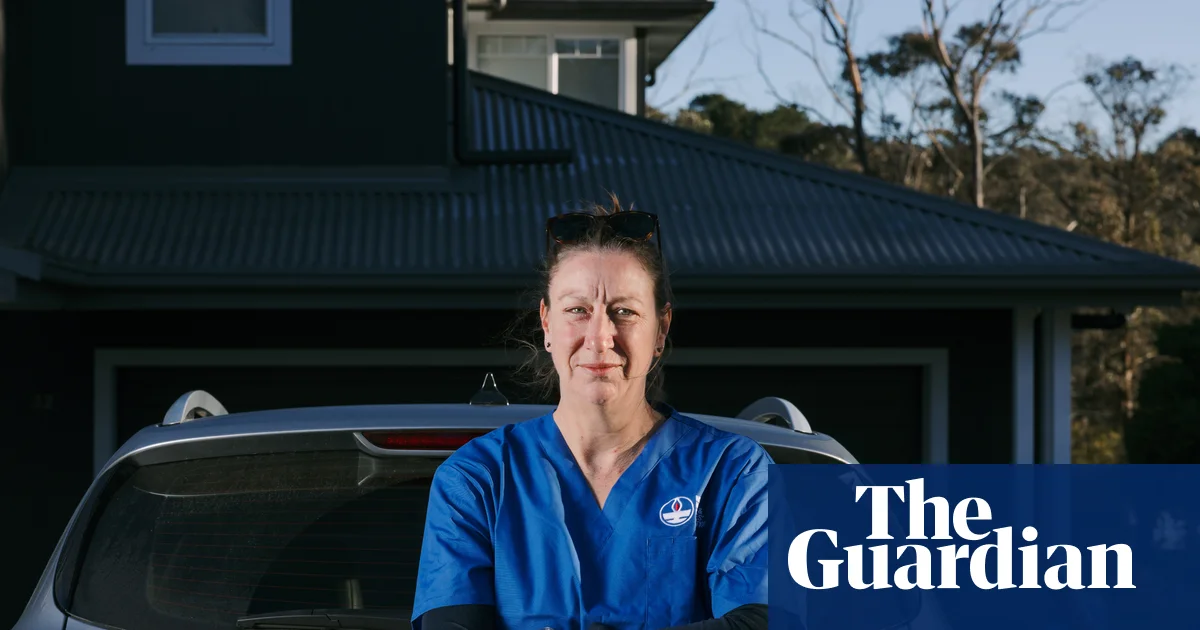
When Fran* finishes a late nursing shift in the Blue Mountains, there is no comfort in driving home. Since the Victoria Pass closed on the Great Western Highway this year, her 45-minute commute has ballooned to two hours.Desperate to avoid the journey, Fran – a New South Wales Nurses and Midwives Association member from the Lithgow hospital branch – sometimes sleeps at a free local campground with cold showers.The drive home from a shift that finishes at 10.30pm ends at 1.45am in Hazelbrook, leaving her a few short hours before her alarm clock signals it’s time to begin the commute again. Along the way, there’s a good chance she’ll encounter gridlock from roadworks and breakdowns on narrow detour roads.Fran is among thousands of drivers now forced on to detours that go via the narrow, potholed routes of the Darling Causeway, Chifley Road and Bells Line of Road. Winter brings black ice, thick fog and faded road markings. When fuel prices spiked in early 2026, her fortnightly petrol bill hit $600.“I feel penalised for living rurally as a healthcare worker,” she says. “I’m tired all the time.”Mitchells Causeway, Mt Victoria passWith Victoria Pass expected to remain closed for another year, Fran faces a choice between white-knuckle night driving and camping in the cold.Clair, a fellow NSWNMA member from the Lithgow hospital branch who lives in Katoomba, faces similar exhaustion, her 35-minute commute now taking up to 90 minutes.“I might not get home until midnight and [then I have to] get up at 6.30am the next morning,” she says. “At the end of the week, you’re just exhausted.”No more through trafficThe Great Western Highway is the main route across the Blue Mountains, connecting Sydney to the west of the state. It still largely follows the path set by colonial surveyors in the early 1800s, including Mitchells Causeway in Victoria Pass, which rests on stonework laid in the 1830s. That stonework is now cracking. Replacing the 194-year-old convict-built structure with a new bridge will take at least 12 months.Letitia Kemister cleans for elderly clients in the Kanimbla Valley near Mount Victoria.“People in Hartley and the surrounding valleys have been forgotten,” Kemister says. “A trip that used to take 10 minutes now takes an hour and a half. I clean for clients in their 70s and 80s who panicked … there are simply no public transport provisions for elderly people trying to access essential services.”Heavy vehicle breakdowns on scenic detour routes compound gridlock, blocking traffic until heavy tow rigs arrive.Despite the impact on residents, the local health district maintains there are no disruptions to hospital services in Lithgow or the Blue Mountains, noting that emergency vehicles can still access the highway up to the closure point.Ronni Mills-Mateer has had to close her Leura shop. Photograph: Blake Sharp-Wiggins/The GuardianIn Leura, east of the pass, Ronni Mills-Mateer has closed her pop-culture shop, Geekdom, after six and a half years. The road closure, which she says has caused a 20% drop in business, was the final blow. Passing trade between Sydney and the regional cities of Orange and Bathurst, on the other side of the mountains, evaporated.The NSW government has offered a $10,000 grant to businesses that can prove they’ve made a 40% loss but Mills-Mateer says the amount “barely covers a month’s rent and expenses”.“Everybody’s known that the road has been a big problem,” she says. “The bridge is over 100 years old; there should have been some thought [given to it] at some point.”More than 3,000 vehicles a day are now turning off the Great Western Highway on to Station Street, one of the main shopping strips in Mount Victoria, according to Shane McLucas, a local guest house owner and the treasurer of the Mount Victoria Business Association. Two blocks along, Station Street becomes the Darling Causeway, which follows the railway line through the mountains.The train lines, rather than being a lifeline, are also frequently closed for repairs. There is, says McLucas, no apparent coordination between road and rail, and no warning to local businesses.“We’d be having an event at the hotel … and then all of a sudden the trains just start to shut down and do line [maintenance] work,” he says.He says the detours and traffic management plans feel more akin to temporarily diverting around an accident than a long-term plan. “We have uncoordinated traffic lights and huge bottlenecks. They’re not thinking, ‘This is going to take 12 months, let’s build proper temporary infrastructure, synced lights and proper signage.’”Traffic approaches the closure on the Great Western Highway. Photograph: Blake Sharp-Wiggins/The GuardianA few kilometres farther east, in Blackheath, the chamber of commerce president, Michael Paag, says businesses face supply-chain delays and staff shortages, with freight companies adding surcharges of up to $50 on small deliveries.Frank Black, a truck driver, says detouring around Victoria Pass adds at least 30 minutes and roughly $130 for each leg in extra fuel, vehicle wear and tear, and lost time.“As an owner-driver, that cost is borne by me,” he says.With just one substandard road in and out, communities are left vulnerable on routes prone to black ice and bushfires.Kemister points to crumbling secondary routes like Browns Gap Road, where sections have degraded near the cliff edge. “Coming around blind corners on unmaintained detour roads full of potholes is scary on a good day,” she says. “What happens if there’s a catastrophic bushfire with only one main exit route open? It makes us feel incredibly vulnerable.”Victoria Pass from the air. Photograph: Blake Sharp-Wiggins/The Guardian‘Kids are exhausted’Edwina McCarron, from Little Hartley, spends hours each day driving her two children, aged 10 and 12, to school in Blackheath.“If they were to catch the public school bus, they would be getting on at about 7.45am and getting home close to 5pm” she says. “[That] isn’t feasible.”Instead, she drives a 50-minute round trip to Lithgow twice daily so her children can catch a direct bus. The disruption has triggered “huge school refusal behaviours”.Ineligible for small business grants as an equine body worker, McCarron took on a part-time teaching job to manage soaring fuel costs.“I leave home at 6am and worry every morning if I’ll make period one with the unpredictable traffic,” she says. “I know I’m not the only one who’s picked up extra work to try and manage the cost.“We didn’t move to Hartley with the assumption that it’s an isolated area … we moved 20 minutes from our kids’ school.”There has been no travel rebate offered to families, she says. Transport NSW has put on an extra morning bus service but not one in the afternoon that could pick up children heading home from school.Family travel times in Hartley have gone up by two to three hours, a community group says“If there was access to some smaller buses that could take kids down the back road … in the mornings and afternoons, that would make just an enormous difference to families and the wellbeing of our kids,” she says.A push to allow a school bus to travel on a more direct route, on a road now restricted to local access only, requires joint approval from the Lithgow and Blue Mountains councils as well as Transport NSW. It is, says Ramsey Moodie, president of the Hartley Valley District Progress Association, “a whole quagmire”.Average family travel times in Hartley have gone up by two to three hours, a survey by the local community group the Hartley Families Network found.“This has moved beyond a transport disruption, the impact on the wellbeing of children and families is significant,” says a spokesperson, Steve McCammon. “Kids are exhausted, routines are breaking down and parents are carrying enormous emotional and financial pressure.”The Minns government in March announced a $50m package “to strengthen and improve key detour routes in the Blue Mountains and central west” of the state.In late June, an additional $20m in financial support was revealed to increase small business grants in some areas to $25,000. At the time, the minister for regional NSW, Tara Moriarty, said the relief would be paired with ongoing logistical support, including free coaches.“We understand the major impact the closure of the Great Western Highway has had on local businesses and communities, and we are committed to providing targeted support where it is needed most,” Moriarty said in June.*Name has been changed
Nurses sleeping in campgrounds, shops shutting and two-hour school buses: what the closure of Victoria Pass means for the Blue Mountains
The main road through the region will be closed for at least another year. Communities who rely on it say they’re already at breaking point
1,379 words~6 min read