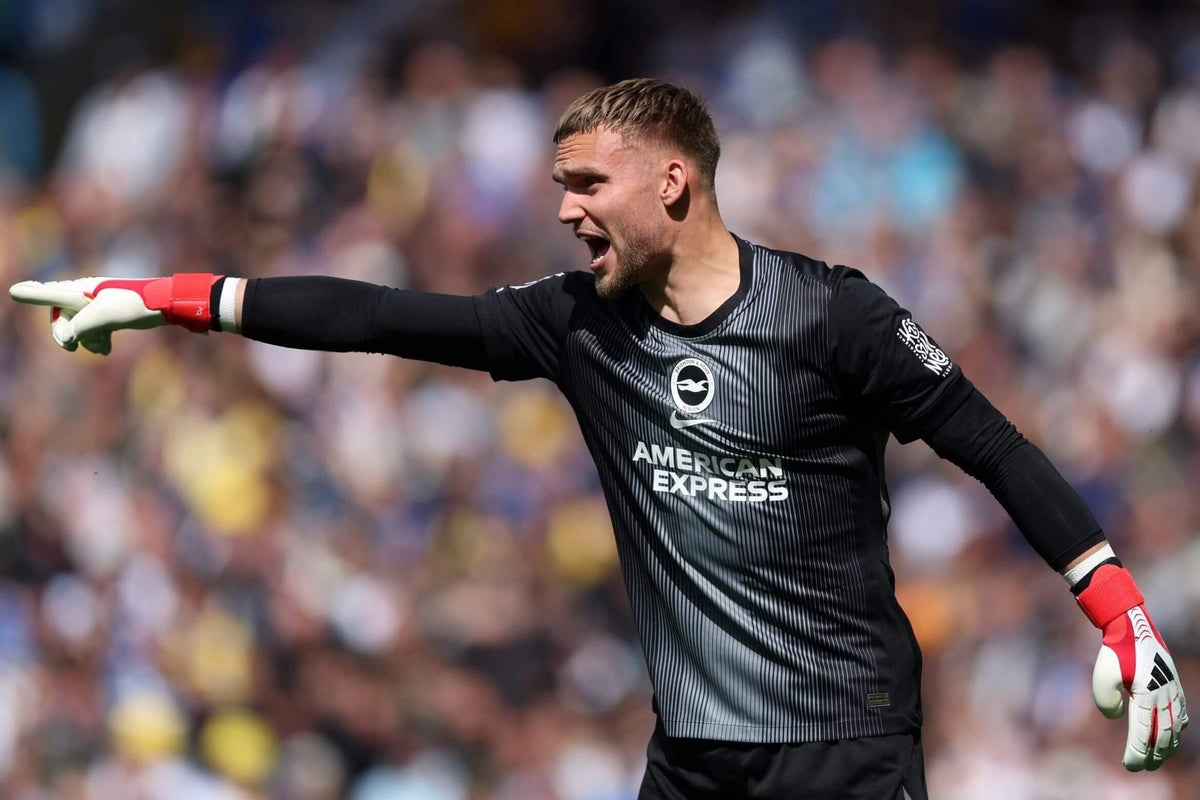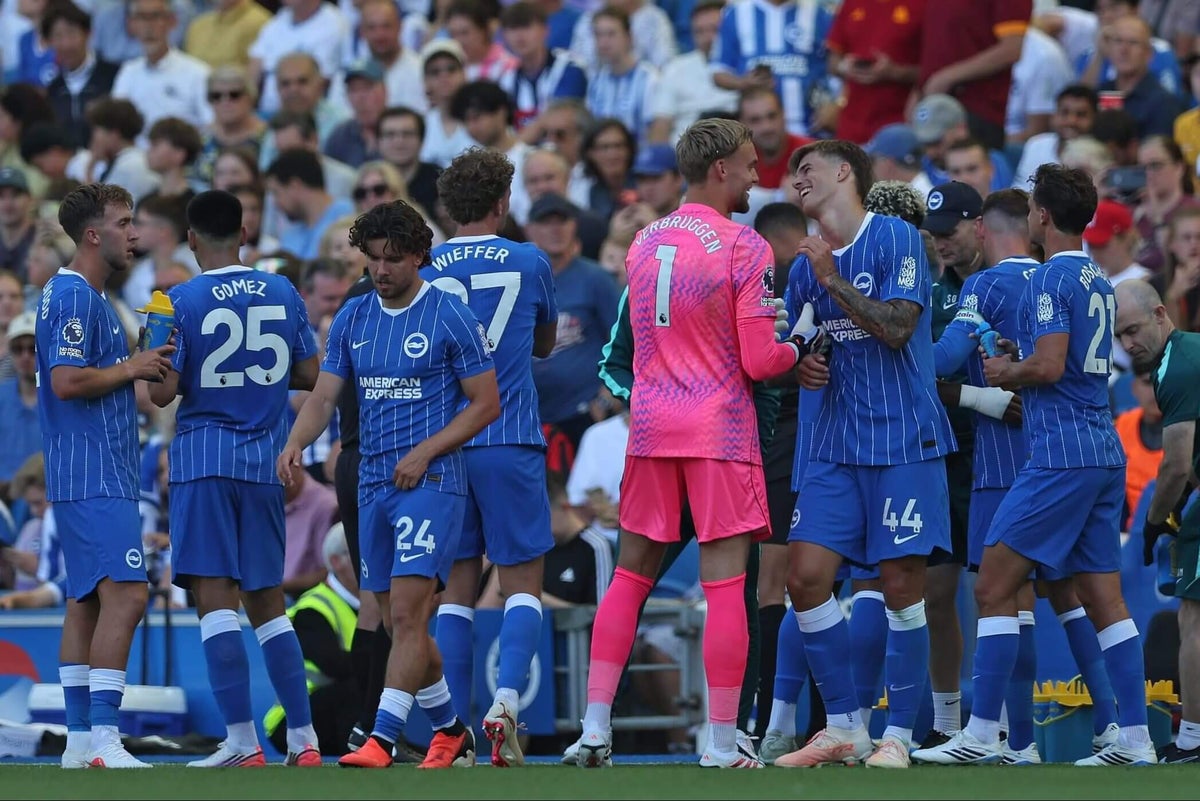
It came too late for the previous head coach Roberto De Zerbi, but the age profiles in Brighton & Hove Albion’s squad have started to change this summer.De Zerbi’s departure, in May 2024, revolved around Brighton’s recruitment strategy at the time.Broadly speaking, their signings back then fell into two categories: talented youth signed from all over the world — based on the data bank of the club’s owner-chairman Tony Bloom — blended with a group of senior pros in their thirties to set standards, aid the development of those youngsters and so help multiply their resale values.However, De Zerbi wanted more signings that fell in between — players in their mid-to-late twenties with established track records.This did not fit the model at that stage of the club’s journey.The Italian, now back in the Premier League as Tottenham Hotspur boss after a spell at French side Marseille, parted company with the club at the end of the 2023-24 season, after leading them to European qualification for the first time in their history a year earlier.His reign, spanning nearly two full seasons, ended with a 4-1 defeat on aggregate against Roma of his homeland in the Europa League’s round of 16 and a drop from finishing sixth in the Premier League in 2023 to 11th in his final campaign.Fast forward to Saturday’s 3-0 friendly win against Roma at the Amex Stadium under De Zerbi’s successor, Fabian Hurzeler, secured by goals from Georginio Rutter and Yasin Ayari (two).Goalkeeper Bart Verbruggen, centre-back Lewis Dunk and midfielder Pascal Gross (and he left the same summer De Zerbi did, and was then re-signed in this year’s winter window) are the only players still at Brighton from the starting line-up for the 1-0 second-leg win at home against the Serie A club in March 2024. That victory was a futile exercise in restoring dignity after a thrashing in Rome a week before.Roberto De Zerbi after Brighton’s Europa League round-of-16 defeat to Roma (Gareth Fuller/PA Images via Getty Images)The extent of the churn since then runs deeper: just nine members of that 23-strong matchday squad are left.The biggest shift has been this summer’s dismantling of the old guard and the number of players in their mid- to late-twenties signed across Hurzeler’s two seasons — filling the void between those colleagues with youthful promise and the long-serving veterans.Danny Welbeck, the now 35-year-old who scored the goal against Roma two years ago, and Joel Veltman, 34, are the most recent exits, moving to Chelsea and West Ham United, respectively.They followed 40-year-old James Milner, Solly March, 32, and Adam Webster, 31, who all left earlier in the summer. Milner retired after breaking the Premier League all-time appearances record, while March and Webster were released following long-term injuries.Dunk, the team’s 34-year-old captain, Gross and reserve goalkeeper Jason Steele, both 35, have maintained a core of experience, but half of the six signings this summer highlight the move towards creating a greater balance in the squad’s ages.Central defenders Pascal Struijk and Michael Svoboda will be 27 when the season starts later this month. Struijk has four seasons of Premier League experience with Leeds United, while Austria international centre-back Svoboda played for two seasons in Serie A and four in Serie B, the Italian second tier, with Venezia.Portuguese right-back Costinha, 26, played in the Champions League and the Greek Super League for Olympiacos last season. Before that, he spent three years in his homeland’s top flight with Rio Ave.The other three newcomers maintain Brighton’s usual policy of targeting global young talent.Croatian centre-back Luka Vuskovic, signed from Tottenham, and Nigerian winger Zadok Yohanna, arriving from Swedish side AIK, are both 19. Portuguese winger Rodrigo Rego, a 21-year-old brought in from Benfica in his homeland, has been loaned out for the season to Spanish second-division club Castellon.Luka Vuskovic joined Brighton from Tottenham this summer (Gareth Fuller/PA Images via Getty Images)“Of course, big personalities, big leaders, have left the club,” said Hurzeler on Thursday, speaking at an annual fans’ forum hosted by BBC Radio Sussex at the Amex.“We are all very happy for what they have given. It’s not always that you can carry on, carry on, carry on. It’s like in a successful company, you can’t always say, ‘Oh, we are successful now, let’s just keep going’. At one point, you have to make changes that are effective.“Last season, I can remember many times Georginio Rutter or Charalampos Kostoulas (both alternatives to Welbeck) warming up beside me, and everyone was singing about Rutter or saying ‘Babis’ (Kostoulas) needs to play more minutes. That’s the opportunity now, for them to step up.“On top of that, we have Ferdi Kadioglu: best football age, Mats Wieffer: best football age (both are 26), Bart Verbruggen has played so many years now in the Premier League (three seasons). We have added Pascal Struijk: best football age. Svoboda was a leader, captain of his club. We have added some great characters, and that’s also an opportunity for these players to step up.”Brighton's Jack Hinshelwood can play anywhere and everywhereDaniel StoreyHurzeler turned to his old guard last season during a crisis, before righting the ship to help Brighton finish eighth for the second year in a row and secure a place in the UEFA Conference League’s final qualifying round (almost certainly against Tromso of Norway) later this month.Dunk, Milner, Gross and Welbeck all started in the 2-0 win at Brentford in February, while Veltman came off the bench in the second half to help secure only Brighton’s second league victory in 14 games going back to the end of November.The average age of Hurzeler’s 10 outfield starters that day was 29, which was fine in an emergency but is unsustainable long-term in a league full of youthful pace, athleticism and energy.The transfer business in and out of the club this summer has gone part of the way to addressing that issue.
Brighton’s squad makeup is shifting this summer – with players at ‘the best football age’
It has been a case of 'Out with the old, in with the new' at the Amex Stadium during this transfer window
978 words~4 min read