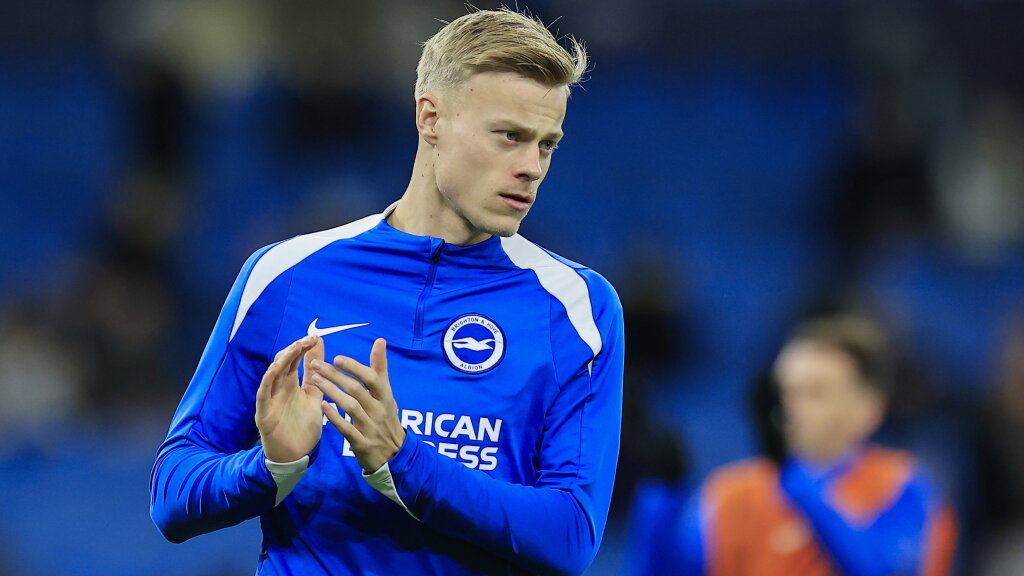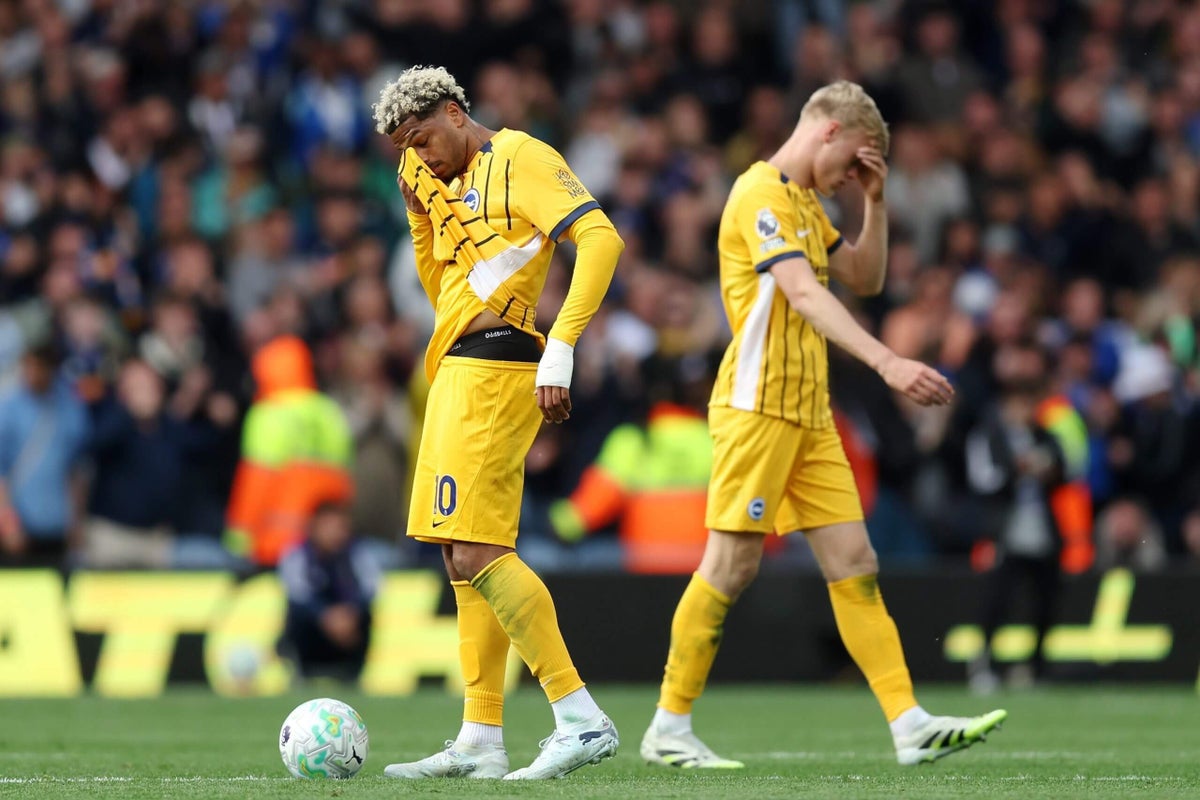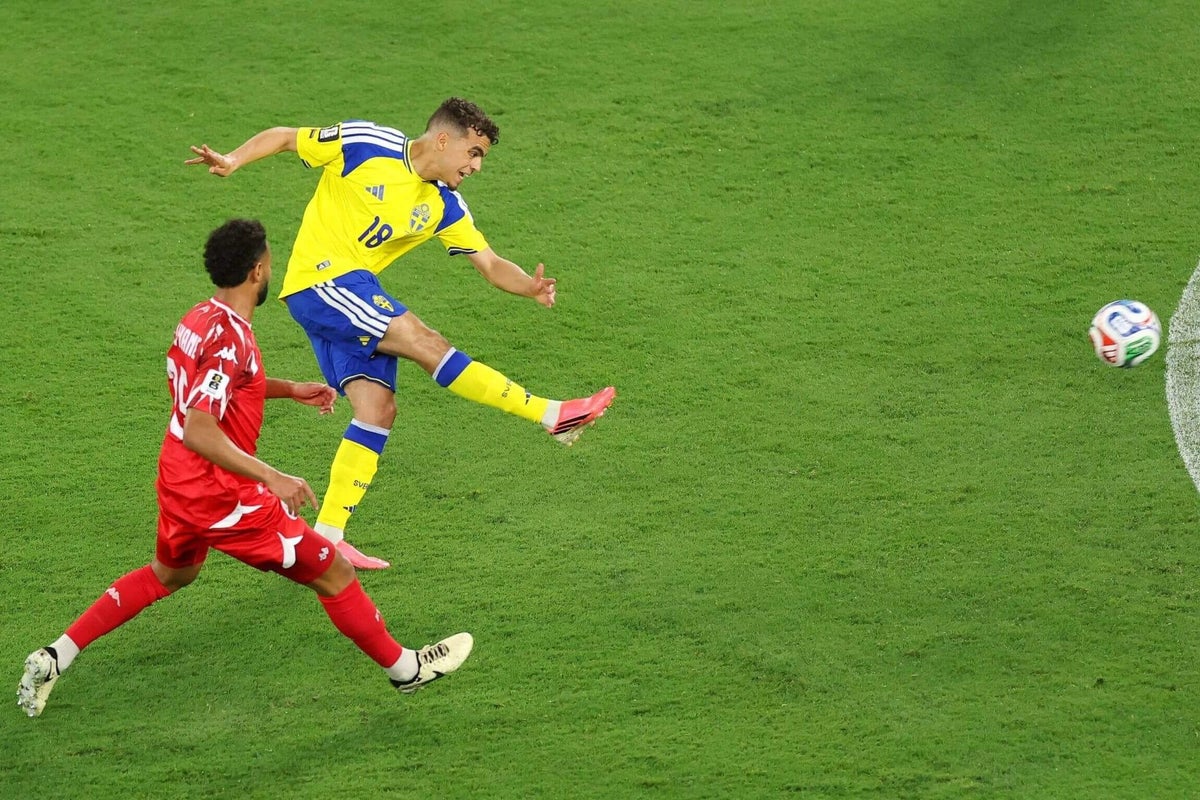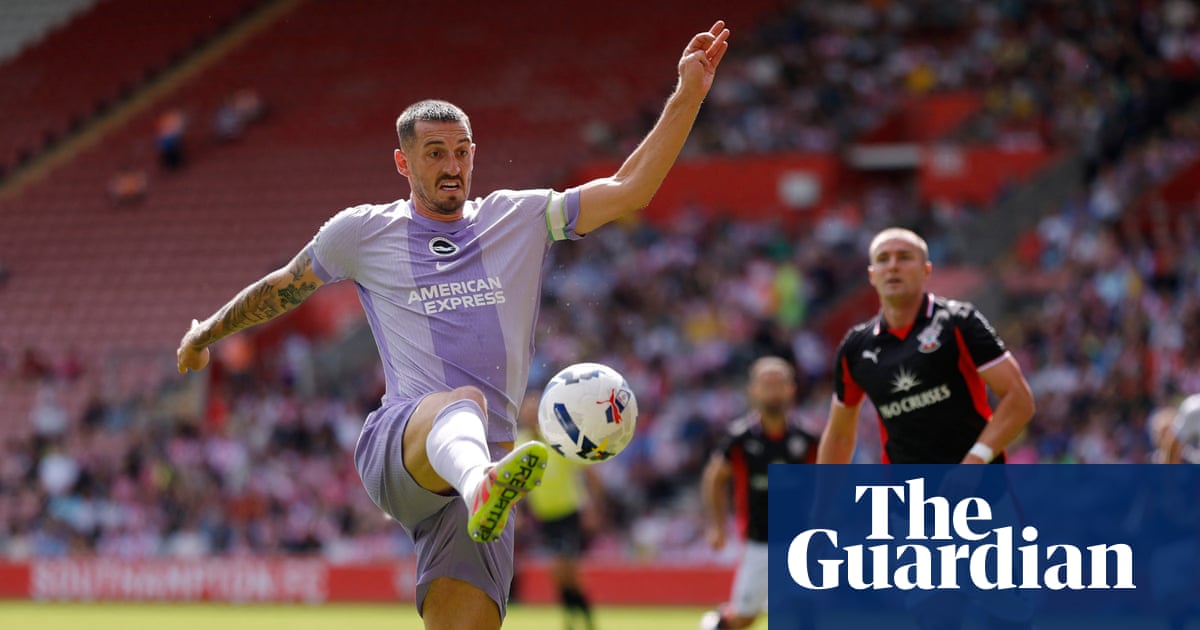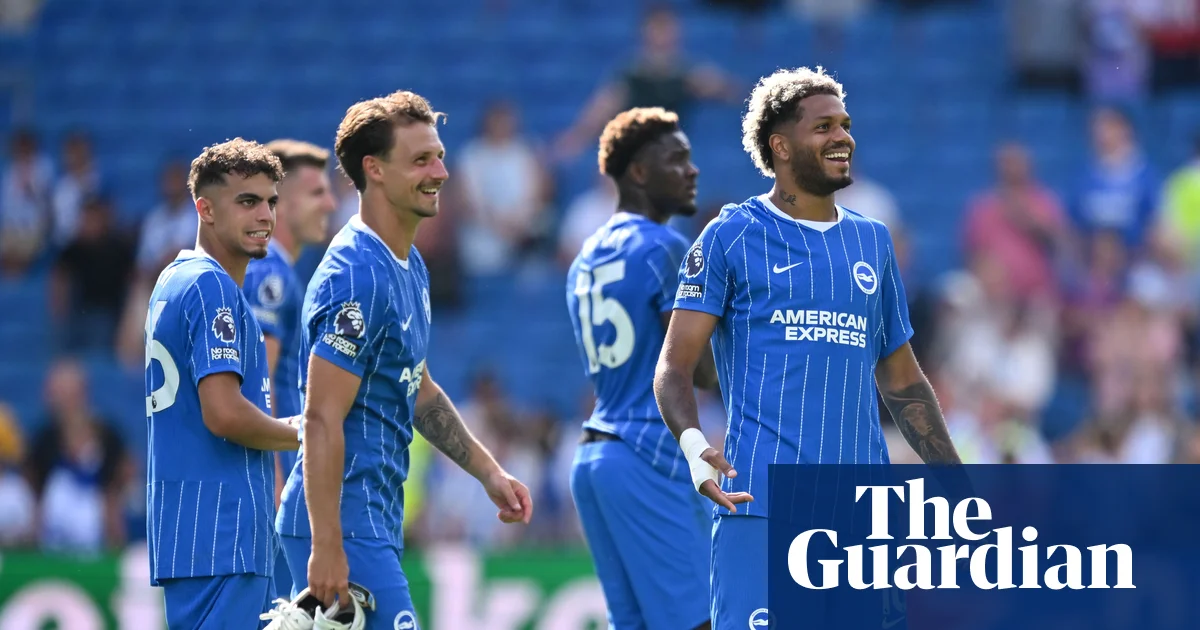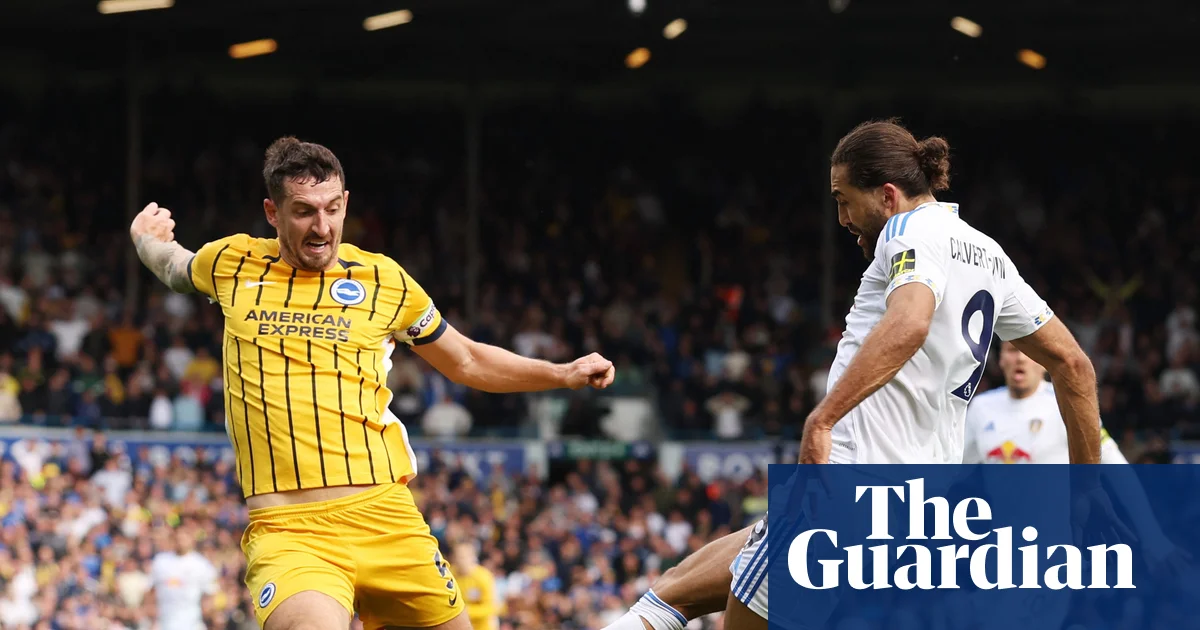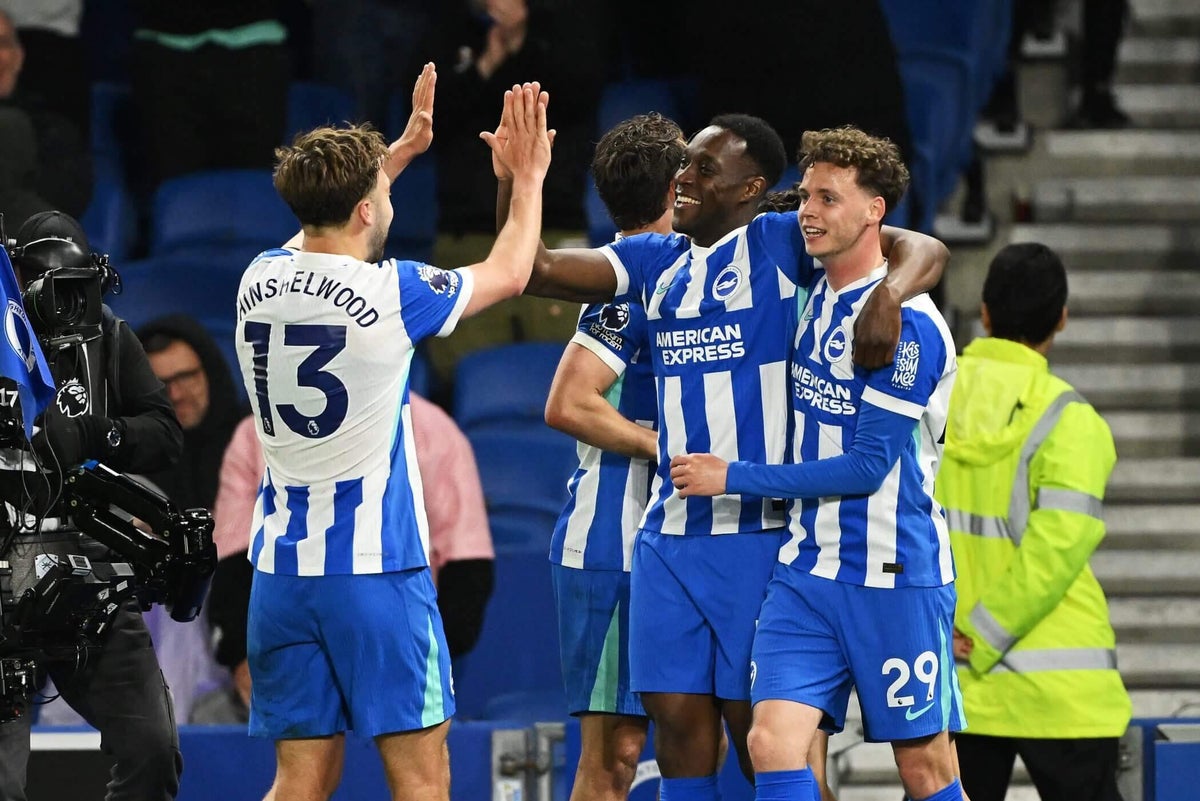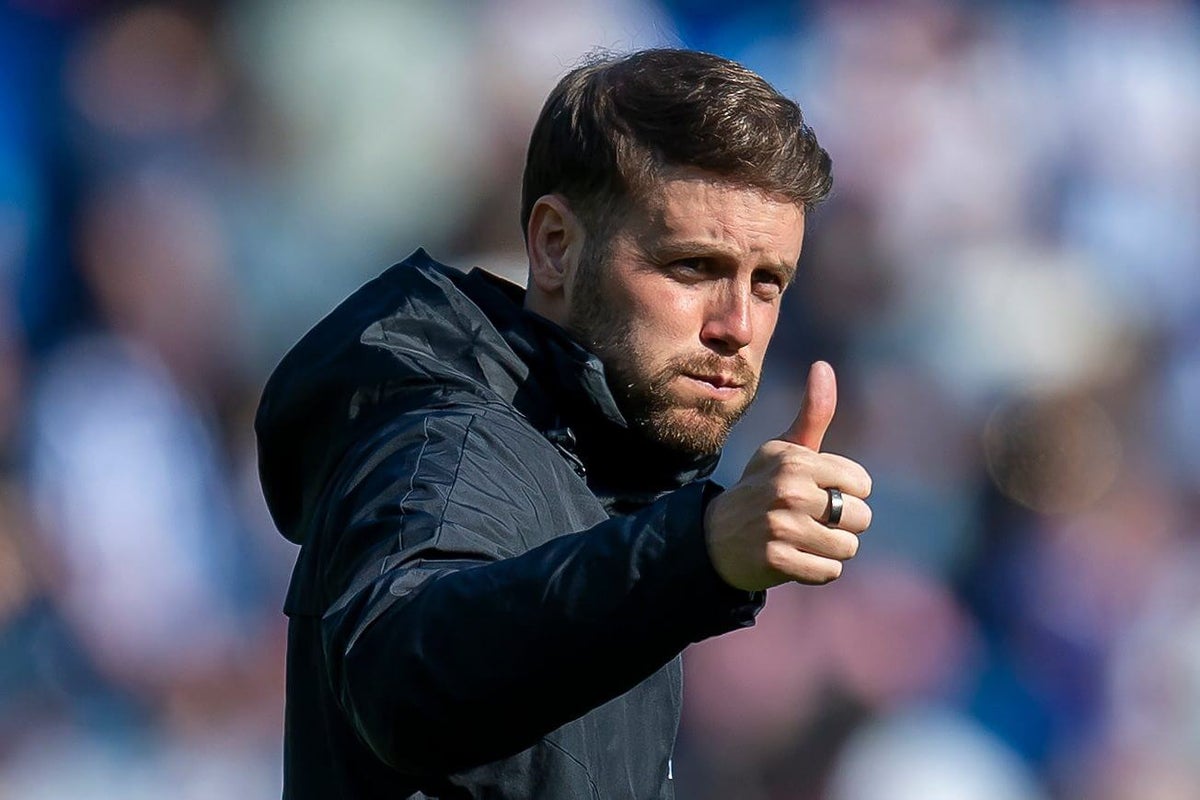
In some respects, it was a fitting finale.A season of highs and lows for Brighton and Hove Albion condensed into a final day of horrible, unbearable tension and ultimate elation at reaching Europe for only the second time in their history.A fourth home defeat of the campaign for Fabian Hurzeler’s side, 3-0 against Manchester United on Sunday, was comfortably the biggest, and it was accompanied by Brighton’s meekest performance.When the final whistle blew, a hush descended over the stadium. To be replaced by roars of delight (and relief) when Brentford’s 1-1 draw with Liverpool was confirmed.That result ensured Brighton dropped only one place to eighth — also their finishing position under Hurzeler in his debut season a year ago — with a happier outcome of it being sufficient to qualify for the UEFA Conference League.Brighton missed out on Europe by four points last time. This season, they made it despite finishing with eight fewer points (53 to 61). They limped over the line, frankly, having also lost the penultimate fixture 1-0 at Leeds United last Sunday. But their 125th anniversary season will still be historic for the club now in more ways than one.This is the inside story of how it happened, told by The Athletic with the help of sources speaking on condition of anonymity to preserve relationships.Brighton looked anything but European-spot contenders during a winter downturn which they began in December by losing 4-3 at home to Aston Villa from two goals up after half an hour.A damaging run of one win in 13 league games dropped them to 14th by mid-February. Its nadir was the 1-0 home defeat by rivals Crystal Palace a few days earlier. Hurzeler endured boos, chants of ‘You don’t know what you’re doing’ when he made substitutions and cries unprompted from the away end of ‘You’re getting sacked in the morning’ from sections of the fanbase at the Amex.It was a grim display in a fixture that matters more than any other to Brighton supporters, but there was never any question that the German would be sacked. No conversation took place between owner-chairman Tony Bloom and chief executive Paul Barber about Hurzeler’s position. Instead, they discussed with him, over dinner, whether there was anything more they could do to help.Tony Bloom (left) and Paul Barber (Neal Simpson/Sportsphoto/Allstar via Getty Images)Hurzeler was meeting all of the criteria they look for — the points-per-game ratio stood up to scrutiny, Brighton were never out of touch with the chase for European places in points terms, the players retained confidence in him, he continued to conduct himself well in public and he remained popular among club staff. The hierarchy was firmly of the opinion that performances during the lengthy downturn — apart from that one against Palace — were much better than people realised.Although the wins dried up, six of the 13 games were draws, including a point away to Manchester City. Only one of the six defeats in the sequence was by more than one goal (2-0 against defending champions Liverpool at Anfield) — further proof that they were in every game. Hurzeler frequently mentioned fine margins and players managing key moments better.One decision arising from Hurzeler’s discussions with Bloom and Barber was to take advantage of the fixture list after the Palace defeat with a stayover for the squad between two away games.They were based at St George’s Park, the national training centre for England teams, for a few days in February, either side of a midweek league fixture at Villa and an FA Cup fourth-round tie at Liverpool.Brighton routinely travel by charter plane to midweek and weekend away matches if they are further afield than London, returning to the south coast straight after the game concerned. On this occasion, staying at St George’s Park — located 30 miles north of Villa Park in the Midlands and so shaving off most of the onward journey to Merseyside — was not just for geographical reasons and reducing travel fatigue for players. It was also regarded by Hurzeler as an opportune moment to bring a tight-knit squad even closer together.Instead of heading home after training and lunch — as normally happens at the club’s training headquarters in Lancing, west of Brighton — the players had more time in each other’s company, taking part in activities which included a darts tournament.It did not have an immediate impact on results — Hurzeler’s side had lost 1-0 at Villa, to an unfortunate late own goal from a corner which brushed off the head of Jack Hinshelwood, and then were eliminated from the cup 3-0 at Liverpool, having beaten Manchester United 2-1 at Old Trafford in the previous round during their league slump. Even so, the break is seen by some at the club as a turning point in the season. A 2-0 win at Brentford in the next match heralded a return to form.Brighton had a stayover at St George’s Park in February as a break from their usual routine (Adam Fradgley/West Bromwich Albion FC via Getty Images)Another event pivotal to the turnaround took place a few days after that Brentford victory.The club held a fans’ evening at Rockwater, a venue on Hove seafront that’s appropriately named, considering the choppy waters still prevailing at the time. A question-and-answer session involving Hurzeler and senior club figures past and present — Barber, former manager Mark McGhee and ex-striker turned TV and radio pundit Glenn Murray — threatened to be tricky for the head coach in the circumstances.Hurzeler’s attendance was discussed internally. He was told he did not have to go, especially as the club were aware that a number of his biggest critics on social media were going to be there. He was determined to front up, though, meeting his detractors head-on. By the end of the night, he had won them over.Confirmation that the fans were back on side came in early March.Hurzeler fueled a hostile atmosphere for the visit of Arsenal with criticism in his press conferences before and after a 1-0 defeat about the time-wasting tactics of the league leaders, and eventual champions, at set pieces when they are leading in matches. Hurzeler’s willingness to speak his mind went down well with supporters.With the 33-year-old on the wanted list of Bayer Leverkusen back in his homeland, doubts over his future persisted, but in mid-April, Brighton were privately bullish that ongoing talks would end with Hurzeler signing a new contract. With his existing deal due to expire after next season, he duly put pen to paper in early May on a new agreement until 2029.The announcement of it was timed deliberately by the club before the penultimate home game of the season, a 3-0 win over relegated Wolverhampton Wanderers, to clear the decks for a final push to get into Europe.Hurzeler has had to find a way to compensate for the £60million sale of Joao Pedro to Chelsea last summer. The Brazilian forward was the talisman of Brighton’s 2023-24 side, with 20 goals across all competitions.It was a tall order to expect 18-year-old Greek striker Charalampos Kostoulas to fill the void following a £30million move from Olympiacos, or countryman Stefanos Tzimas, who had just turned 19 when he arrived from Nurnberg of Germany for £20m in the January 2025 window.Kostoulas has been on the fringes of the team in his debut season, making just two starts among 23 league appearances. Tzimas was breaking through when he suffered a season-ending knee injury in that December defeat by Villa.With the goals drying up for Evan Ferguson and the Irish prospect sent to Roma on a season-long loan that was cut short in January by ankle trouble, it was left to Danny Welbeck, at 35 years of age, to carry the load.Hurzeler took care with the former England international, not starting him in successive fixtures if they were close together. Welbeck responded with the best tally (13 goals) of a Premier League career spent also with boyhood club Manchester United, Sunderland (on loan), Arsenal and Watford. He was the club’s most consistent player in converting big chances across the season (five of his first nine, five of the next 11).Danny Welbeck has been crucial for Brighton (Justin Setterfield/Getty Images)Like a fine wine, Welbeck is getting better with age. He partly attributes that to the injuries he suffered during his career. His outstanding 2025-26 season brought to mind something Arsene Wenger told him after he suffered a bad injury when playing for him at Arsenal. The Frenchman said Welbeck would not appreciate the layoff in the moment but predicted it would add years to his career, as he would not have as many miles on the clock as normal for a player of his experience.Welbeck is part of a leadership group of experienced players that Hurzeler has relied upon from the day he was appointed to both guide an essentially young squad and to act as a bridge between the dressing room and the coaching staff.Bringing Pascal Gross back to the club from Borussia Dortmund early in this season’s winter transfer window was a priority. Hurzeler tried to persuade Gross to stay when he took charge in the summer of 2024, but his mind was made up. Contact was maintained throughout the midfielder’s 18 months in his German homeland.Hurzeler’s side were still in their sticky spot of 14th, though only five points adrift of Chelsea in fifth, when Gross made his debut second time around, as a substitute in a 2-0 home win against Burnley. The 34-year-old started each of the 18 league games after that and was only substituted once — an indication of his importance.As Hurzeler leaned heavily on the core group of veterans to kick-start a revival, Gross, 40-year-old James Milner, Dunk, who is 34, and Welbeck all started four wins in five games in February and March, a sequence which began with Milner breaking Gareth Barry’s Premier League appearances record with his 654th outing, at Brentford, on his return to the starting line-up after injury.Hurzeler had to think outside the box to cater for key players from last season struggling more in this one, through injury or dramatic drop-offs in form.Carlos Baleba has been a shadow of the player he was in 2024-25, amid transfer interest from Manchester United. The Cameroon midfielder only completed 90 minutes three times across the 38 league fixtures, 23 of which he started. An enduring image of Baleba’s lacklustre contribution followed during only his fifth start across a run of 11 late-season games, when victory in the final away match at Leeds would have secured Europe. During the first half of that 1-0 defeat, Gross raged at him for a lack of urgency. He was benched today, with Milner picked instead.Hurzeler ended up without Kaoru Mitoma for 13 league games because of injuries, the final blow being a hamstring problem which ruled the influential left-winger out of the final two matches and will prevent him playing for Japan at the looming World Cup.He utilised Brighton’s eventual young player of the season Diego Gomez to good effect in wide positions — the 23-year-old is more likely to feature in his regular role as a midfielder for Paraguay at the World Cup. Hurzeler also made full use of other midfield options to mask Baleba’s downturn, not only Gross and Milner but also Hinshelwood and Sweden international Yasin Ayari.Jack Hinshelwood has moved to a No 10 role (Clive Rose/Getty Images)Converting Hinshelwood, 21, into a No 10 proved to be a masterstroke. Hurzeler lost patience with the ineffective form of Georginio Rutter, when compared to the Frenchman’s impressive 2024-25, which got cut short for the final two months by injury following a club record £40million move from Leeds.Hinshelwood responded with three goals and two assists in the final 11 games, as the England Under-21 international linked up with Welbeck. Their blossoming partnership was a perfect illustration of the marriage between young players rich in potential and old heads to steer them which underpins how Brighton recruit, and the way in which Hurzeler moulded those extremes to help them over the line and into European competition.Yes, the way they got there on the final day — relying on favours elsewhere — was a dampener, but a case can be made that playing in the third-tier Conference League provides a better opportunity of winning a major trophy for the first time. Palace have reached its final this season, West Ham won it in 2023.The financial boost (last season it generated £19million for Chelsea when they lifted the trophy), although not as lucrative as the second-tier Europa League would have been, is not to be sniffed at either.
Inside Brighton reaching Europe: Hurzeler’s owner talks, squad-bonding trip, faith in veterans
From falling to 14th to a stayover at St George's Park to fusing youth and experience - this is how Hurzeler turned it around
TL;DRAI
Brighton reached the UEFA Conference League for the second time, finishing 8th with 53 pts despite a 1-win-in-13 winter slump that dropped them to 14th. Owner Bloom backed Hurzeler through fan pressure via private support, not a sacking — a long-term trust call that ultimately delivered Europe.
2,106 words~10 min read